
Supporting Your Investment: Warranty, Lifespan, and After-Sales Service for Induction Heaters
A defensible lifespan commitment rests on three things: material grade (copper heating coils, thickened aluminium alloy and cold-rolled steel casing, 304 stainless steel liner), protection behaviour at millisecond scale (instantaneous overcurrent protection of ≤2 μS and 130% power overload protection on JONSON units), and a documented after-sales route. JONSON, the brand of Guangdong Jiangxin Electronic Technology Co., Ltd., states a ten-year whole-machine service-life commitment, one year of free maintenance and lifelong maintenance, supported by remote technical support.
An industrial induction heater is bought for its running cost but kept, or replaced early, on the strength of its service life. Between commissioning and end of life, three variables decide whether the asset performs: how the machine is built, how it behaves when the process upsets it, and how quickly the manufacturer responds when a part needs replacing. This guide works through all three, using JONSON specification and service terms as a concrete example so that the same scrutiny can be applied to any supplier on a shortlist.
Problem Definition: Why Warranty and Lifespan Promises Are Hard to Compare
Two suppliers can both offer a warranty and mean entirely different things. One covers the complete machine for a defined period; another covers selected components and excludes the parts that actually fail. Before any comparison of price or kilowatts, a buyer needs the answers to five questions written into the offer: what is covered, for how long, how a claim is raised, who pays for freight on a replacement, and whether consumables such as heating coils are inside or outside the scope.
Induction heating equipment is a system rather than a single component, which is what makes generic warranty language unreliable. A working unit combines the heating coil, the power supply and IGBT stage, the control board, the liner and casing, and the cooling path. Each has a different wear profile. A machine sold on a headline efficiency figure, with no statement about which of these five elements is protected and how, transfers the whole long-term risk to the buyer.
Geography introduces a second difficulty. A manufacturer several time zones away can promise support it cannot deliver. Remote technical support is only useful if the response is diagnostic rather than administrative — if the person answering can read a fault code, ask for a coil inductance reading, and tell the operator whether the problem sits in the control board, the coil, or the site wiring.
A third difficulty is that industrial failures are rarely caused by a single dramatic event. They accumulate: dust on the control cabinet, a loosened terminal, a coil that has drifted out of its inductance window, a cooling circuit that was never cleaned, frequent start-stop cycles that load the IGBT stage with repeated inrush. Any warranty that does not address maintenance conditions is protecting a scenario that does not exist in a real plant.
Industry Background: Why Longevity Has Moved Up the Buying Agenda
The installed base explains the shift. As of mid-2024, more than 550,000 induction heating systems were deployed globally, with the Asia-Pacific region accounting for roughly 40% of that total (approximately 220,000 units), according to Global Market Insights. Every one of those installations eventually needs a coil, a board, or a technician.
Market sizing varies by scope, and buyers should read the definitions rather than the headline number. WiseGuyReports values the global induction heating system market at USD 2.39 billion in 2024, projected to reach USD 4.5 billion by 2035. Global Market Insights puts the systems category at approximately USD 2.3 billion, while MarketsandMarkets reports a narrower USD 616.5 million for a more tightly defined induction heating market. The direction is consistent even where the figures diverge.
Segment structure matters for spare-parts planning. MarketsandMarkets identifies the 10 kW to 100 kW power band as the dominant segment, driven by automotive part hardening, forging and brazing. That is the same band in which most industrial buyers operate, and it is where coil and power-module spares are most frequently consumed.
The efficiency case is well established. Global Market Insights reports that induction heating systems achieve energy efficiencies up to 92%, with an average cycle time reduction of 30% compared with traditional gas or resistance-based heating. Efficiency gains of that magnitude change the economics of maintenance: a machine held at 95%–99% heat conversion efficiency, as JONSON specifies across its industrial range, justifies investment in keeping it there.
The wider context is electrification. Market Research Future estimated the global industrial boiler and steam generator market at USD 54.79 billion in 2024, with a shift toward electrification via induction technology to meet decarbonisation goals. Every boiler replaced by an electrically driven unit creates a new long-term service relationship.
Safety obligations run alongside. Industrial induction heating equipment is expected to comply with IEC 60519-1 for general requirements and IEC 60519-3 for particular requirements covering induction heating and melting. A supplier who can speak to these standards in a warranty discussion is usually a supplier who has thought about failure modes.
Detailed Solution: What Actually Produces a Long Service Life
Longevity in induction heating is not a single feature. It is the sum of materials chosen for the environment, protection logic fast enough to matter, thermal management that keeps the electronics inside their envelope, and a service route that restores the machine quickly when something does fail.
Material Specification: Where Corrosion, Vibration and Thermal Cycling Are Absorbed
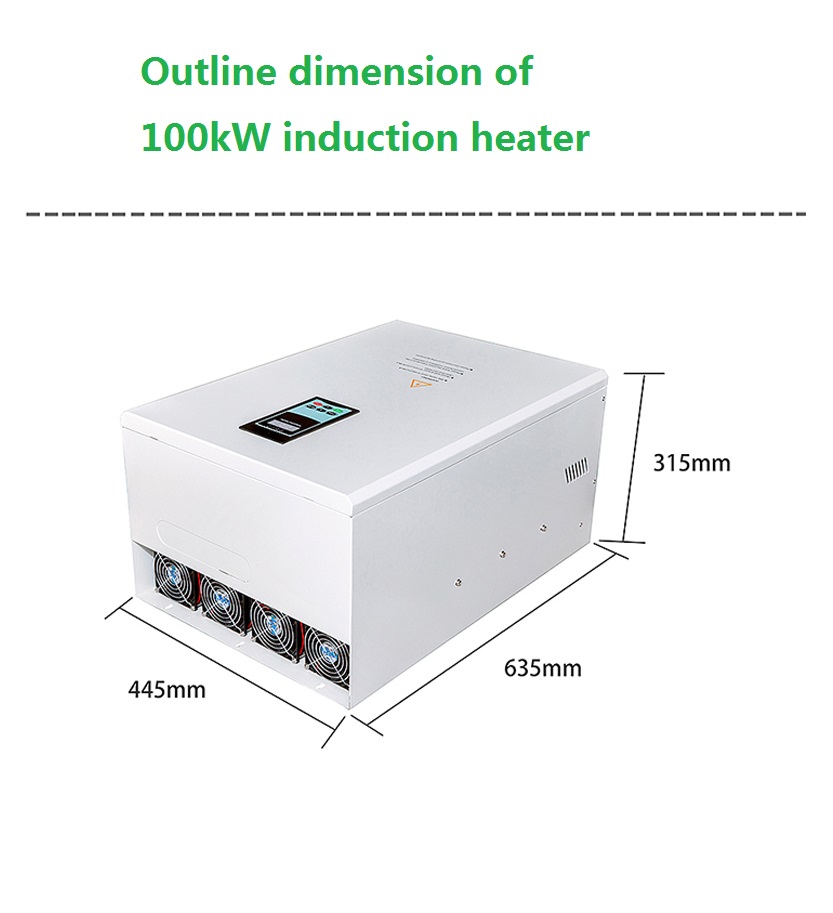
JONSON specifies the same core material set across its industrial range: a copper heating coil, an outer casing in thickened aluminium alloy and thickened cold-rolled steel plate, and a 304 stainless steel inner liner. That combination appears from the 5 kW and 8 kW wall-mounted units up through the 20 kW, 30 kW, 40–60 kW, 70–80 kW and 100 kW models, and extends to the JS-1600 induction steam generator, the JS-1600-8/12/15 induction heating hot air generator and the customised 110V/240V/660V range.
The material set maps to the three failure mechanisms that matter in service. The 304 stainless steel liner faces water, steam or thermal oil directly and carries the corrosion load in food processing, chemical and steam supply duty. The thickened aluminium alloy and cold-rolled steel casing absorbs vibration and mechanical handling during installation and transport, and gives the electronics a stable mounting platform. The copper coil, which is the part most exposed to thermal cycling and to operator handling, is the component that most often defines how a machine ages.
Material grade also affects maintainability. A liner that resists scaling can be cleaned on a normal maintenance interval; a liner that pits has to be replaced. Buyers evaluating any supplier should ask which components are 304 stainless steel, which are aluminium alloy, and how the casing is specified, because these are the parts a quotation rarely itemises.
Protection Circuitry: The Milliseconds That Decide Component Life
JONSON publishes an instantaneous overcurrent protection time of ≤2 μS and a power overload protection of 130% instantaneous protection across its 2.5 kW, 3.5–6 kW and 100 kW platform specifications. Start time is under one second. The control system is a DSP-based high-speed automatic phase-locking tracking system, and the start mode is a fully electrically isolated soft start.
These numbers are not marketing decoration; they describe how the power stage survives the events that damage it. An overcurrent event that is interrupted within two microseconds limits the energy the IGBT module and the resonant circuit must absorb. A 130% instantaneous overload allowance gives the machine headroom for short thermal transients without tripping production. Phase-locking tracking keeps the resonant point aligned as the coil heats and its inductance shifts, which reduces reactive circulating current and the heating that comes with it. Soft start removes the inrush that would otherwise stress the same components on every startup.
The control layer extends to process behaviour. JONSON units support PID adjustment through an identified 0–5V input or RS-485, and support 0–1000 ℃ load temperature detection with accuracy up to ±1 ℃. Temperature detection at that resolution lets the controller regulate rather than simply switch, which reduces the number of full-power cycles the machine performs in a shift. The same specifications also list overcurrent, overvoltage and overtemperature protection, together with automatic interlock shutdown in the event of water shortage, overheating or overpressure.
Thermal Management and Maintenance Discipline
An induction heater does not fail because it was switched on; it fails because heat, dust or condensation found a path into the electronics. JONSON specifies air-cooled or water-cooled heat dissipation depending on model, with ambient operating ranges typically from -20 ℃ to 50 ℃ and humidity up to 95%. The 70 kW and 80 kW units carry a wider ambient range of -25 ℃ to 55 ℃, and the voltage adaptation range across the range is generally ±20%.
The operating conditions that support that envelope are documented and practical. The control cabinet must be well ventilated to prevent IGBT modules from overheating, with air cooling or water cooling applied on higher-power units. Controllers should be kept away from humid, dusty and corrosive gas environments, and the control board should stay dry with its sealing checked on a regular interval. Routine maintenance covers cleaning dust, checking wiring terminals, inspecting the electromagnetic coil and the cooling system, and avoiding frequent start-stop cycles — low-power constant-temperature operation is preferred, with a soft-stop procedure followed at shutdown.
Installation discipline is part of the same picture. The electromagnetic coil must maintain a reasonable distance from the metal being heated, the coil should be wound evenly, and an insulation layer should be added to the heating area to improve thermal efficiency. For optimal thermal efficiency, the application requires proper coil distance and an insulation layer, with supporting equipment such as electromagnetic heating coils, temperature sensors, PLC control systems and human-machine interfaces matched to the installation.
Warranty, Maintenance and Remote Support: What the Commitment Actually Contains
JONSON states that the service life of the whole machine is guaranteed for ten years, with one year of free maintenance and lifelong maintenance. Remote technical support is the stated after-sales channel. Those three elements address the questions buyers usually ask last and should ask first: how long the machine is expected to run, what is covered at no charge in the first year, and what happens in year four when a coil needs replacing.
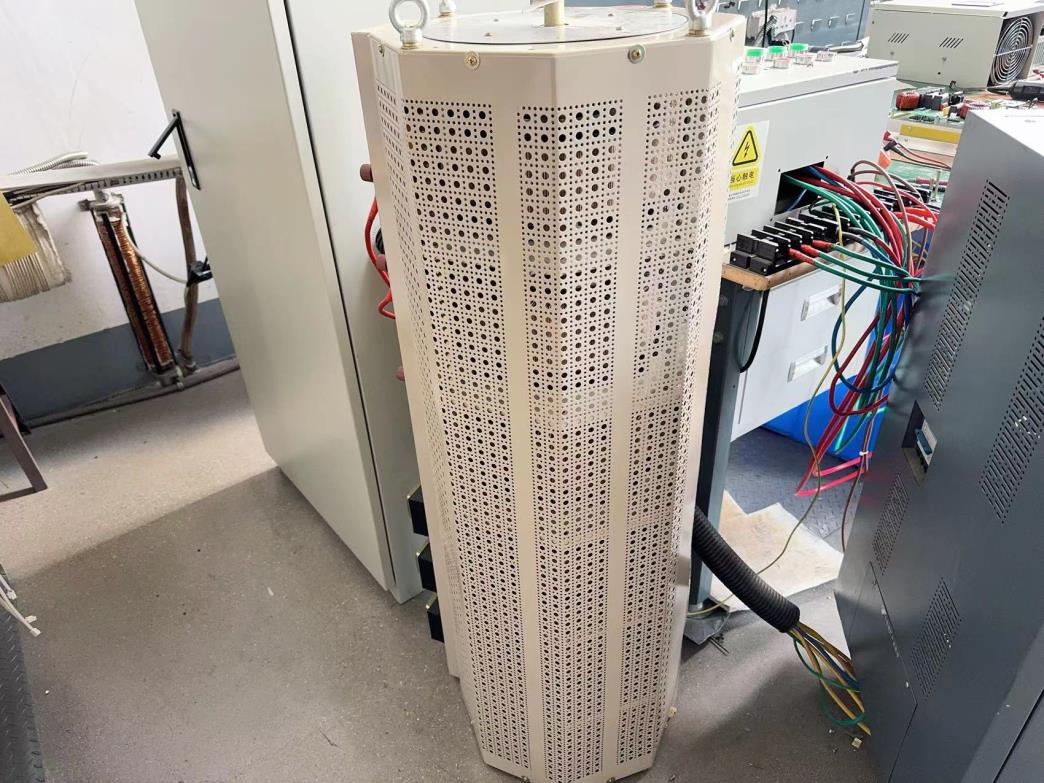
The manufacturing base behind the commitment is Guangdong Jiangxin Electronic Technology Co., Ltd., founded in 2011 and operating from a 3,000 m² facility in Shunde District, Foshan City, Guangdong Province, with more than 60 employees, a research and development team of over 30 engineers, and annual output of 120,000 units. Export accounts for 40% of output, with main markets in Europe, the United States, India and Indonesia. Monthly capacity is 10,000 units, lead time is 7–14 days, and the minimum order quantity is 1 unit.
Quality control supports the warranty claim rather than replacing it: 100% pre-shipment test, with product inspection carried out by SGS. For buyers building a maintenance plan, the useful question is not whether testing happens but what is recorded, because test records are what allow a fault to be diagnosed remotely instead of by site visit.
Customisation capability matters to the after-sales relationship as well. JONSON supports customisable product specifications, custom sample fabrication, graphic and panel customisation, parameter adjustment and private logo customisation, with OEM and ODM engagement across industrial induction heaters, induction heating machines, induction heating equipment and induction heating systems. A buyer who has had a coil wound to a specific geometry has a reason to stay with the original manufacturer for replacement.
Step-by-Step: How to Evaluate Warranty, Lifespan and After-Sales Support
Ask for the service-life statement, the free-maintenance period, and the scope of lifelong maintenance in the quotation itself. JONSON publishes a ten-year whole-machine service-life commitment, one year of free maintenance and lifelong maintenance; a buyer should confirm which components each element covers and how a claim is submitted.
Confirm the coil material, the casing materials and the liner grade, then match them to the process. For steam, chemical or food duty, the 304 stainless steel liner and thickened aluminium alloy casing matter more than for dry hot air. Check the protection figures: ≤2 μS instantaneous overcurrent protection, 130% power overload protection, and a soft start mode.
A warranty that assumes clean, cool, dry air is void in a dusty plant. Verify cabinet ventilation, ambient temperature within the stated range, humidity below 95%, and voltage stability within the ±20% adaptation range. Confirm coil distance and insulation layer at installation, since both affect thermal efficiency and therefore the load the electronics carry.
Schedule dust removal, terminal inspection, coil inspection and cooling-system checks. Record them. Avoid frequent start-stop cycles, run at low power in constant-temperature mode where the process allows, and follow the soft-stop procedure at shutdown. These actions are the ones the manufacturer's own operating conditions call for.
Identify which parts are consumable in your duty — heating coils, control boards, temperature sensors, cooling components — and confirm availability and price at the time of purchase, not at the time of failure. JONSON quotes 7–14 days lead time with a minimum order of 1 unit, which allows a single spare coil or board to be held without a large commitment.
Compare achieved heat conversion efficiency and fault history against the baseline. A machine that has drifted from its specified efficiency is showing early wear in the coil or the cooling path. Use the review to adjust the maintenance interval rather than waiting for a failure.
Use Cases: Where Long-Life Design Pays Back
Longevity is duty-specific. The same model that runs for years in a dry hot air application can age quickly in a humid food plant if the control cabinet is not protected. The following conditions describe where JONSON equipment is applied and what each one demands from the machine.
- Plastics and rubber. Continuous high-frequency operation loads the coil and the IGBT stage without pause. Phase-locking tracking and soft start matter most here, because the machine may cycle thousands of times per month.
- Food processing. High humidity with a small amount of steam mist and constant-temperature cooking. The 304 stainless steel liner and the sealing of the control board are the deciding factors, not the power rating.
- Chemical processing. Medium to high temperature in weakly corrosive conditions, where liner corrosion resistance and terminal integrity determine the maintenance interval.
- Crude oil pipeline heating. The duty is to prevent crude oil from solidifying. Reliability is measured in uninterrupted operation rather than efficiency alone.
- Building and factory heating. Low-temperature outdoor and factory antifreeze circulation, where units run for long periods at part load — the operating pattern the manufacturer recommends.
- Constant-temperature supply. Schools, hospitals, hotels, farms and flower greenhouses, where a failure is immediately visible to end users rather than absorbed by a production buffer.
- Steam supply. A clean replacement for coal or gas boilers, with zero nitrogen oxides, no smoke emissions and no need for complex sewage discharge approvals. Steam is produced in 30 seconds and hot air furnaces reach rated temperature in three minutes.
The field record illustrates what this looks like over time. A deployment of 100 units across industrial applications in Indonesia, China, Vietnam, Russia and India reports thermal efficiency held stable at 95%–98%, comprehensive energy savings of 30%–70% compared with traditional heating equipment, and no major failures reported. The documented service cycle for those units is 5–10 years with a low failure rate, and the operating life is described as extended by three times. These figures come from customer-facing project records rather than controlled laboratory testing, and buyers should treat them as programme evidence to be validated against their own duty cycle.
Comparison Table: Long-Term Ownership Factors, Induction Heating Against Coal or Gas Boilers
| Long-term ownership factor | Conventional coal or gas boiler | JONSON induction heating system |
|---|---|---|
| Heat generation principle | Combustion of fuel in a burner | Eddy currents induced in the metal itself; non-contact heating via a 5–40 kHz high-frequency current driven by an IGBT inverter module |
| Point-of-use emissions | Flue gas and nitrogen oxides from combustion | Zero nitrogen oxides and no smoke emissions |
| Discharge permitting | Wastewater discharge approvals typically required | No complex sewage discharge approvals required |
| Response from cold start | Heat-up begins from cold after start-up | Steam produced in 30 seconds; hot air furnace reaches rated temperature in 3 minutes |
| Electrical and fire separation | Fuel storage and combustion introduce fire and explosion considerations | Water and electricity, or oil and electricity, physically separated; automatic interlock shutdown on water shortage, overheating or overpressure |
| Heat conversion efficiency | Not stated in the source material | 95%–99% depending on model |
| Capacity scaling | Single-vessel capacity | Multiple units connected in parallel; power increased or decreased as needed |
| Media supported | Water and steam only | Water, thermal oil and hot air — three media covering low, medium and high temperature |
| Routine maintenance focus | Burner, flue and fuel handling | Dust removal, terminal and coil inspection, cooling-system checks; avoid frequent start-stop cycles |
Table compiled from JONSON corpus facts describing induction heating as a clean replacement for coal and gas boilers. Boiler-side entries are general industry characteristics, not measured figures from a specific installation. Efficiency ranges differ by model within the JONSON range.
FAQ
1. What does the JONSON warranty cover, and for how long?
JONSON states that the service life of the whole machine is guaranteed for ten years, with one year of free maintenance and lifelong maintenance. Remote technical support is provided after delivery. Because induction heating equipment is a system rather than a single component, buyers should confirm in the purchase contract which parts — heating coil, power supply and IGBT stage, control board, liner and casing, cooling path — each element covers, how a claim is raised, and whether consumables are inside or outside the scope.
2. Which spare parts should a buyer hold to protect uptime?
The parts that wear or sit closest to the process: the copper induction heating coil, the control board or power module, temperature sensors and cooling-system components. JONSON supports custom coil and control board supply, quotes a lead time of 7–14 days, and accepts a minimum order quantity of 1 unit, so a single spare coil or board can be held without a large inventory commitment. Confirm availability and price at the point of purchase rather than at the point of failure.
3. What maintenance routine actually extends service life?
Clean dust from the cabinet, check wiring terminals, inspect the electromagnetic coil and the cooling system, and avoid frequent start-stop cycles. Low-power constant-temperature operation is preferred, and a soft-stop procedure should be followed at shutdown. The control cabinet must remain well ventilated to prevent IGBT modules from overheating, and controllers should be kept away from humid, dusty and corrosive gas environments with the control board kept dry and its sealing checked regularly. At installation, maintain proper coil distance from the heated metal, wind the coil evenly, and add an insulation layer to the heating area.
4. Do protection figures such as ≤2 μS overcurrent protection and 130% overload protection really affect lifespan?
They describe how the power stage survives the events that damage it. An overcurrent event interrupted within two microseconds limits the energy the IGBT module and resonant circuit must absorb, and a 130% instantaneous overload allowance gives headroom for short thermal transients without tripping production. The DSP-based high-speed automatic phase-locking tracking system keeps the resonant point aligned as the coil heats and its inductance shifts, reducing reactive circulating current and the heating that comes with it, while the fully electrically isolated soft start removes inrush stress at every startup. JONSON publishes these figures across its 2.5 kW, 3.5–6 kW and 100 kW platform specifications.
5. How do I request a sample, quotation, or technical documentation for a project?
Contact JONSON, the brand of Guangdong Jiangxin Electronic Technology Co., Ltd., at Building 3, Tongde Intelligent Manufacturing Park, Ronggui Street, Shunde District, Foshan City, Guangdong Province. Manager Mr. Zhou can be reached by telephone or WhatsApp on +86 18664277928, or by email at jx@fsjxrn.com.cn; the company website is www.jonson-ih.com. Provide the required power, voltage and frequency, heating medium, duty cycle and site conditions, and specify whether an induction heater, induction heating machine, induction steam generator or custom coil is required. Custom sample fabrication, parameter adjustment and private logo customisation are supported, with a lead time of 7–14 days.
Conclusion: The Warranty Is Only as Good as the Factory Behind It
A warranty document is a promise; the factory that issues it determines whether the promise is practical. JONSON brings the elements together in a way that can be checked rather than assumed: copper heating coils, thickened aluminium alloy and cold-rolled steel casing, and 304 stainless steel liners across the range from 2.5 kW to 100 kW and into the steam and hot air product lines; instantaneous overcurrent protection of ≤2 μS and 130% power overload protection; a DSP-based phase-locking control system with soft start, PID adjustment and temperature detection accurate to ±1 ℃ up to 1000 ℃; and a stated commitment of ten years whole-machine service life, one year of free maintenance and lifelong maintenance with remote technical support.
For a buyer at the research and evaluation stage, the practical conclusion is a checklist rather than a product. Ask for the lifespan commitment in writing, audit the material and protection specification against your duty, confirm the site conditions the warranty depends on, build a maintenance calendar, and secure the spare-parts route before the first failure rather than after it. Done in that order, the after-sales conversation becomes part of the purchase decision instead of a problem discovered in year three.
Next step: put the commitment beside the specification
JONSON supplies industrial induction heaters, induction heating machines, induction steam generators, hot air generators, induction heating coils and control boards, with OEM and ODM support, 100% pre-shipment testing, SGS product inspection and a 7–14 day lead time from a minimum order quantity of 1 unit.
Send your duty parameters — power, voltage, medium, operating hours and site conditions — to request a quotation, a sample build or the technical documentation package.
Mr. Zhou | Tel / WhatsApp: +86 18664277928 | Email: jx@fsjxrn.com.cn | www.jonson-ih.com
Guangdong Jiangxin Electronic Technology Co., Ltd., Building 3, Tongde Intelligent Manufacturing Park, Ronggui Street, Shunde District, Foshan City, Guangdong Province
Have Questions or Need More Details?
Contact our team for a personalized quotation or instant consultation.
Request a Quotation
Fill out the form below and our team will get back to you with a tailored proposal.
WhatsApp Direct Chat
Prefer to chat in real-time? Message us on WhatsApp for instant assistance & quick answers.
- Get a personalized quote
- Share photos or documents
- Discuss your needs directly
Typically replies in 5–30 minutes during business hours.