
Application Guide: Boosting Efficiency in Crude Oil Pipeline Heating with Induction
Induction heating keeps crude oil moving by generating heat inside the pipeline wall itself instead of delivering it through a flame, a resistive element or a steam jacket. A high-frequency current is driven through a copper coil wound around the pipe; the alternating magnetic field induces eddy currents in the metal, so the pipe becomes its own heating element. JONSON builds this as a configurable pipeline heating solution: a compact single-phase platform rated 3.5 kW, 5 kW and 6 kW at 220 V for pipeline heating duty, and larger 380 V platforms — 40 kW, 50 kW, 60 kW and up to 100 kW — for heavier crude oil transportation and oil and natural gas transmission work.
Problem Definition: Why Crude Oil Lines Need Heat
Crude oil is not a uniform fluid. Its viscosity rises as line temperature falls, which increases pumping resistance and reduces throughput, and in cold ambient conditions or after a shutdown, waxy crude can solidify inside the pipe. JONSON's application data describes the working condition in exactly those terms: oil pipeline heating exists to prevent crude oil from solidifying. That objective drives every specification decision that follows — the heater must hold the pipe wall above the temperature at which flow becomes unreliable, and it must do so along the length of the line, not at a single point.
Three constraints decide whether a heating method is usable on an outdoor pipeline. First, heat has to be delivered along the pipe surface with acceptable uniformity, because a hot spot is not a solution. Second, temperature control has to be precise enough to avoid both under-heating, which lets viscosity climb, and local overheating of the pipe wall. Third, the hardware has to tolerate industrial reality: ambient temperatures from -20 °C to 50 °C and relative humidity up to 95% are the design conditions JONSON specifies across its heating range.
Conventional approaches each place something between the heat source and the pipe — a steam jacket, a resistive trace element or a combustion chamber — and each therefore has to manage that interface and its losses. Induction heating removes the interface and heats the pipe directly. It does not remove engineering work: coil geometry, insulation and cabinet cooling still have to be designed correctly, which is what the step-by-step section below covers.
Industry Background: A Heating Market Moving Toward Electrification
Crude oil pipeline heating is one of the applications JONSON lists across its electromagnetic heating range, alongside plastics and rubber, food processing, chemical reactions, textile printing and dyeing, aquaculture heating, metal heat treatment, building heating and medicinal herb drying. The same coil-and-power-supply architecture therefore serves both a pipeline operator and a chemical processor, and crude oil transportation appears again in the specifications of the 40 kW / 50 kW / 60 kW heaters and of the 100 kW unit, which is listed for oil and natural gas transmission.
Third-party data supports the direction of travel. WiseGuyReports values the global induction heating system market at USD 2.39 billion in 2024 and projects USD 4.5 billion by 2035. Global Market Insights reports more than 550,000 induction heating systems deployed worldwide as of mid-2024, with Asia-Pacific accounting for roughly 40% of the installed base. MarketsandMarkets identifies the 10 kW–100 kW power segment as the dominant one — the same band in which pipeline heating equipment sits. Market Research Future estimates the industrial boiler and steam generator market at USD 54.79 billion in 2024 and notes a shift toward electrification to meet decarbonization goals.
On performance, Global Market Insights states that induction heating systems achieve energy efficiencies of up to 92% and can reduce cycle time by around 30% compared with gas or resistance-based heating. On the regulatory side, the International Electrotechnical Commission publishes IEC 60519-1 (general requirements) and IEC 60519-3 (particular requirements for induction heating and melting), which define the safety framework against which industrial induction equipment is assessed.
Detailed Solution: How the JONSON Induction Pipeline Heating Solution Works
The operating principle is documented in JONSON's application data. 50 Hz AC power is converted into a 5–40 kHz high-frequency current by an IGBT inverter module; that current drives an electromagnetic coil to generate an alternating magnetic field, and the resulting eddy currents heat the metal itself. Heating is non-contact and the pipe wall is the heating element. The system supports temperature control mode, time control mode and PID closed-loop constant-temperature control, and can automatically adjust output power according to the load.
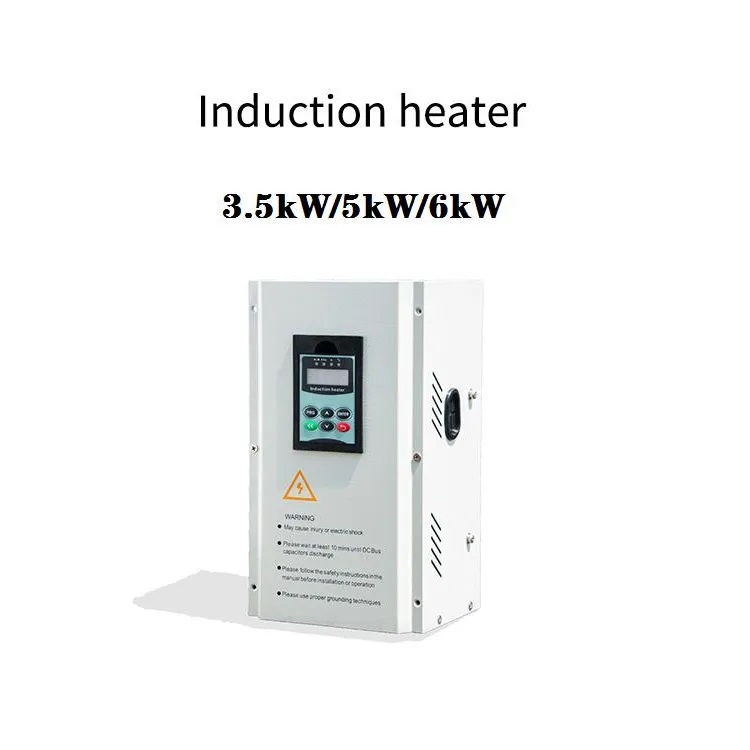
The 3.5 kW / 5 kW / 6 kW, 220 V Platform
This single-phase unit is the entry point of JONSON's crude oil pipeline heating solution, and its published specification reads as follows.
- Rated power: single-phase 3.5 kW / 5 kW / 6 kW
- Rated input current: 15–16 A (3.5 kW); 20–22 A (5 kW); 22–27 A (6 kW)
- Rated output current: 20–25 A (3.5 kW); 20–30 A (5 kW); 55 A (6 kW)
- Rated voltage and frequency: AC 220 V / 50 Hz, with a 100–260 V adaptation range and constant power output between 210 V and 260 V
- Ambient conditions: -20 °C to 50 °C, relative humidity ≤95%
- Power regulation: 20%–100% stepless adjustment (0.5–5 kW / 6 kW)
- Heat conversion efficiency: ≥95%; effective power: ≥98%
- Operating frequency: 5–40 kHz, half-bridge series resonance
- Control system: DSP-based high-speed automatic phase-locking tracking
- Response and protection: start time <1 s; instantaneous overcurrent protection ≤2 μs; 130% instantaneous power overload protection
- Start mode: fully electrically isolated soft start heating / stop
- Control inputs: PID power adjustment via 0–5 V input voltage; load temperature detection over 0–1000 °C with accuracy up to ±1 °C
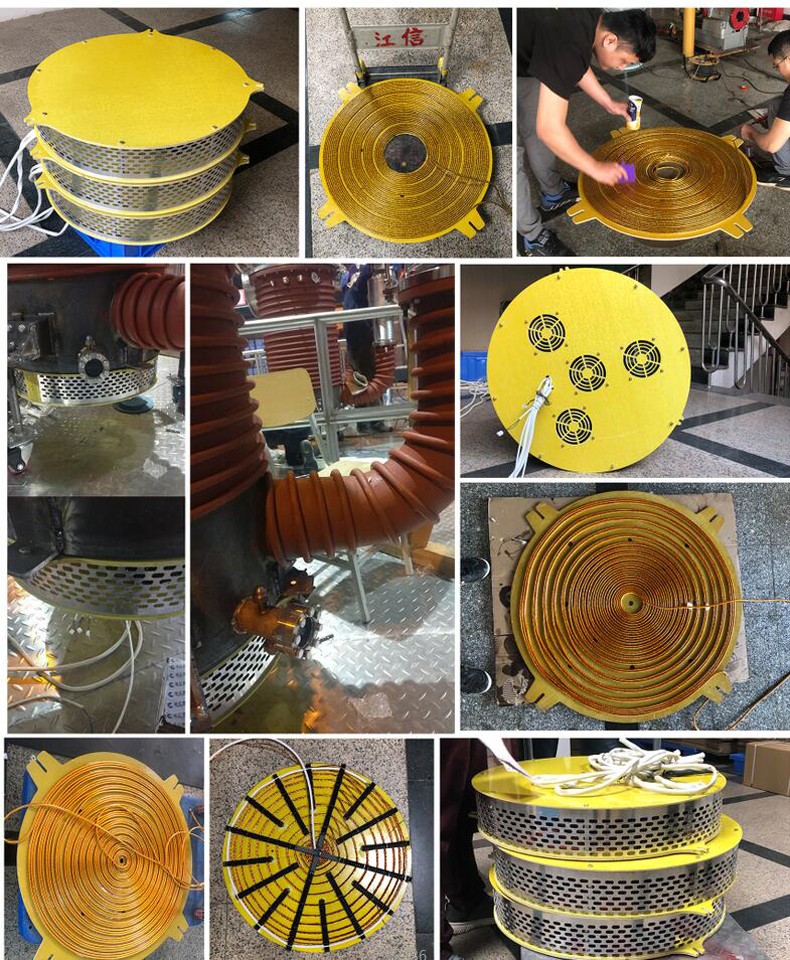
- Adaptive coil parameters: 3.5 kW — 6 mm² line, 20 m, 80–100 µH; 5 kW — 10 mm² line, 15 m, 60–75 µH; 6 kW — 10 mm² line, 13 m, 60–65 µH
- Construction: copper wire heating coil; thickened aluminium alloy and cold-rolled steel plate outer casing; 304 stainless steel inner liner
Crude oil pipeline heating appears across the applicable-industry data for this heating family, and the same coil technology scales from 1 kW to 100 kW in the induction heating coil series, which is itself listed for crude oil pipeline heating, chemical reactions, metal heat treatment and building heating.
Efficiency: Reading the ≥98% Figure Correctly
Efficiency claims deserve precise reading, because the number depends on which figure a supplier quotes. For the 3.5 kW / 5 kW / 6 kW, 220 V platform, heat conversion efficiency is specified at ≥95% and effective power at ≥98%. Higher up the range, heat conversion efficiency is specified at ≥98% for the induction heating coil series (1–100 kW), ≥98% for the 40 kW / 50 kW / 60 kW heaters, and ≥99% for the 70 kW / 80 kW industrial electric heaters and the JS-1600 induction steam generator. In installed projects, JONSON reports overall thermal efficiency stable at 95%–98%, with comprehensive energy savings of 30%–70% compared with traditional heating equipment.
For a pipeline buyer the practical conclusion is straightforward: 98% and above is a range-level benchmark for JONSON's pipeline-capable hardware, while the exact figure for a specific unit should be read from that model's datasheet — 95% heat conversion plus 98% effective power on the compact single-phase unit, and 98% or better heat conversion on the coil series and the 40–100 kW class.
Control Precision and Temperature Stability
Precision is what separates induction from most trace-heating alternatives on a crude oil line. The controller accepts a 0–5 V PID input and reads load temperature across a 0–1000 °C window with accuracy up to ±1 °C, which is the resolution required to hold a pipe wall inside a narrow band instead of cycling between over- and under-heating. Because the PID loop adjusts power continuously rather than switching the heater on and off, the pipe is not subjected to repeated thermal shock. Matched equipment for a full installation includes electromagnetic heating coils, temperature sensors, PLC control systems, touch screens and human-machine interfaces.
Construction for Industrial Environments
Pipeline heating equipment is installed where maintenance access is limited and weather is not negotiable. The 3.5 kW / 5 kW / 6 kW unit is wall-mounted and rated for -20 °C to 50 °C ambient and ≤95% relative humidity. Heating coils use copper wire; outer casings combine thickened aluminium alloy with cold-rolled steel plate, and JONSON's liquid- and steam-side units use a 304 stainless steel inner liner. Higher-power models such as the 20 kW, 30 kW and 100 kW machines offer air-cooled or water-cooled heat dissipation, which matters when a control cabinet is installed in a hot process area. JONSON's installation guidance adds three practical rules: keep a reasonable distance between the coil and the metal being heated, wind the coil evenly, and add an insulation layer over the heated zone to improve thermal efficiency.
Step-by-Step Breakdown: From Line Survey to Commissioning
An induction pipeline heating project follows a defined sequence. Each step below is tied to a specification or installation requirement that JONSON publishes for its equipment.
- Survey the line and define the temperature to hold. Record pipe material, ambient range (the JONSON heating range is designed for -20 °C to 50 °C), insulation condition and duty cycle — continuous flow or intermittent restart after shutdown. The stated design objective of the application is preventing crude oil from solidifying.
- Match power and voltage to the duty. Single-phase 220 V at 3.5 kW, 5 kW or 6 kW covers compact pipeline heating duty and works across a 100–260 V supply with constant power output above 210 V. Where a three-phase supply is available, the 40 kW / 50 kW / 60 kW 380 V models are specified for crude oil transportation, and the 100 kW JS1000-100 is listed for oil and natural gas transmission. Where site voltage differs, JONSON offers 110 V / 240 V / 660 V customization across 500 W–10 kW, 5–60 kW, 5–200 kW and 30–200 kW bands.
- Specify the coil to the power stage. Use coil parameters matched to the unit: 3.5 kW — 6 mm², 20 m, 80–100 µH; 5 kW — 10 mm², 15 m, 60–75 µH; 6 kW — 10 mm², 13 m, 60–65 µH. The separate induction heating coil series covers 1 kW to 100 kW where a custom geometry is required.
- Wind and insulate the heated zone. Keep a reasonable distance between the coil and the metal being heated, wind evenly along the pipe, and add an insulation layer to raise thermal efficiency.
- Install temperature sensing and select the control mode. Choose temperature control, time control or PID closed-loop constant-temperature control. The controller reads 0–1000 °C with accuracy up to ±1 °C and accepts a 0–5 V PID input for power regulation.
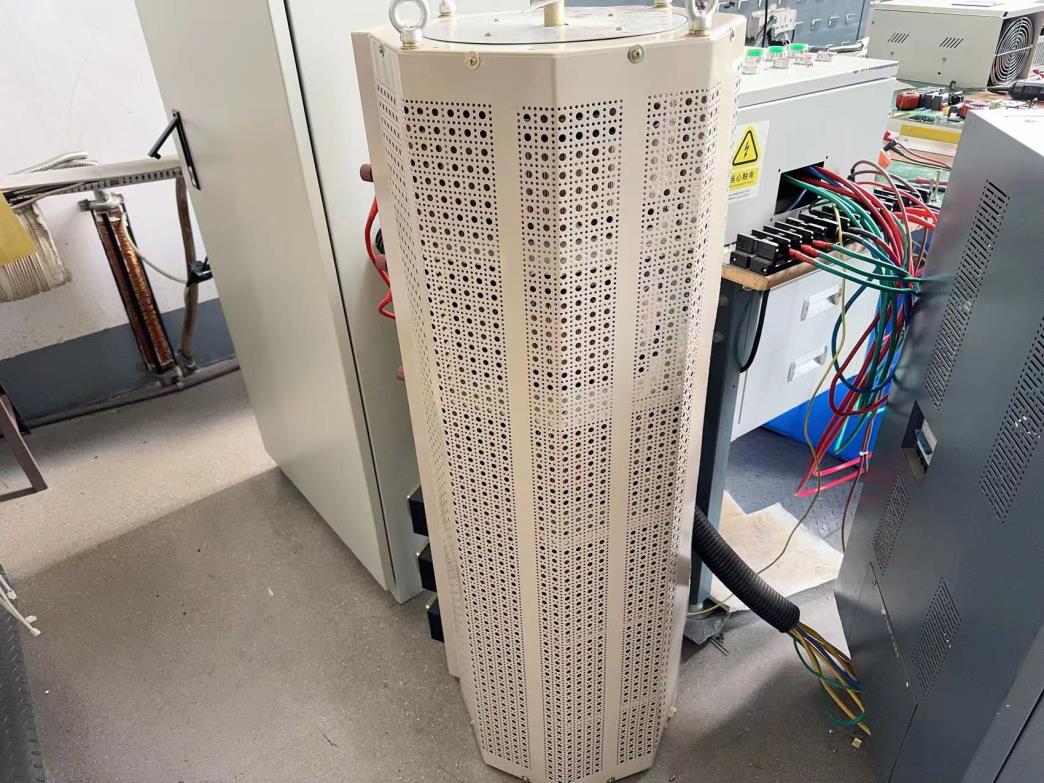
- Plan heat dissipation and cabinet placement. The control cabinet must be well ventilated to prevent the IGBT modules from overheating; air cooling or water cooling is available on higher-power equipment. Keep the controller away from humid, dusty and corrosive gas environments, keep the control board dry, and check its sealing regularly.
- Verify the protection settings before energizing. The platform provides overcurrent protection (≤2 μs response), overvoltage and overtemperature protection, 130% instantaneous power overload protection, and fully electrically isolated soft start and stop. JONSON also describes automatic interlock shutdown for water shortage, overheating or overpressure, with water and electricity (or oil and electricity) physically separated, so the heating circuit carries no explosion or fire risk from that interface.
- Commission, then maintain on a schedule. Maintenance requirements are explicit: clean dust regularly, check wiring terminals, electromagnetic coils and the cooling system, avoid frequent start-stop cycles, prefer low-power constant-temperature operation, and follow a soft-stop procedure when shutting the system down.
Use Cases: Where Induction Pipeline Heating Is Applied
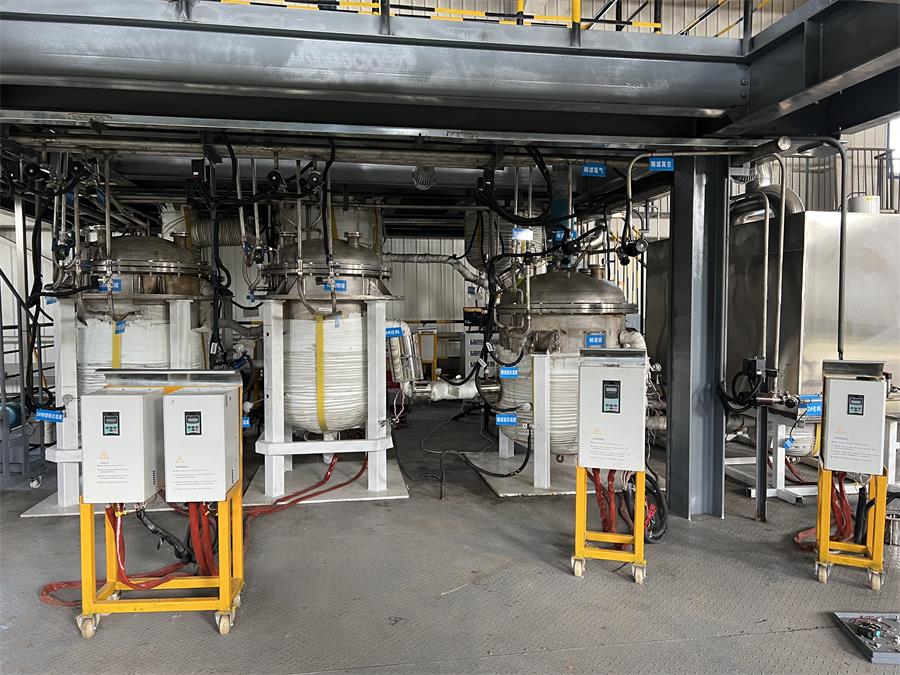
Crude oil and gas transmission. The primary case is holding line temperature so that crude oil can be pumped without solidifying. The 40 kW / 50 kW / 60 kW models are specified for crude oil transportation and the 100 kW JS1000-100 for oil and natural gas transmission, while the 3.5 kW / 5 kW / 6 kW, 220 V platform serves compact pipeline heating duty.
Process heat and thermal duties around the line. The same architecture covers steam supply, medium- and high-temperature thermal oil heating, hot air drying, constant-temperature water supply for factory production, and constant-temperature heating for schools, hospitals, hotels, farms and greenhouses. Water, thermal oil and hot air are the three heating media, covering low, medium and high temperature duty.
Replacing coal- or gas-fired heat. JONSON describes induction heating as a clean replacement for coal and gas boilers: zero nitrogen oxides, no smoke emissions and no need for complex sewage discharge approvals, with steam produced quickly and hot air furnaces reaching rated temperature in minutes.
Documented field experience. A JONSON induction heating installation program covering 100 units in Indonesia, China, Vietnam, Russia and India, running for more than ten years, reports thermal efficiency stable at 95%–98%, comprehensive energy savings of 30%–70% compared with traditional heating equipment, service life extended by three times, and zero major failures.
Comparison Table: JONSON Induction Platforms for Crude Oil Pipeline Heating
| Platform | Rated power | Rated voltage and frequency | Heat conversion efficiency | Power regulation | Operating frequency |
|---|---|---|---|---|---|
| Induction heater, 3.5 kW / 5 kW / 6 kW, 220 V (single-phase, wall-mounted) | 3.5 / 5 / 6 kW | AC 220 V / 50 Hz; adaptation 100–260 V, constant power 210–260 V | ≥95% (effective power ≥98%) | 20–100% stepless | 5–40 kHz |
| Induction heater, 40 kW / 50 kW / 60 kW (specified for crude oil transportation) | 40 / 50 / 60 kW | 380 V / 50 Hz (±20%) | ≥98% | 20–100% | 5–40 kHz |
| 100 kW industrial induction heater (JS1000-100, listed for oil and natural gas transmission) | Three-phase 100 kW | AC 380 V / 50–60 Hz; constant power 300–400 V | ≥95% (effective power ≥98%) | 20–100% stepless | 5–40 kHz |
| Induction heating coil, customizable copper geometry | 1–100 kW | 220 V / 380 V, 50 / 60 Hz | ≥98% | 20–100% | 5–40 kHz |
| Custom-voltage induction heater | 500 W–10 kW / 5–60 kW / 5–200 kW / 30–200 kW | 110 V / 240 V / 660 V | ≥98% | 20–100% | 5–40 kHz |
Certification is model- and market-specific. Within the JONSON range, the induction heating coil (product 6365) is certified to ISO 9001:2015 under certificate 02826Q00032R001 issued by Beijing Zhong An Zhi Huan Certification Center Co., Ltd. (Zhong An Certification). Models JS1300-005/008, JS1300-10/15 and JS-1600-8/12/15 carry CE, ISO and RoHS for the EU market, and the JS1300-5/8/15/20/30 platform holds CCC certification for the China Mainland market. Confirm the applicable certificate set against the exact model and destination market.
FAQ
1. Which standards and certifications apply to induction equipment used for crude oil pipeline heating?
Industrial induction heating equipment is assessed against IEC 60519-1 (general requirements) and IEC 60519-3 (particular requirements for induction heating and melting), published by the International Electrotechnical Commission. Within the JONSON range, the induction heating coil (product 6365) is certified to ISO 9001:2015 under certificate 02826Q00032R001, issued by Beijing Zhong An Zhi Huan Certification Center Co., Ltd. (Zhong An Certification), to standard GB/T 19001—2016 / ISO 9001:2015, valid worldwide. Models JS1300-005/008, JS1300-10/15 and JS-1600-8/12/15 hold CE, ISO and RoHS for the EU market; the CE certificate is number KEYS23032915001EM-02, issued by Guangdong KEYS Testing Technology Co., Ltd. against EN IEC 55014-1:2021. CCC certification applies to specific models for the China Mainland market, including the JS1300-5/8/15/20/30 platform (certificate 2017010706999985, issued by CQC, standards GB 4706.1-2005 and GB 4706.11-2008). Because certification scope is model-specific, verify the certificate set for the exact model and destination market before ordering.
2. Can a 3.5 kW, 5 kW or 6 kW, 220 V induction heater handle crude oil pipeline heating?
Within its power band, yes. The platform delivers single-phase 3.5 kW, 5 kW or 6 kW with 20%–100% stepless power regulation, effective power ≥98%, a 5–40 kHz operating frequency and PID closed-loop control that reads load temperature across 0–1000 °C with accuracy up to ±1 °C. Coil parameters are matched to each rating — 6 mm² / 20 m / 80–100 µH at 3.5 kW, 10 mm² / 15 m / 60–75 µH at 5 kW, and 10 mm² / 13 m / 60–65 µH at 6 kW — and the same coil technology scales from 1 kW to 100 kW. Where the duty requires more power, the 40 kW / 50 kW / 60 kW, 380 V models are specified for crude oil transportation and the 100 kW JS1000-100 for oil and natural gas transmission, so the choice is a matter of duty rather than of principle.
3. What drives the running cost of an induction pipeline heating system?
Four specification factors dominate: rated power, duty cycle, coil design and insulation quality, and cooling mode (air or water). Efficiency figures are the reason those choices matter — heat conversion efficiency is specified at ≥95% for the 3.5 kW / 5 kW / 6 kW platform (with ≥98% effective power), ≥98% for the coil series and the 40 kW / 50 kW / 60 kW models, and ≥99% for the 70 kW / 80 kW heaters and the JS-1600 induction steam generator. Installed JONSON projects report thermal efficiency stable at 95%–98% and comprehensive energy savings of 30%–70% compared with traditional heating equipment. Stepless regulation between 20% and 100% of rated output also lets the system match demand instead of running at a fixed full load. Because each line is configured differently, commercial proposals are built around the selected power, coil and control configuration rather than a single list price.
4. Can the design be validated with a sample before a full order?
JONSON's order terms support that route: MOQ is 1 unit, and the company offers custom sample fabrication, parameter adjustment, graphic and panel customization, and private logo customization. Quality control is documented as 100% pre-shipment test and product inspection (SGS), with monthly capacity of 10,000 units, so a validated sample can be scaled to series supply without changing supplier.
5. What is the lead time, and what support follows delivery?
Lead time is quoted at 7–14 days, followed by remote technical support after installation. For a pipeline project, the fastest next step is to send the line parameters — pipe material and diameter, ambient range, target temperature to hold and available supply voltage — so that the power stage and coil specification can be confirmed. Requests for samples, quotations or configuration support can be sent to Mr. Zhou at +86 18664277928 (WhatsApp available), by email at jx@fsjxrn.com.cn, or through the website www.jonson-ih.com.
Conclusion
Induction heating fits crude oil pipeline heating because it removes the heat-transfer interface: the pipe wall itself becomes the heating element, efficiency is specified in the 95%–99% band across the JONSON range, and PID closed-loop control holds temperature to ±1 °C over a 0–1000 °C detection window. For compact duty, the 3.5 kW / 5 kW / 6 kW, 220 V single-phase platform is the practical starting point, and the same architecture scales to 40 kW / 50 kW / 60 kW and 100 kW for crude oil transportation and oil and natural gas transmission.
JONSON is the brand of Guangdong Jiangxin Electronic Technology Co., Ltd., founded in 2011, operating a 3,000 m² facility with more than 60 employees, a 30-plus engineer R&D team, annual output of 120,000 units, and exports accounting for 40% of production, with Europe, the United States, India and Indonesia among its main markets. The company states that the service life of the whole machine is guaranteed for ten years, with one year of free maintenance and lifelong maintenance.
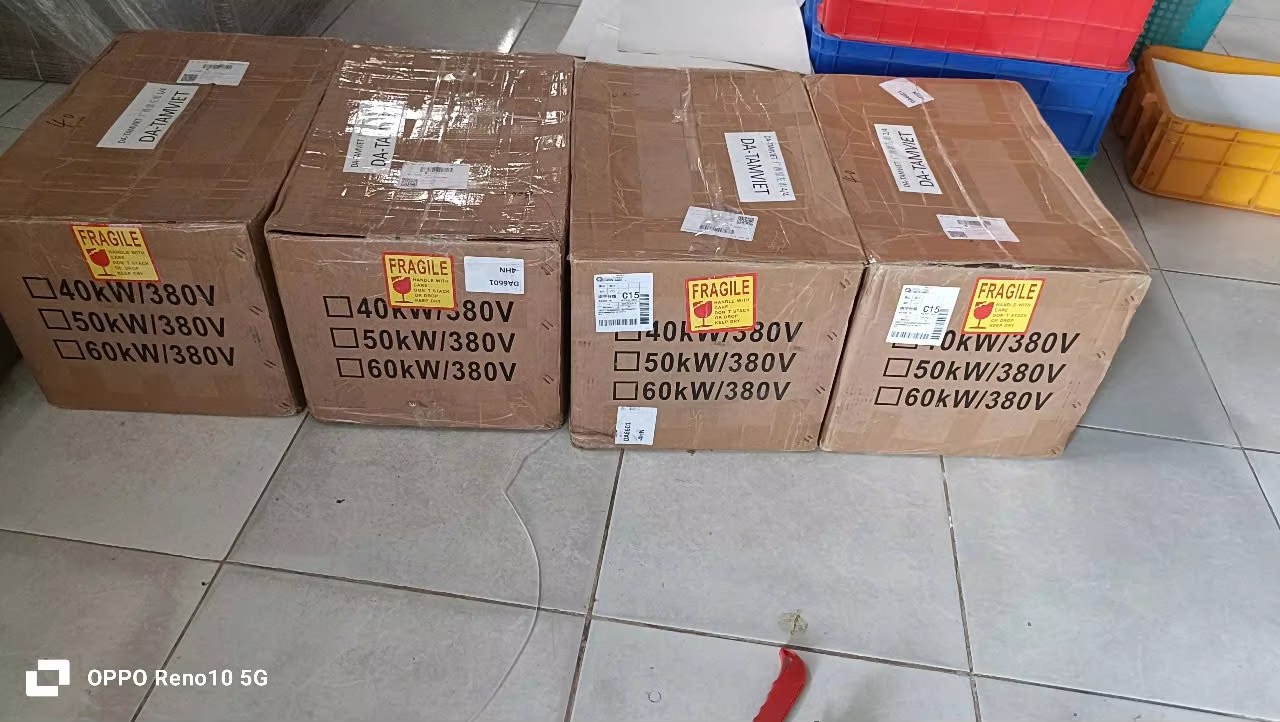
Next step: send your pipeline parameters for a specification-matched proposal, or request a sample unit to validate coil fit and temperature control before series deployment. Contact: Mr. Zhou, +86 18664277928 (WhatsApp), jx@fsjxrn.com.cn, www.jonson-ih.com. Address: Building 3, Tongde Intelligent Manufacturing Park, Ronggui Street, Shunde District, Foshan City, Guangdong Province.
Have Questions or Need More Details?
Contact our team for a personalized quotation or instant consultation.
Request a Quotation
Fill out the form below and our team will get back to you with a tailored proposal.
WhatsApp Direct Chat
Prefer to chat in real-time? Message us on WhatsApp for instant assistance & quick answers.
- Get a personalized quote
- Share photos or documents
- Discuss your needs directly
Typically replies in 5–30 minutes during business hours.