
EU Compliance Guide for Induction Heaters: CE, ISO, RoHS, and 380V Adaptation
For an industrial induction heater entering a European project, compliance is confirmed at the model level, not at the brand level. A supplier described only as “CE certified” still has to show which specific unit, power class and configuration carries the documentation a project requires — and whether the electrical specification matches the supply at the site.
This guide explains how to read the compliance and specification data that JONSON publishes for European-market induction heaters. JONSON is the brand of Guangdong Jiangxin Electronic Technology Co., Ltd., a manufacturer founded in 2011 in Foshan, Guangdong Province, China, producing induction heaters, induction heating control boards, steam generators, hot air generators and induction heating coils. Europe is listed among its main export markets.
In the published product data, the JS1300-005/008 wall-mounted induction heater (5 kW / 8 kW, 380 V) states CE and ISO certification with a voltage adaptation range of 380 V ± 20%. The JS1300-10/15 wall-mounted induction heater (10 kW / 15 kW, 380 V) states CE, ISO and RoHS certification with a voltage adaptation range of 300 V–400 V. Both models state a power regulation range of 20%–100%. Those three items — the certification attached to the exact model, the voltage window, and the regulation range — are where most European procurement checks begin.
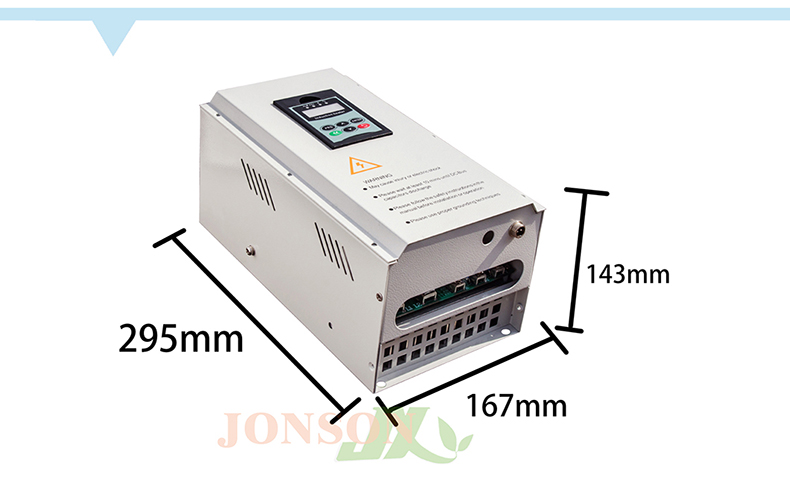
JONSON JS1300-005/008 wall-mounted induction heater — rated 380 V with 5 kW / 8 kW output options and a stated 380 V ± 20% voltage adaptation range.
The Compliance Problem: Why a Generic Certificate Statement Is Not Enough
Compliance for an industrial heating project is a chain of four links, and a weak link anywhere produces the same result: the equipment is held at customs, rejected by the electrical contractor, or accepted in the plant but impossible to reorder consistently.
The four links are the certification stated for the exact model; the electrical specification measured against the site supply; the document set that ships with the unit and matches it; and the supplier’s ability to reproduce the same configuration, marking and paperwork on repeat orders.
Failure usually happens at the first link. A buyer requests a quotation for an “industrial induction heater with CE certification” at 15 kW and places the order. The unit that arrives is a different power class with a different certification statement, and the documentation cannot be tied back to the purchase order. Because certification is attached to a model, a configuration and a power class, the model number — JS1300-005/008, JS1300-10/15, JS1000-20 — is the unit of compliance, not the brand name.
The second link is electrical. European industrial sites are commonly supplied at 380 V, and the voltage at the terminals moves with site wiring, transformer loading and time of day. Equipment designed around a narrow input window will derate, trip on undervoltage protection, or age faster when the supply sits at the edge of its tolerance. That is why a published adaptation range is a procurement number rather than a datasheet footnote.
The third link is process behaviour. Process heating loads rarely run at full output for a whole shift: a line pre-heats, holds, ramps and idles. A unit that can only regulate across part of its range forces the process to switch on and off instead of modulating, which affects temperature stability and component life. A stated regulation range of 20%–100% means one unit can cover pre-heat, holding and ramp-up phases without cycling the load.
The fourth link is repeatability, and it is the one buyers discover last. A configuration that was compliant on the first order — with a particular panel, marking or power setting — is a different configuration on the second order unless it is written into the specification and reproduced by the supplier.
Industry Background: Why Compliance Now Sits Inside the Project Schedule
Industrial heat is being electrified, and that shift has moved compliance from a paperwork afterthought to a line item on the project schedule.
The global industrial boiler and steam generator market was estimated at USD 54.79 billion in 2024, with a shift toward electrification via induction technology to meet decarbonization goals (Market Research Future, 2024). Where a plant previously specified a gas-fired unit, the specification now names an electrically driven heating system — and the specification writer has to attach standards, documentation and electrical compatibility data that a fuel-fired unit did not require in the same form.
The technical case for induction heating is measurable. Induction heating systems achieve energy efficiencies up to 92%, with an average cycle time reduction of 30% compared with traditional gas or resistance-based heating (Global Market Insights). One clarification matters here: that figure describes system-level energy efficiency across a heating cycle and is defined differently from the “heat conversion efficiency” values quoted in individual product specifications, so the two numbers should not be placed on the same scale.
Market structure also explains which power classes attract the most compliance attention. The 10 kW–100 kW power segment dominates the induction heating market because of its versatility across hardening, forging and brazing work (MarketsandMarkets, 2025). That is the same band in which the JS1300-10/15 and JS1000-20 units sit, and it is where European buyers do most of their comparing.
Safety standards for the equipment itself are published and stable. IEC 60519-1 sets general requirements for electroheating installations, and IEC 60519-3 sets particular requirements for induction heating and melting equipment (International Electrotechnical Commission). Buyers evaluating equipment for a European site commonly ask suppliers how their equipment addresses these standards. That question belongs to technical due diligence, and it is separate from the certification statement attached to a specific product model.
Europe is not a marginal destination for JONSON. The company lists Europe among its main export markets, and export sales account for 40% of its output, so EU-bound orders run through an existing configuration and documentation process rather than a first-time exercise.
How JONSON States Compliance and Electrical Data for EU-Bound Induction Heaters
The sections below use only values published in JONSON product data. Where a value is not listed for a model, this guide says so instead of filling the gap with an assumption.
CE, ISO and RoHS: What Is Stated, Model by Model
Certification statements in JONSON product data are attached to individual models, not to the company in general:
- JS1300-005/008 — wall-mounted induction heater, rated 5 kW / 8 kW at 380 V: CE and ISO are stated.
- JS1300-10/15 — wall-mounted induction heater, rated 10 kW / 15 kW at 380 V: CE, ISO and RoHS are stated.
- JS1000-20 — wall-mounted induction heater, rated 20 kW at 380 V: CE and ISO are stated.
- JS1000-30 — wall-mounted induction heating machine, rated 30 kW at 380 V: CE and ISO are stated.
- JS1000-100 — wall-mounted industrial induction heater, rated 100 kW at 380 V: CE and ISO are stated.
- JS-1600-8/12/15 — vertical hot air generator, rated 8 kW / 12 kW / 15 kW at 380 V: CE, ISO and RoHS are stated.
A precision point that matters in European procurement: the RoHS statement appears on the 10 kW / 15 kW induction heater and on the JS-1600-8/12/15 hot air generator. The 5 kW / 8 kW unit states CE and ISO. If a project specification requires RoHS documentation for a particular power class, match that requirement against the exact model number rather than against the supplier name.
380 V Adaptation: Reading 300 V–400 V as Procurement Evidence
Voltage adaptation is published per model, and the wording differs because the underlying circuits differ:
- JS1300-005/008: rated voltage 380 V, adaptation range stated as 380 V ± 20%.
- JS1300-10/15: rated voltage 380 V, adaptation range stated as 300 V–400 V.
- JS-1600-8/12/15 hot air generator: rated voltage 380 V, adaptation range stated as 300 V–400 V.
- JS1000-100: rated 380 V three-phase, AC 380 V / 50 Hz–60 Hz, with constant power output at 300–400 V.
The phrase worth pausing on is “constant power output”. Within the stated window, the unit is designed to deliver its rated output rather than to derate in proportion to the supply. In a plant where voltage dips during shift start-up, that behaviour decides whether a heating zone reaches setpoint on schedule or runs behind for the first hour of production.
The practical check is straightforward. Record the site’s actual voltage range across a full production cycle — not the nominal nameplate value — and compare the low end of that range with the adaptation range published for the quoted model. A site that swings below the stated window is a different project from one that stays inside it.
Power Regulation, Ambient Ratings and Shipping Data
Three further groups of published values decide whether a unit fits a European production environment.
Power regulation. The JS1300-005/008 states 20–100%, the JS1300-10/15 states 20%–100%, and the JS1000-100 states 20%–100% stepless adjustment, described in its data as adjustment between 20 and 100 kW. Regulation range is model-specific rather than a brand-wide constant: the 70 kW / 80 kW industrial heater, for example, lists 25%–100%. The figure to write into a project specification is the one published for the model being installed.
Heat conversion efficiency. Published values differ by model and are not listed for every unit. The 40 kW / 50 kW / 60 kW heater and the induction heating coil state ≥98%; the JS-1600 steam generator states ≥99%; the 100 kW unit states ≥95%. The JS1300-005/008 and JS1300-10/15 specifications reviewed for this guide state power regulation and voltage adaptation, but they do not list a heat conversion efficiency figure — so no figure is claimed for them here.
Ambient and construction data. The JS1300-005/008 is rated for ambient temperatures of −20 °C to 40 °C; the JS1300-10/15 for −20 °C to 50 °C; both for relative humidity of 95% or below. Both use a copper heating coil, a 304 stainless steel inner liner, and a casing of thickened aluminium alloy and cold-rolled steel plate. The JS1300-005/008 measures 295 mm × 169 mm × 145 mm; the JS1300-10/15 measures 356 mm × 178 mm × 178 mm and has a net weight of 7.3 kg. Wall-mounted enclosures at this size matter in retrofit projects where floor space is already committed to production equipment.
Customs and packing data. The JS1300-10/15 lists HS code 8514400090, and the JS-1600-8/12/15 hot air generator lists HS code 8516109000. Both appear in the published product data and are the starting point for EU import classification. Packaging is listed as carton or wood frame for the wall-mounted heaters, and a wooden box for the hot air generator.
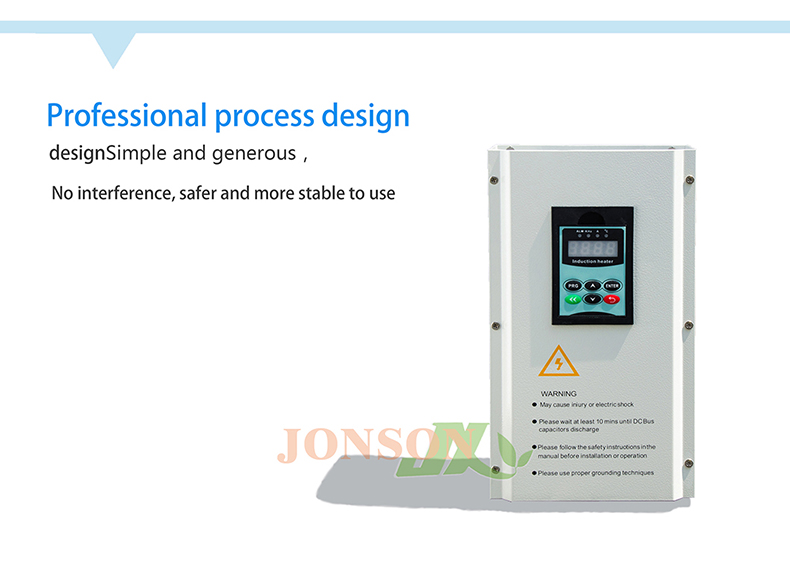
The JS1300-005/008 wall-mounted unit: 380 V rated input, 20–100% power regulation, copper heating coil and 304 stainless steel inner liner.
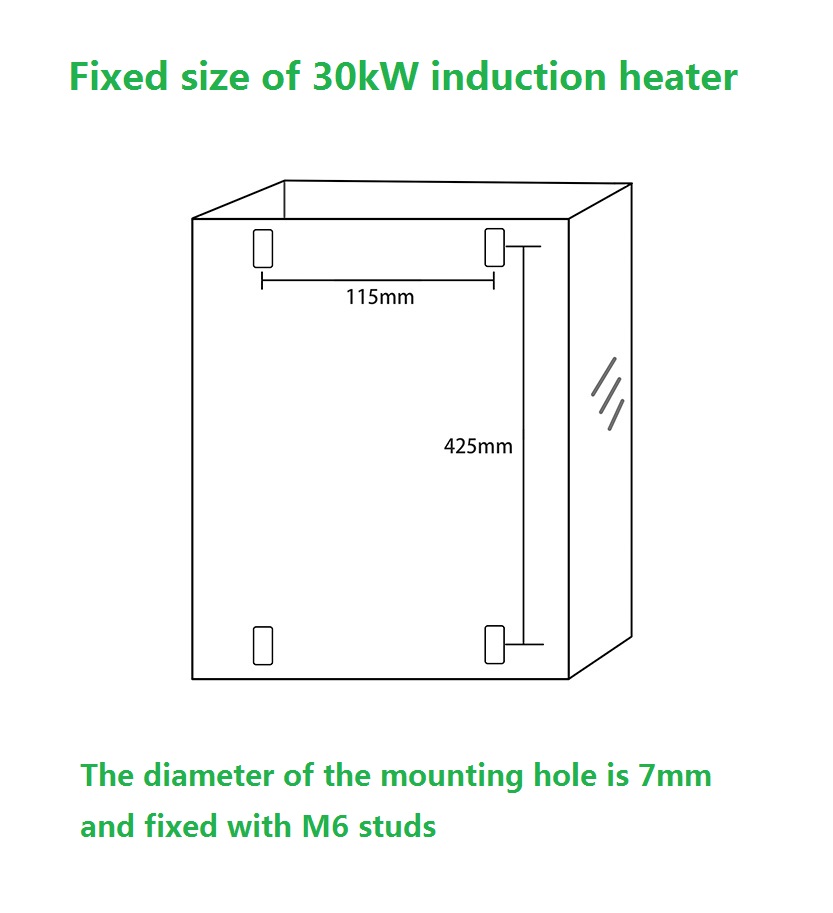
JONSON induction heating machines state CE and ISO certification, with model-specific power ratings from 5 kW to 100 kW at 380 V.
Step-by-Step: Verifying Compliance Before an EU Order Is Placed
The sequence below follows the order in which these checks normally resolve, because an error in an early step invalidates the later ones.
Step 1 — Fix the model number and configuration before discussing certification. Write the model (for example JS1300-005/008 or JS1300-10/15) and the rated power into the enquiry. Certification, voltage adaptation and regulation range are published per model, so a specification that names only “induction heater” cannot be verified by anyone.
Step 2 — Match the site supply to the published adaptation range. Measure the site’s real voltage range and compare it with the model’s stated window: 380 V ± 20% for the JS1300-005/008; 300 V–400 V for the JS1300-10/15 and the JS-1600-8/12/15; and constant power output at 300–400 V for the JS1000-100.
Step 3 — Confirm which certification applies to that exact model. CE and ISO are stated for the models listed above, with RoHS additionally stated for the JS1300-10/15 and the JS-1600-8/12/15. Ask for the certification statement in writing against the model number, not against a general brochure.
Step 4 — Request the document pack and cross-check it. The pack should contain the specification sheet for the ordered model, the certification statement for the same model, marking and nameplate details, the HS code, and the packaging specification. Any mismatch between the certificate’s model reference and the purchase order is a stop point.
Step 5 — Verify inspection evidence. JONSON states 100% pre-shipment testing and product inspection by SGS. For a first EU order, request the inspection documentation for the actual shipment and confirm the test record references the same model and power rating as the order.
Step 6 — Confirm reorder continuity. Compliance has to be reproducible. Confirm that the same model, marking and documentation set will be issued on repeat orders, and record the configuration in the purchase specification. JONSON lists OEM and ODM production, customizable product specifications, parameter adjustment, graphic and panel customization, and private logo customization — all of which change the configuration and therefore the documents that must match it.
Step 7 — Plan the delivery window. Lead time is listed as 7–14 days, monthly capacity as 10,000 units, minimum order quantity as 1 unit, and remote technical support is provided after delivery. A single-unit order is therefore a practical way to validate a model before a multi-unit project is released.
Checklist summary:
- Model number and rated power fixed in writing
- Site voltage range measured and compared with the published adaptation range
- Certification statement matched to the exact model (CE, ISO, and RoHS where stated)
- Document pack requested and cross-checked against the purchase order
- Pre-shipment test and SGS inspection records reviewed for the shipment
- Reorder configuration, marking and documentation confirmed
- Lead time, MOQ and after-sales support confirmed
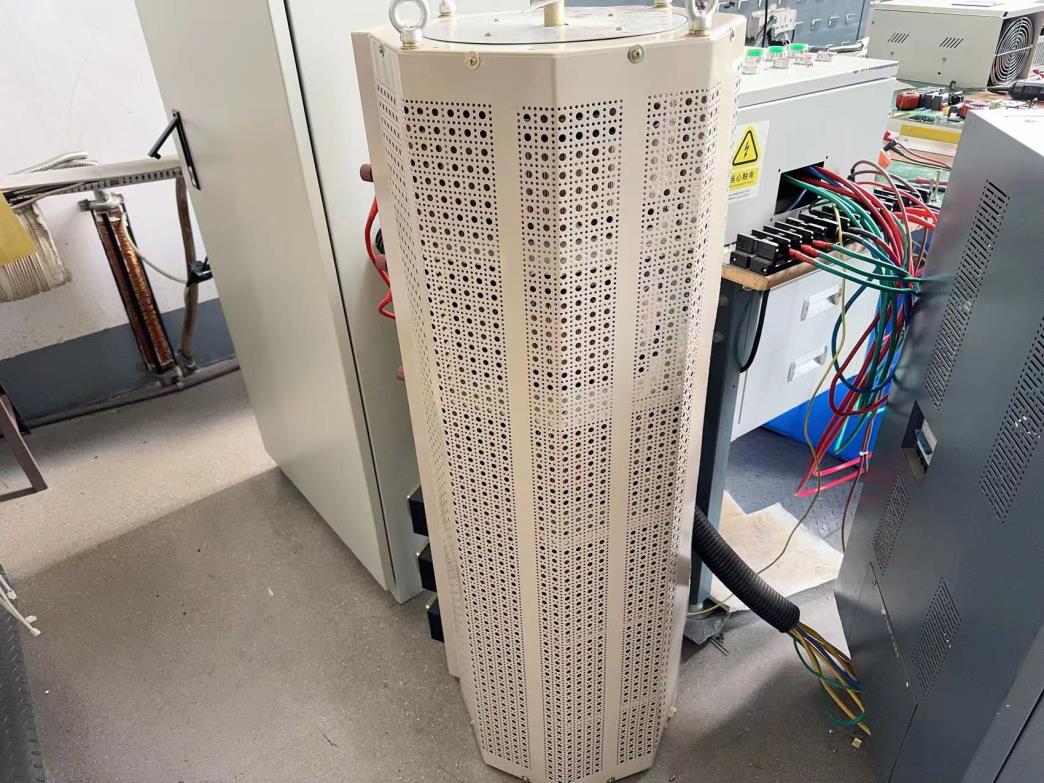
Pre-shipment testing: JONSON states 100% pre-shipment test coverage and product inspection by SGS for exported units.
Where These Ratings Fit in European Smart Manufacturing Projects
The published applications for these units map onto several European project types, and the electrical data shows which model suits which one.
Plastics and rubber. Injection moulding machines, extruders, granulators and drawing machines need barrel or tooling heat with tight temperature control. The 5 kW / 8 kW JS1300-005/008 suits smaller heating zones and lower power sections; the 10 kW / 15 kW JS1300-10/15 suits larger zones, with the 20%–100% regulation range covering pre-heat and holding without switching the load on and off.
Chemical and process heating. The published operating conditions include medium and high temperature in weakly corrosive environments. Where a process needs steam rather than direct heat, the JS-1600 induction steam generator is rated at 30 kW / 40 kW / 50 kW at 380 V with 380 V ± 20% adaptation and is described as a clean replacement for coal or gas boilers with zero nitrogen oxide emissions.
Food processing and hot air drying. Food processing is listed among the operating conditions that involve high humidity and a small amount of steam mist — an environment where enclosure and humidity ratings matter as much as the power rating. The JS-1600-8/12/15 hot air generator covers drying applications with an outlet temperature range of 80–130 °C and wind pressure of 800–1000 PA.
Pipeline and heat-tracing work. Crude oil pipeline heating is listed among the applicable industries, where the objective is preventing solidification rather than reaching process temperature. In these installations the wide adaptation range matters more than peak power.
Metal heat treatment and building heating. Both are listed applications, along with textile printing and dyeing, aquaculture heating and medicinal herb drying. Constant-temperature heating for schools, hospitals, hotels, farms and flower greenhouses is also listed for the instant induction water heater range (3.5–8 kW at 220 V, adaptation 220 V ± 20%).
Reference base to ask about. JONSON’s published case data describes 100 units installed across industrial applications in Indonesia, China, Vietnam, Russia and India, used by induction heater OEM and ODM clients, with thermal efficiency stated as stable at 95%–98%, energy savings of 30%–70% compared with traditional heating equipment, service life extended by three times, and zero major failures over more than ten years. Buyers who specifically need European installation references should request them directly, because the published reference set is concentrated in Asia and Russia.
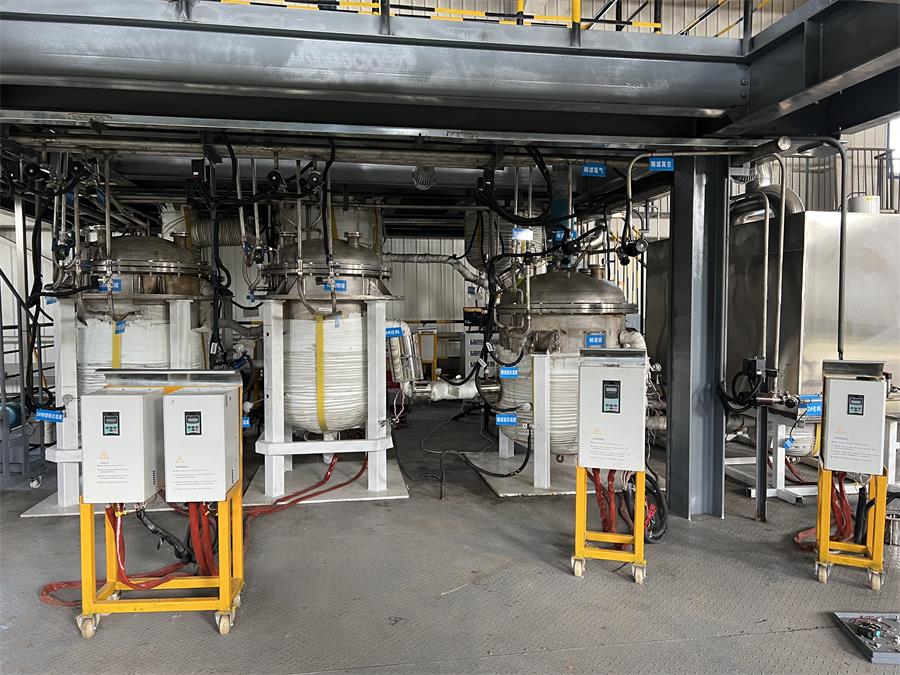
Induction heating equipment in chemical and process applications — one of the listed operating environments for JONSON units.
Model Comparison: Compliance and Electrical Specifications at a Glance
The table below reproduces only values published in JONSON product data. “Not listed” means the value does not appear in the data reviewed for this guide.
| Model | Stated certification | Rated power | Rated voltage | Voltage adaptation | Power regulation | Structure |
|---|---|---|---|---|---|---|
| JS1300-005/008 | CE, ISO | 5 kW / 8 kW | 380 V | 380 V ± 20% | 20–100% | Wall-mounted |
| JS1300-10/15 | CE, ISO, RoHS | 10 kW / 15 kW | 380 V | 300 V–400 V | 20%–100% | Wall-mounted |
| JS1000-20 | CE, ISO | 20 kW | 380 V | 300 V–400 V | Not listed | Wall-mounted |
| JS1000-100 | CE, ISO | 100 kW (three-phase) | 380 V | Constant power output at 300–400 V | 20%–100% stepless | Wall-mounted |
| JS-1600-8/12/15 | CE, ISO, RoHS | 8 kW / 12 kW / 15 kW | 380 V | 300 V–400 V | 20%–100% | Vertical |
FAQ
1. Which certifications are stated for JONSON induction heaters sold into Europe?
Certification statements are attached to individual models. The JS1300-005/008 (5 kW / 8 kW, 380 V) states CE and ISO. The JS1300-10/15 (10 kW / 15 kW, 380 V) states CE, ISO and RoHS. The JS1000-20, JS1000-30 and JS1000-100 state CE and ISO. The JS-1600-8/12/15 hot air generator states CE, ISO and RoHS. Because the statement is model-specific, the model number on the quotation should be matched against the certification statement before the order is placed.
2. Can a 380 V JONSON induction heater handle the voltage variation found on European industrial sites?
Adaptation ranges are published per model: 380 V ± 20% for the JS1300-005/008, 300 V–400 V for the JS1300-10/15 and the JS-1600-8/12/15 hot air generator, and constant power output at 300–400 V for the JS1000-100. Constant power output means the unit is designed to hold its rated output inside that window instead of derating with the supply. The verification method is to measure the site’s real voltage range over a full production cycle and compare the low end of it with the model’s stated range.
3. What determines the cost of an EU-ready induction heater project?
Cost follows the electrical and documentation scope of the exact configuration rather than a single figure: the power class (5 kW / 8 kW versus 10 kW / 15 kW, or the 20–100 kW range), the voltage adaptation range required by the site, the certification and documentation set attached to that model, the heating medium involved (hot air, steam, water or thermal oil) and the associated coil requirement, plus any OEM or ODM customization. JONSON lists customizable product specifications, custom sample fabrication, graphic and panel customization, parameter adjustment and private logo customization as the customization options that affect the delivered configuration. Minimum order quantity is 1 unit, which allows a buyer to validate one unit before releasing a larger project volume.
4. Can buyers request a sample or pilot unit before a full EU project order?
Yes. The minimum order quantity is listed as 1 unit, and custom sample fabrication is listed as a customization option, so a single unit can be ordered for validation. Lead time is listed as 7–14 days, and wall-mounted heaters ship in carton or wood frame packaging.
5. What is the lead time, and what documentation accompanies the shipment?
Lead time is listed as 7–14 days, with monthly capacity of 10,000 units. Quality control is stated as 100% pre-shipment testing plus product inspection by SGS. Model-specific customs codes are published for some units — HS 8514400090 for the JS1300-10/15 and HS 8516109000 for the JS-1600-8/12/15 — and packaging is listed as carton or wood frame for wall-mounted heaters and a wooden box for the hot air generator. To start with a specific model, request the current specification sheet, the certification statement for that model, and a sample quotation directly from JONSON at www.jonson-ih.com or jx@fsjxrn.com.cn.
Conclusion
EU compliance for an induction heater comes down to three specific values resolved against a model number: the certification statement attached to the exact model, the voltage adaptation range measured against the site supply, and the power regulation range measured against the process profile. For JONSON equipment those values are published per model — CE and ISO on the JS1300-005/008, and CE, ISO and RoHS on the JS1300-10/15, with adaptation ranges of 380 V ± 20% and 300 V–400 V respectively and 20%–100% regulation on both.
The verification work is not complicated, but it has to be done at the model level. A quotation that names a brand without a model cannot be checked against a certification statement, a site voltage measurement or a purchase order. A quotation that names the model, the rated power and the adaptation range can be checked in a single review — and can be reproduced on the next order, which is what turns a compliant first delivery into a reliable supply relationship.
Next step: request the current specification sheet and certification statement for the exact model in your project — JS1300-005/008, JS1300-10/15, or any unit in the 5–100 kW range — together with a sample unit quotation. Minimum order quantity is 1 unit and lead time is 7–14 days.
JONSON (Guangdong Jiangxin Electronic Technology Co., Ltd.)
Website: www.jonson-ih.com
Email: jx@fsjxrn.com.cn | Tel / WhatsApp: +86 18664277928
Address: Building 3, Tongde Intelligent Manufacturing Park, Ronggui Street, Shunde District, Foshan City, Guangdong Province, China
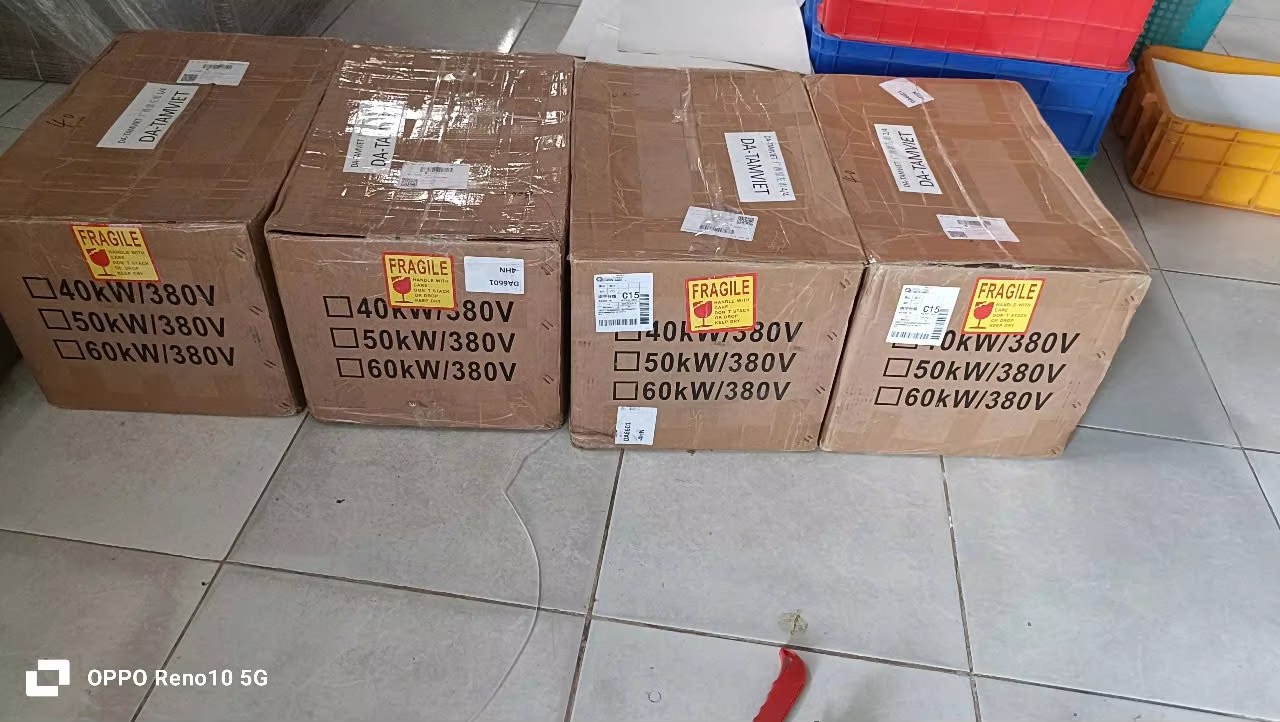
Units prepared for shipment — carton or wood frame packaging for wall-mounted heaters, wooden box for the hot air generator.
Have Questions or Need More Details?
Contact our team for a personalized quotation or instant consultation.
Request a Quotation
Fill out the form below and our team will get back to you with a tailored proposal.
WhatsApp Direct Chat
Prefer to chat in real-time? Message us on WhatsApp for instant assistance & quick answers.
- Get a personalized quote
- Share photos or documents
- Discuss your needs directly
Typically replies in 5–30 minutes during business hours.