
Top-Rated Induction Heaters for 2026: A Practical Shortlist for Manufacturers
Top-Rated Induction Heaters for 2026: A Practical Shortlist for Manufacturers
Short answer: For manufacturers evaluating induction heating equipment in 2026, the most practical way to build a shortlist is to sort JONSON units by power band and site supply: 2.5 kW–3 kW single-phase models for small plastic machinery, 5 kW–15 kW wall-mounted JS1300 units for compact machine-barrel and light process heat, 20 kW–30 kW JS1000 units for mid-size production lines, and 40 kW–100 kW models for pipeline, boiler and heavy process-heat duty. Every unit referenced below is wall-mounted, and the catalog entries list 304 stainless steel inner liners with thickened aluminium alloy outer casings.
This article ranks seven JONSON induction heaters against six published selection criteria, then adds the application-specific units that fall outside a power-based ranking. JONSON is the brand of Guangdong Jiangxin Electronic Technology Co., Ltd., an induction heating equipment manufacturer established in 2011 in Foshan, Guangdong, China, operating a 3,000 m² facility with 60+ employees, 30+ engineers and an annual output cited at 120,000 units, with roughly 40% of output exported.
Why Induction Heater Selection Goes Wrong More Often Than Buyers Expect
Most induction heating mismatches in manufacturing come from four decisions, not from the equipment itself.
- Power band mismatch. A 5 kW unit cannot hold a large barrel at temperature; a 100 kW unit on a small load wastes installed capacity. Power class is the first filter, not a price filter.
- Supply and voltage-window mismatch. Single-phase 220 V models and three-phase 380 V models are not interchangeable. Several JONSON units tolerate a wide window — for example the 2.5 kW model accepts 100 V–260 V with constant power output between 210 V and 260 V — but the wiring and protection design must still match.
- Coil mismatch. The inductor determines heat transfer. JONSON catalog data shows coil parameters are power-specific, from a 4 mm² line, 23 m long, 100–150 µH on the 2.5 kW unit, up to a 95 mm² line, 40 m long, 80–100 µH on the 100 kW unit.
- Documentation mismatch. A CE or CCC certificate covers the models listed on that certificate. Buying a model outside the listed scope means the certificate does not automatically apply to your delivery.
Third-party research puts induction heating system energy efficiency at up to 92%, with an average cycle-time reduction of about 30% versus traditional gas or resistance heating. That benchmark is achievable only when power, coil geometry and duty cycle are matched — which is why a specification-level shortlist matters more than a brand-level one.
The 2026 Market Context for Industrial Induction Heating
Three market data points frame the buying decision for 2026.
- The global induction heating system market was valued at USD 2.39 billion in 2024 and is projected to reach USD 4.5 billion by 2035 (WiseGuyReports).
- As of mid-2024, more than 550,000 induction heating systems were deployed globally, with Asia-Pacific accounting for about 40% of the installed base — approximately 220,000 units (Global Market Insights).
- The 10 kW–100 kW power segment dominates the induction heating market because it covers automotive part hardening, forging and brazing duty (MarketsandMarkets).
Two additional signals matter for manufacturers planning an electrification project. The industrial boiler and steam generator market was estimated at USD 54.79 billion in 2024, with a measurable shift toward electrification via induction technology driven by decarbonisation goals (Market Research Future). And the supplier landscape remains fragmented: Fuji Electric held a leading market share of over 9.5% in the induction heating system market in 2025 (Global Market Insights), meaning no single vendor controls the majority of global supply and specification-level evaluation is a necessary step.
Reading market numbers carefully: published induction heating market estimates vary widely by scope. One research house sized the broad induction heating system market in the billions, while another sized a narrower induction heating definition in the hundreds of millions. Treat any single figure as directional and check the definition behind it before using it in a procurement case.
On the standards side, industrial induction heating equipment is generally assessed against IEC 60519-1 (general requirements for electroheating installations) and IEC 60519-3 (particular requirements for induction heating and melting). These are the reference points buyers should ask suppliers to address during technical review.
How This Shortlist Was Ranked (Selection Criteria)
The ranking below is an editorial ordering based on six criteria drawn from published catalog specifications. It is not a laboratory test result, and it does not replace a load trial on your own workpiece.
- Process power and duty. Rated power in kW and the adjustment range, which on most JONSON units runs 20%–100% stepless (25%–100% on the 70 kW/80 kW family).
- Site supply compatibility. Single-phase 220 V versus three-phase 380 V, plus the voltage adaptation window.
- Heat conversion efficiency and effective power as stated in the catalog — ranging from ≥95% to ≥99% depending on model.
- Cooling and mounting. Air-cooled or water-cooled options on the JS1000 series; wall-mounted structure across the line.
- Control and automation interface. DSP-based high-speed automatic phase-locking tracking control, programmable digital display, 0–5 V PID power adjustment (RS-485 also supported on the 100 kW unit), and load temperature detection up to 1,000 °C at ±1 °C accuracy.
- Physical integration and documentation. Enclosure dimensions, unit weight, and whether CE/ISO or CCC coverage is stated for the model.
The Shortlist: Seven JONSON Induction Heaters Ranked for 2026
Ranking is weighted toward mainstream manufacturing deployment — the profiles most buyers actually run — rather than raw power alone. Higher ranks indicate broader fit across heavy process-heat requirements.
Rank 1 — JS1000-100: 100 kW Industrial Induction Heater
Ranked first for high-capacity process heat. The JS1000-100 is a three-phase 100 kW wall-mounted induction heating machine rated at 140–150 A input and 200–220 A output on AC 380 V / 50–60 Hz, with constant power output maintained between 300 V and 400 V. It uses a full-bridge series resonance main circuit, air-cooled or water-cooled heat dissipation, a 635 mm × 445 mm × 315 mm enclosure at 35 kg, a 95 mm² coil line of 40 m at 80–100 µH, and supports both 0–5 V PID and RS-485 power adjustment. Catalog entry lists CE and ISO.
Best fit: large pipeline heating, boiler and heat-transfer-oil duty, high-throughput metal heat treatment, and multi-station plant heating where one cabinet serves several loads.
Watch-outs: it requires a three-phase supply with 300–400 V headroom, is the heaviest unit on this list, and needs a coil built to the specified 40 m length to deliver rated performance.
Rank 2 — 40 kW / 50 kW / 60 kW Induction Heater
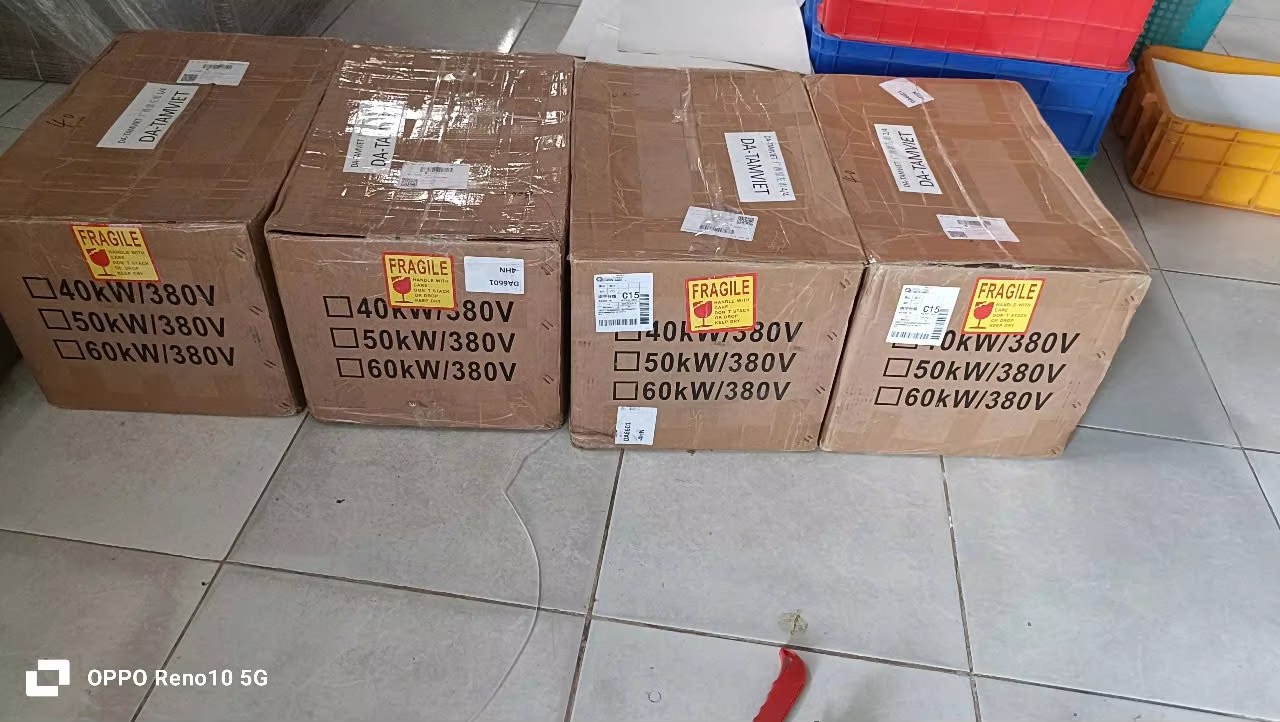
Ranked second for the widest mid-to-high power coverage. This family runs on 380 V / 50 Hz with a ±20% voltage adaptation range, 20%–100% power regulation, heat conversion efficiency stated at ≥98%, and a 5–40 kHz operating frequency. It is built for pipeline heating and is explicitly positioned for energy-saving retrofits of plastic machinery — injection moulding machines, wire drawing machines, granulators and extruders — as well as food machinery, crude oil transportation, boilers and heat-transfer-oil systems. Materials follow the standard JONSON build: copper core heating coil, thickened aluminium alloy and cold-rolled steel plate casing, 304 stainless steel inner liner.
Best fit: plant-wide barrel and pipeline retrofit programmes where several machines share one power class.
Watch-outs: the catalog family is listed by power rather than by a single model code, so model identification should be confirmed in the quotation stage.
Rank 3 — JS1000-30: 30 kW High Frequency Induction Heating Machine
Ranked third as the mid-power workhorse. The JS1000-30 is a three-phase 380 V, 30 kW wall-mounted unit with air-cooled or water-cooled heat dissipation, a 450 mm × 245 mm × 261 mm enclosure, and catalog-listed CE and ISO coverage. Ambient tolerance is stated as −20 °C to 50 °C with humidity up to 95%.
Best fit: medium production lines, plastics and rubber processing, chemical reaction heating, textile printing and dyeing, and metal heat treatment.
Watch-outs: 30 kW will not hold a very large thermal mass; if your duty cycle is continuous at full load, step up to the 40–60 kW family.
Rank 4 — JS1000-20: 20 kW / 380 V Induction Heater
Ranked fourth for small-to-mid industrial duty. Specifications: single-unit 20 kW on 380 V, voltage adaptation 300 V–400 V, ambient −20 °C to 50 °C, humidity ≤95%, air-cooled or water-cooled, carton transport packaging, enclosure 250 mm × 390 mm × 240 mm, catalog-listed CE and ISO.
Best fit: single-machine retrofits, small process-heat loops and workshops with limited wall space.
Watch-outs: confirm the coil geometry fits your barrel or pipe diameter before ordering; a 20 kW unit on a thin, poorly coupled load will underperform its rating.
Rank 5 — JS1300-10/15: 10 kW / 15 kW / 380 V Induction Heater
Ranked fifth as the lightest true industrial option. The JS1300-10/15 delivers 10 kW or 15 kW on 380 V with 300 V–400 V adaptation, 20%–100% power adjustment, ambient −20 °C to 50 °C, humidity ≤95%, enclosure 356 mm × 178 mm × 178 mm, net weight 7.3 kg, and carton or wood-frame packaging. It is the only ranked unit whose catalog entry also lists RoHS alongside CE and ISO.
Best fit: compact machines, laboratory-scale process heating, and multi-point installations where several small heaters are distributed along a line.
Watch-outs: limited thermal mass; it suits small and medium loads rather than large pipeline or boiler duty.
Rank 6 — JS1300-005/008: 5 kW / 8 kW / 380 V Induction Heater
Ranked sixth for low-power three-phase duty. The JS1300-005/008 runs at 5 kW or 8 kW on 380 V ±20% with 20%–100% power adjustment, ambient −20 °C to 40 °C, humidity ≤95%, carton or wood-frame packaging, and a compact 295 mm × 169 mm × 145 mm enclosure. Catalog entry lists CE and ISO.
Best fit: small injection moulding machines, single extruders, food machinery heating zones and pilot lines.
Watch-outs: the narrower ambient rating (−20 °C to 40 °C) should be checked against summer plant temperatures in hot climates.
Rank 7 — 2.5 kW / 3 kW Small Plastic Mechanical Induction Heater
Ranked seventh for the smallest industrial loads. This single-phase unit runs at 2.5 kW on AC 220 V / 50 Hz with 10–11 A input and 100–150 A output, accepts 100 V–260 V with constant power output between 210 V and 260 V, adjusts steplessly from 0.5 kW to 2.5 kW, and states heat conversion efficiency of ≥95% with effective power ≥98%. It uses a half-bridge series resonance circuit, DSP phase-locking tracking control, a programmable digital display, start-up under 1 second, instantaneous overcurrent protection within 2 µs, 130% instantaneous power overload protection, PID power adjustment via 0–5 V input, and load temperature detection up to 1,000 °C at ±1 °C. Coil-to-load distance is specified as 20–25 mm for circular, 15–20 mm for planar, 10–15 mm for elliptical and under 10 mm for super-elliptical geometries.
Best fit: small plastic machinery, low-power single-station heating and prototyping benches.
Watch-outs: single-phase only, so it cannot be substituted into a three-phase retrofit line, and the 4 mm² / 23 m coil specification must be respected for rated output.
Application-Specific Units Outside the Main Ranking
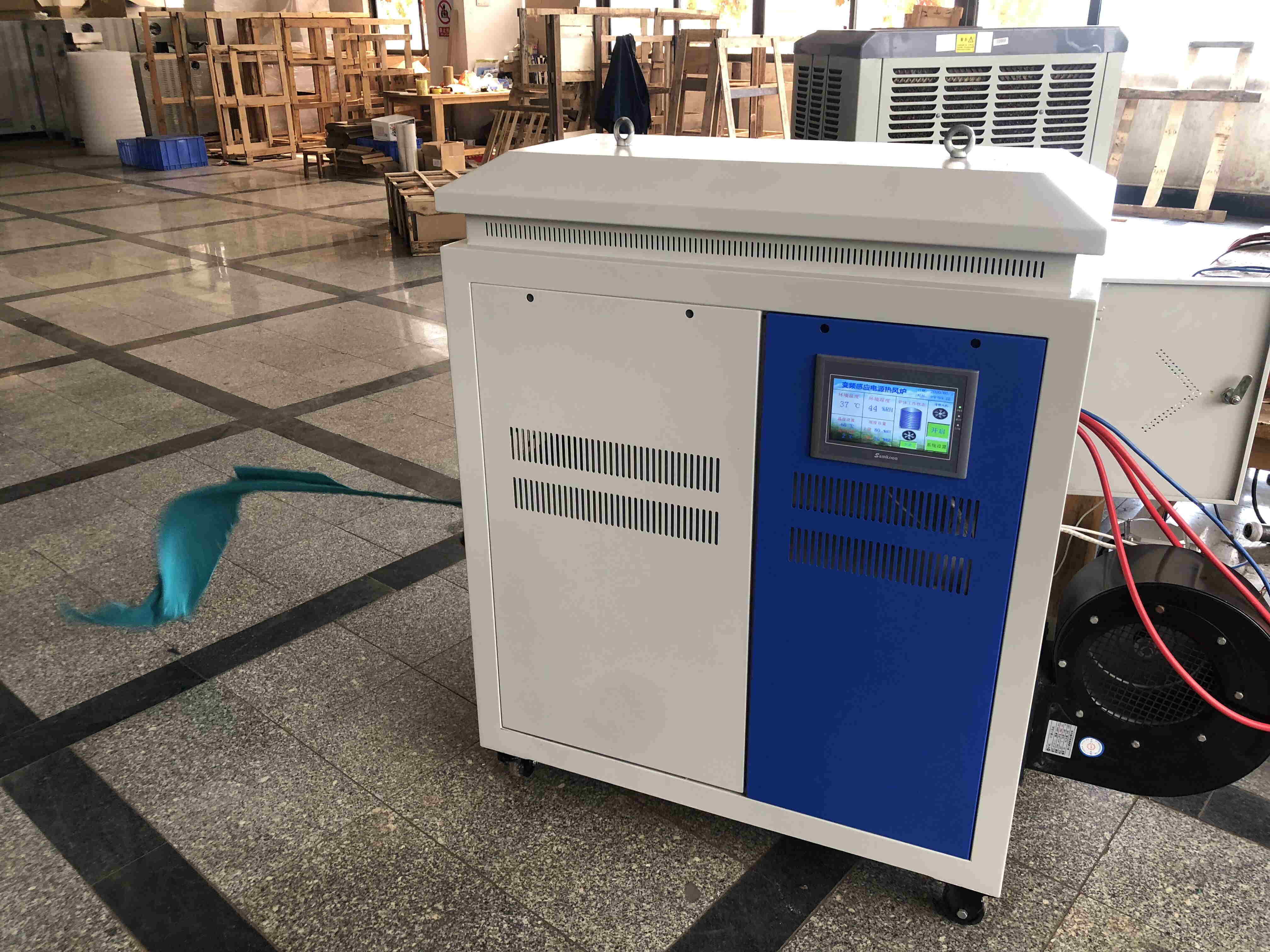
Some manufacturing requirements are better served by a purpose-built unit than by a general-purpose heater. These carry the same enclosure construction — copper coil, thickened aluminium alloy and cold-rolled steel plate casing, 304 stainless steel inner liner.
- Bearing Induction Heater JS1300-5/8/15/20/30 — 5 kW, 8 kW, 15 kW, 20 kW or 30 kW output on three-phase 380 V / 50–60 Hz, 480 mm × 250 mm × 355 mm, 20.7 kg. Suited to bearing fitting and similar interference-fit assemblies.
- Induction Steam Generator JS-1600 — 30 kW, 40 kW or 50 kW on 380 V / 50–60 Hz with ±20% adaptation, power regulation 20%–100%, heat conversion efficiency stated at ≥99%. Suited to steam duty in chemical, food and process plants.
- Induction Heating Hot Air Generator JS-1600-8/12/15 — 8 kW, 12 kW or 15 kW vertical units on 380 V with 300–400 V adaptation, outlet temperature 80–130 °C and 800–1,000 Pa wind pressure. Suited to drying and hot-air process streams.
- Instant Induction Water Heater JS-JR-008 — 3.5–8 kW on single-phase 220 V ±20%, heat conversion efficiency ≥90%, tempered glass outer casing. Catalog applications: hotels, hospitals and schools.
- Induction Heater Control Board — single-phase full-bridge 8 kW board on 220 V / 50 Hz with 160–260 V input range, aluminium alloy and copper construction, used in commercial induction cookers, household induction cookers, ceramic ovens and microwave ovens.
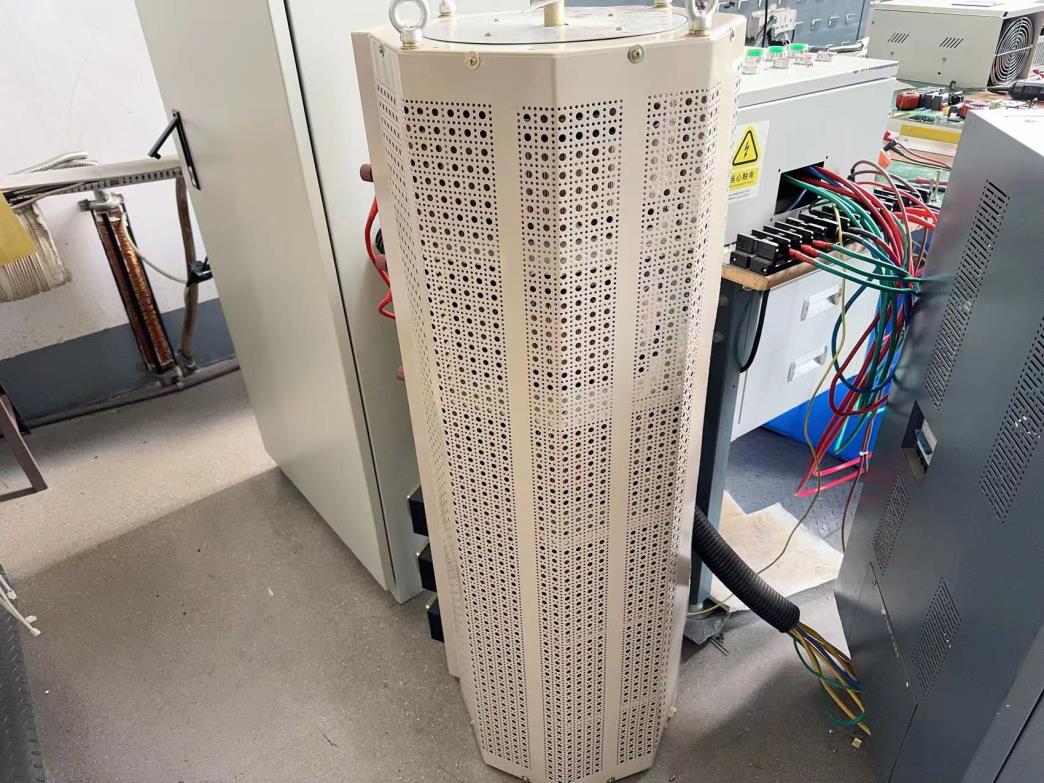
- Induction Heating Coil — custom electromagnetic induction coils rated 1 kW to 100 kW, 220 V or 380 V, 50/60 Hz, 5–40 kHz, copper construction. Coil engineering is often the difference between a rated and an under-performing system.
- 110 V / 240 V / 660 V customised heaters — configurable across 500 W–10 kW, 5–60 kW, 5–200 kW and 30–200 kW ranges with ±20% voltage adaptation, for sites outside standard 380 V supply.
Step-by-Step: Matching a JONSON Unit to Your Line
- Define the load, not the equipment. Record mass, target temperature, required ramp time and cycle frequency. The control platform supports load temperature detection up to 1,000 °C at ±1 °C, which sets the practical ceiling for most catalog units.
- Convert the load into a kW requirement. Size for continuous duty, then apply a realistic margin. Most JONSON units allow stepless throttling between 20% and 100% of rated power, so a modest oversize rarely costs efficiency — a systematic undersize always does.
- Confirm the site supply. Single-phase 220 V models accept 100 V–260 V with constant power above 210 V. Three-phase models commonly accept 380 V ±20% or a 300 V–400 V window. Check the plant's actual voltage drop under load before committing.
- Engineer the coil around the workpiece. Coil sizing is power-specific: 4 mm² / 23 m / 100–150 µH at 2.5 kW; 6 mm² / 20 m / 80–100 µH at 3.5 kW; 10 mm² / 15 m / 60–75 µH at 5 kW; 10 mm² / 13 m / 60–65 µH at 6 kW; 95 mm² / 40 m / 80–100 µH at 100 kW. Respect the coil-to-load coupling distances if you want the stated efficiency.
- Decide cooling, mounting and enclosure fit. The JS1000 series supports air-cooled or water-cooled dissipation; all ranked units are wall-mounted, with footprints from 295 mm × 169 mm × 145 mm up to 635 mm × 445 mm × 315 mm.
- Close the loop with documentation and delivery terms. Ask for the certificate whose model scope matches your order, and confirm quality-control and delivery terms in writing. JONSON states 100% pre-shipment testing with product inspection by SGS, a standard production lead time of 7–14 days, monthly capacity of 10,000 units and a minimum order quantity of 1 unit.
Where These Units Fit: Use Cases
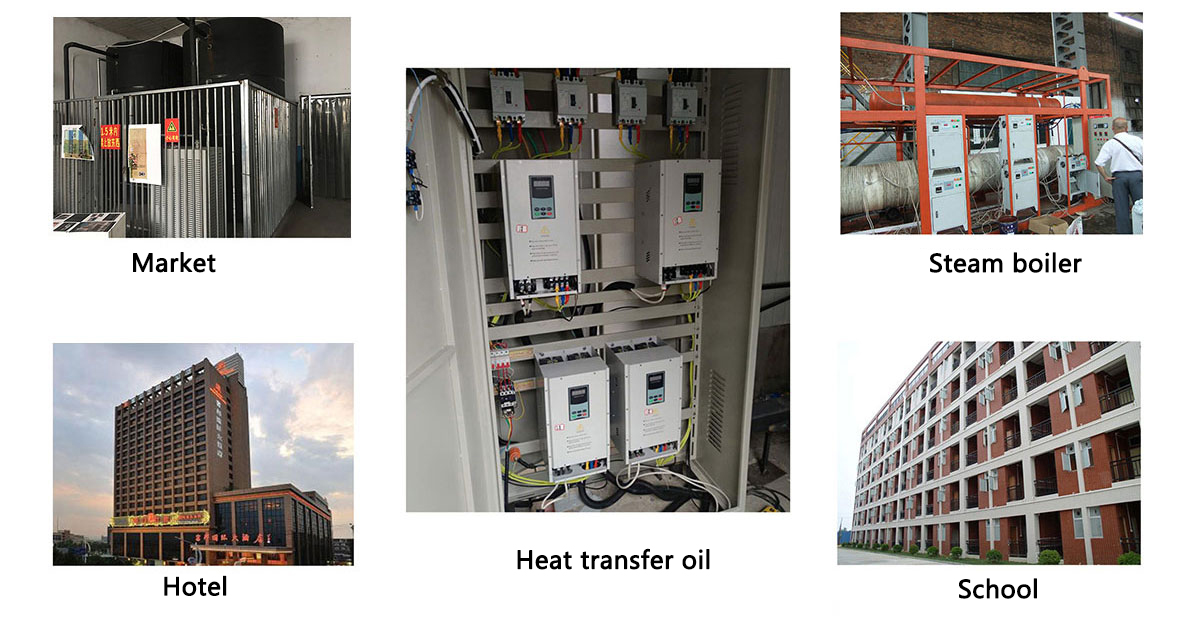
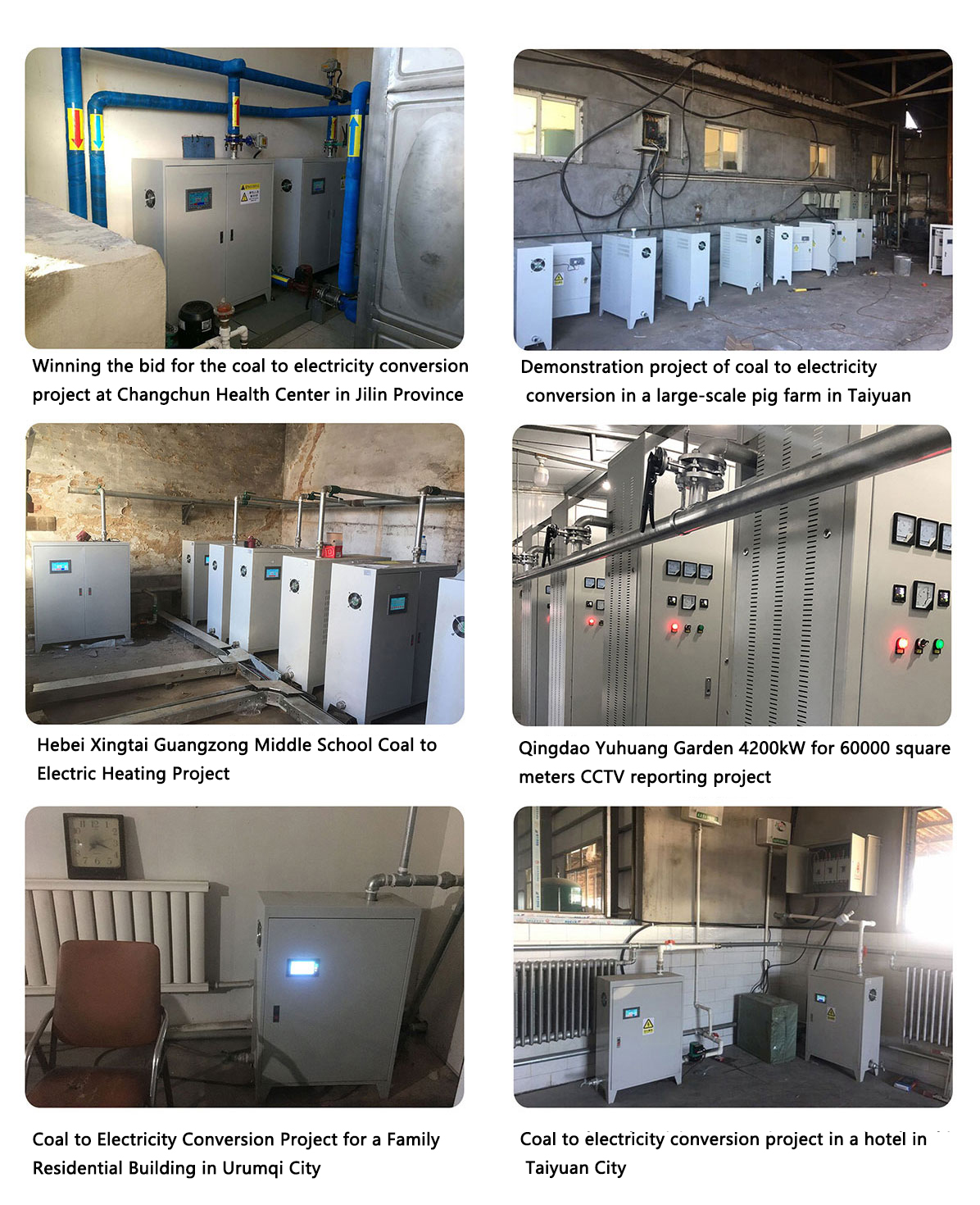
JONSON catalog entries list a common application envelope across the range: plastics and rubber, food processing, chemical reactions, crude oil pipeline heating, textile printing and dyeing, aquaculture heating, metal heat treatment, building heating and medicinal herb drying. The 40–60 kW family is positioned specifically for pipeline heating and injection moulding, wire drawing, granulating and extrusion retrofits, while the 70 kW/80 kW unit is aimed at plastic machinery, food machinery, aluminium-plastic machinery, roller equipment, boilers and oil and natural gas transmission.
Field evidence from 100 deployed units across Indonesia, China, Vietnam, Russia and India, serving industrial induction heater OEM and ODM clients, reports overall thermal efficiency of 95%–98%, comprehensive energy savings of 30%–70%, lifespan extended by three times, and zero major failures. Those results come from the manufacturer's own project reporting and should be validated against your own baseline energy data — savings depend heavily on the equipment being replaced.
Specification Comparison Table
| Rank / unit | Rated power | Supply | Catalog heat conversion efficiency | Certification in catalog | Mounting / size | Best-fit need |
|---|---|---|---|---|---|---|
| 1 — JS1000-100 | 100 kW | 3-phase AC 380 V, 50–60 Hz, 300–400 V window | ≥95% (effective power ≥98%) | CE, ISO | Wall-mounted, 635 × 445 × 315 mm, 35 kg | Large pipeline, boiler, heavy process heat |
| 2 — 40/50/60 kW family | 40 / 50 / 60 kW | 3-phase 380 V / 50 Hz, ±20% | ≥98% | Not stated in catalog entry | Wall-mounted | Plant-wide barrel and pipeline retrofits |
| 3 — JS1000-30 | 30 kW | 3-phase 380 V | Catalog lists efficiency class only | CE, ISO | Wall-mounted, 450 × 245 × 261 mm | Mid-size production lines |
| 4 — JS1000-20 | 20 kW | 3-phase 380 V, 300–400 V window | Catalog lists efficiency class only | CE, ISO | Wall-mounted, 250 × 390 × 240 mm | Single-machine retrofits |
| 5 — JS1300-10/15 | 10 / 15 kW | 3-phase 380 V, 300–400 V window | Catalog lists efficiency class only | CE, ISO, RoHS | Wall-mounted, 356 × 178 × 178 mm, 7.3 kg | Compact machines, distributed heating points |
| 6 — JS1300-005/008 | 5 / 8 kW | 3-phase 380 V ±20% | Catalog lists efficiency class only | CE, ISO | Wall-mounted, 295 × 169 × 145 mm | Small machines, pilot lines |
| 7 — 2.5/3 kW plastic mechanical | 2.5 kW (3 kW class) | Single-phase AC 220 V / 50 Hz, 100–260 V window | ≥95% (effective power ≥98%) | Not stated in catalog entry | Wall-mounted, single-station | Small plastic machinery, lab benches |
| Specialist — Steam Generator JS-1600 | 30 / 40 / 50 kW | 3-phase 380 V / 50–60 Hz, ±20% | ≥99% | Not stated in catalog entry | Free-standing steam unit | Chemical, food and process steam |
| Specialist — Hot Air Generator JS-1600-8/12/15 | 8 / 12 / 15 kW | 3-phase 380 V, 300–400 V window | Catalog lists efficiency class only | CE, ISO, RoHS | Vertical type | Drying, hot-air process streams |
Compliance Snapshot: What the Certificates Actually Cover
JONSON documentation as published by Guangdong Jiangxin Electronic Technology Co., Ltd. includes three certificate families. Scope matters more than the logo on the datasheet.
- ISO 9001:2015 quality management system certificate No. 02826Q00032R001, issued 6 January 2026 and valid to 7 January 2029 by Beijing Zhong An Zhi Huan Certification Center Co., Ltd., against GB/T 19001—2016 / ISO 9001:2015.
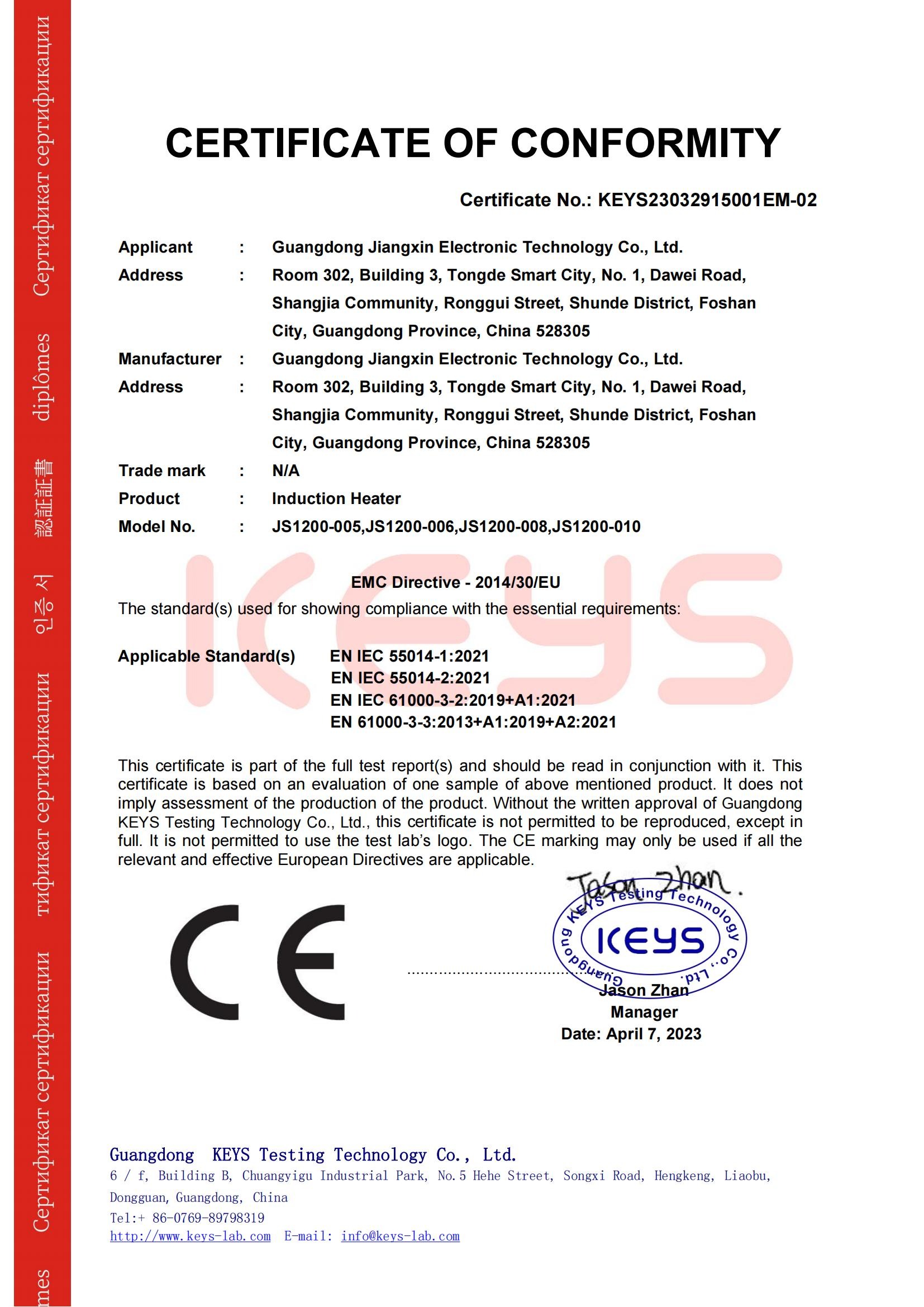
- CE Certificate of Conformity No. KEYS23032915001EM-02, issued 7 April 2023 and valid to 7 April 2028 by Guangdong KEYS Testing Technology Co., Ltd., covering models JS1200-005, JS1200-006, JS1200-008 and JS1200-010 against EN IEC 55014-1:2021, EN IEC 55014-2:2021, EN IEC 61000-3-2:2019+A1:2021 and EN 61000-3-3:2013+A1:2019+A2:2021.
- CCC certificates for the China mainland market: No. 2017010706999985 covering JS3000-006 6.1 kW, JS3000-008 8 kW and JS3000-010 10 kW at 220 V~50 Hz IPX1, and No. 2017010706002104 covering JS3000-015 15 kW through JS3000-060 60 kW at 380 V 3N~50 Hz, both issued by CQC and valid to 24 July 2027.
Two practical conclusions follow. First, catalog entries for the JS1000 and JS1300 series list CE and ISO, but the numbered CE certificate covers JS1200-series models — so always ask which document applies to the exact model on your purchase order. Second, for projects referencing international safety requirements, ask how the installation addresses IEC 60519-1 and IEC 60519-3.
Frequently Asked Questions
Are JONSON induction heaters CE and ISO certified?
Guangdong Jiangxin Electronic Technology Co., Ltd. holds ISO 9001:2015 certificate No. 02826Q00032R001, issued 6 January 2026 and valid to 7 January 2029, and CE Certificate of Conformity No. KEYS23032915001EM-02, issued 7 April 2023 and valid to 7 April 2028, covering models JS1200-005, JS1200-006, JS1200-008 and JS1200-010. Catalog entries for the JS1000 and JS1300 series also list CE and ISO, and CCC certificates cover the JS3000 series for the China mainland market. Because certificate scope is model-specific, buyers should confirm in writing that the certificate provided matches the exact model ordered.
Can JONSON customise power, voltage, coil or branding?
Yes. JONSON operates as an OEM and ODM supplier for induction heaters, induction heating machines and induction heating systems, with customisable product specifications, custom sample fabrication, graphic and panel customisation, parameter adjustment and private logo customisation. Voltage customisation is published for 110 V, 240 V and 660 V configurations across 500 W–10 kW, 5–60 kW, 5–200 kW and 30–200 kW ranges, and induction heating coils can be built from 1 kW to 100 kW at 220 V or 380 V with 5–40 kHz operating frequency. The engineering team is cited at 30+ engineers.
What drives the cost and the payback of an induction heating project?
Four variables dominate: power class, cooling method, coil engineering and voltage customisation. Energy economics are the main payback lever. Induction heating systems are reported to reach up to 92% energy efficiency with roughly 30% cycle-time reduction versus gas or resistance heating, and JONSON project reporting states overall thermal efficiency of 95%–98% with comprehensive energy savings of 30%–70%. Actual savings depend on the baseline equipment being replaced and on duty cycle, so the payback figure should be calculated against your own metered consumption rather than a generic percentage. Specific unit prices are quoted per configuration.
Can we validate a unit before committing to a full deployment?
Yes. The minimum order quantity is 1 unit, and custom sample fabrication is offered, which allows a single heater or coil to be tested on a real production line before scaling. Quality control includes 100% pre-shipment testing plus product inspection by SGS. The reference base includes 100 units deployed across Indonesia, China, Vietnam, Russia and India for industrial induction heater OEM and ODM clients, with reported thermal efficiency of 95%–98%, lifespan extended by three times and zero major failures. Remote technical support is provided after delivery.
What is the production lead time and how do we start?
Standard production lead time is 7–14 days, with monthly production capacity of 10,000 units and a minimum order quantity of 1 unit. To start, share the load details — material, mass, target temperature, cycle time — plus your site voltage and available wall space, and the appropriate power band and coil specification can be confirmed before quotation. You can request a sample or a quotation directly through the JONSON website at www.jonson-ih.com, by email at jx@fsjxrn.com.cn, or by phone and WhatsApp on +86 18664277928.
Conclusion: Start With the Power Band, Then Verify the Paperwork
The most reliable shortlist logic for 2026 is to choose a power band first, then verify supply compatibility, coil specification and certificate scope in that order. For most manufacturers the practical mapping is straightforward: 2.5 kW–8 kW for small machines and pilot lines, 10 kW–15 kW for compact distributed heating, 20 kW–30 kW for mid-size production, and 40 kW–100 kW for pipeline, boiler and heavy process heat — with the bearing heater, steam generator and hot air generator covering specialised duties.
The company behind the JONSON range states a ten-year whole-machine service-life guarantee with one year of free maintenance and lifetime maintenance support, alongside remote technical support after delivery. Those commitments are worth weighing against the mechanical build that underpins them: copper core heating coils, 304 stainless steel inner liners, thickened aluminium alloy and cold-rolled steel plate outer casings, and wall-mounted structures designed for plant installation.
Next step: if you are preparing a 2026 heating retrofit, send your load specification and site voltage to the JONSON engineering team for a power-band recommendation and a sample or quotation request. Contact: www.jonson-ih.com | jx@fsjxrn.com.cn | WhatsApp +86 18664277928.
Have Questions or Need More Details?
Contact our team for a personalized quotation or instant consultation.
Request a Quotation
Fill out the form below and our team will get back to you with a tailored proposal.
WhatsApp Direct Chat
Prefer to chat in real-time? Message us on WhatsApp for instant assistance & quick answers.
- Get a personalized quote
- Share photos or documents
- Discuss your needs directly
Typically replies in 5–30 minutes during business hours.