
Bearing Induction Heater vs. Standard Induction Heater: Choosing the Right Solution
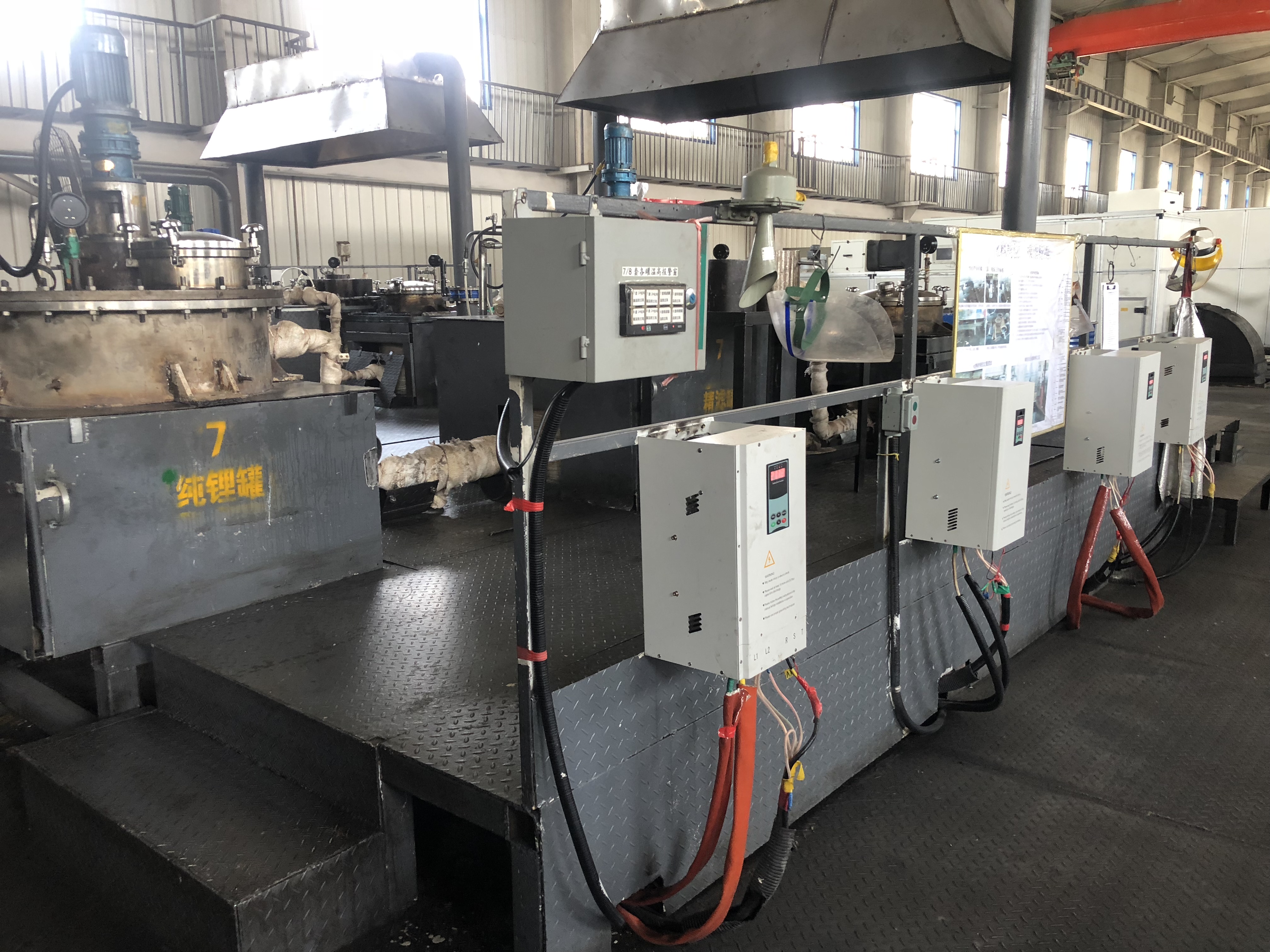
Two induction heaters can look almost identical on a plant floor and still solve fundamentally different problems. A bearing induction heater is a specialized configuration built around surface heating. A standard induction heater is the general-purpose configuration: a power supply, a controller, and a work coil sized to heat a metal part through the coil for hardening, brazing, forging, melting, or similar duties.
For a buyer who has already chosen induction technology and is now deciding between configurations, the useful question is not which type is better. It is which configuration matches the heating target, the site power supply, the control requirement, and the service life the plant expects from the equipment.
Quick answer
- Choose the JONSON bearing induction heater, model series JS1300-5/8/15/20/30, when the process is surface heating in plastics, rubber, food, or chemical reaction applications, the site supplies three-phase 380V, and the required output falls between 5 kW and 30 kW.
- Choose a standard induction heater when the duty is through-heating or localized heating of a metal workpiece and the machine must be configured around part geometry, coil design, and the available power supply.
Problem Definition: Where the Wrong Configuration Actually Costs Money
Selection errors in induction heating rarely show up as a machine that will not start. They show up as a machine that runs against the process: unstable surface temperature, cycle times that creep upward, coils that are replaced earlier than planned, and a maintenance calendar that keeps expanding. Four mismatch patterns account for most of them, and all four are decided long before the purchase order is issued.
- Heating-mode mismatch. Surface heating and through-heating are different duties with different coil geometries and different heat-flow assumptions. A configuration designed to raise the temperature of a surface - a barrel wall, a die face, a plate, a vessel - behaves very differently from one designed to heat a part through its section. Specify the wrong one and the process team will spend the next year compensating with cycle time and scrap.
- Power and voltage mismatch. Output options and site supply must line up. The JONSON bearing induction heater covers 5 kW to 30 kW across the JS1300-5/8/15/20/30 series and operates on three-phase 380V. Industry-wide, the 10 kW to 100 kW segment dominates the induction heating market because that band covers the widest range of industrial duties, which is precisely why the correct answer is a specific number rather than a category.
- Coil and control mismatch. The coil is the interface between machine and work, and coils are application-specific. On JONSON equipment, coil parts are factory-supplied. The control layer - the induction heating controller and control board - determines how tightly surface temperature is held. Precise temperature control is the stated design objective of the JONSON surface-heating configuration, and it is the first characteristic lost when a general-purpose unit is forced into a surface-heating role.
- Lifecycle mismatch. A heater that fits the process on day one but cannot be supported on day one thousand is a liability. Spare coil availability, maintenance terms, and documentation matter more in process heat than in most equipment categories, because downtime is measured in lost batches rather than lost hours.
There is also a compliance and installation dimension that is easy to defer and expensive to retrofit. Industrial induction heating equipment is expected to comply with IEC 60519-1 for general safety requirements and IEC 60519-3 for the particular requirements of induction heating and melting equipment. Physically, the unit requires ample space for heat dissipation and should be kept away from dust, oil, and flammable or explosive materials. Neither requirement can be solved by changing a setting after commissioning.
Industry Background: Where Industrial Induction Heating Stands in 2026
Industrial induction heating is an established equipment category rather than an emerging one. The global induction heating system market was valued at USD 2.39 billion in 2024 and is projected to reach USD 4.5 billion by 2035, according to WiseGuyReports. Independent market analysis counted more than 550,000 induction heating systems deployed worldwide as of mid-2024, with the Asia-Pacific region accounting for roughly 40% of that installed base - approximately 220,000 units.
Induction systems are usually assessed on efficiency rather than raw power. Global Market Insights reports energy efficiencies of up to 92% for induction heating systems, together with an average cycle-time reduction of about 30% compared with traditional gas or resistance-based heating. That operating profile is the main reason electrification projects continue to convert fossil-fired process heat to electric alternatives.
The power band that matters most to buyers is also the most crowded. The 10 kW to 100 kW power segment dominates the induction heating market because it spans automotive part hardening, forging, brazing, and a wide range of process heating duties, according to MarketsandMarkets. The supplier landscape around that segment remains fragmented: Fuji Electric held a leading share of just over 9.5% of the induction heating system market in 2025, meaning no single vendor controls the category and configuration fit often outweighs brand scale in a purchase decision.
Adjacent process-heat markets reinforce the same direction. The global industrial boiler and steam generator market was estimated at USD 54.79 billion in 2024, with a visible shift toward electrification using induction technology to meet decarbonization goals. For buyers planning equipment that will still be running in a decade, that shift changes what a reasonable specification looks like today.
JONSON is the brand of Guangdong Jiangxin Electronic Technology Co., Ltd., an induction heating manufacturer founded in 2011 and based in Foshan, Guangdong, China. The company operates a 3,000 square meter factory with 60+ employees and a 30+ engineer R&D team, and reports annual output of 120,000 units, with export business accounting for about 40% of sales across markets including Europe, the United States, India, and Indonesia.
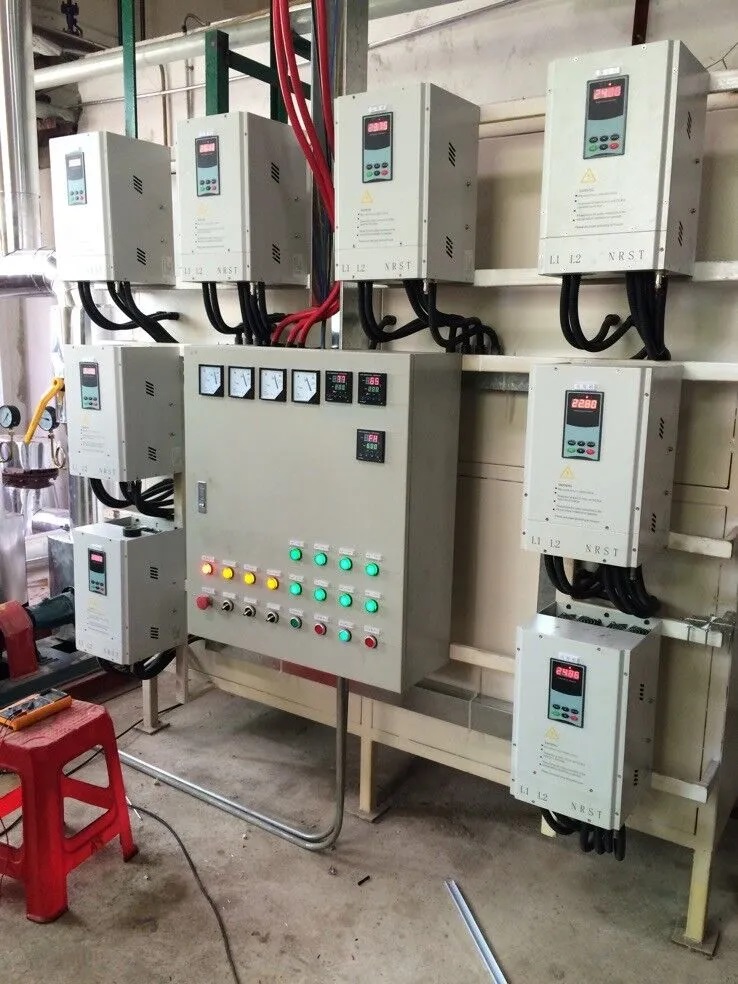
Detailed Solution: The JONSON Bearing Induction Heater JS1300-5/8/15/20/30
Within the JONSON range, the bearing induction heater is the configuration aimed at surface heating. It is supplied as the JS1300-5/8/15/20/30 series, with five output steps on a shared three-phase 380V platform, and it is intended for plastics and rubber processing, food processing, and chemical reaction heating. The published specification is short and specific, which is useful when comparing it against a general-purpose induction heater.
| Specification | JONSON bearing induction heater |
|---|---|
| Model series | JS1300-5 / JS1300-8 / JS1300-15 / JS1300-20 / JS1300-30 |
| Input power supply | Three-phase 380V |
| Output options | 5 kW / 8 kW / 15 kW / 20 kW / 30 kW |
| Heating mode | Surface heating |
| Target applications | Plastics and rubber, food processing, chemical reactions |
| Thermal efficiency (stated) | 95% to 98% |
| Energy savings (stated) | 30% to 70% compared with traditional heating |
| Maintenance profile (stated) | 90% less maintenance required |
| Service life (stated) | Lifespan extended by up to 3 times compared with traditional induction heater machines |
| Support terms | One year of free maintenance and lifelong maintenance |
Two things in that specification drive the comparison that follows. The first is the power ladder. Because the series is offered at 5, 8, 15, 20, and 30 kW on the same three-phase 380V platform, a plant can standardise on one equipment family and scale output as a line is expanded, instead of introducing a different machine architecture every time capacity changes. The second is the application focus. A unit built for plastics and rubber, food, and chemical reaction heating is designed around surface temperature control for those duties, which is a different engineering target from through-heating a metal component.
JONSON also manufactures the equipment families that typically sit around a surface-heating unit on the same site: industrial induction heaters, induction steam generators, induction hot air generators, induction water boilers, induction heating coils, induction heating control boards, and induction welding machines. Consolidated supply is not a technical advantage by itself, but it shortens the specification and spares conversation when a project involves more than one heating duty.
Step-by-Step: How to Choose Between the Two Configurations
The following sequence is written for buyers moving from evaluation into execution. Each step eliminates machines that would otherwise be shortlisted for the wrong reason.
Step 1 - Define the heating target before the equipment
Write down what is being heated and which layer of it matters. If the answer is a barrel, die, plate, mold, or vessel surface in plastics and rubber, food, or chemical reaction equipment, the requirement is surface heating and the JONSON bearing induction heater JS1300 series belongs on the shortlist. If the answer is the cross-section of a metal part, the requirement is through-heating and a standard induction heater configured around the part and coil is the correct starting point.
Step 2 - Fix the power and voltage envelope
Confirm the site supply and the required output. The JONSON JS1300-5/8/15/20/30 series runs on three-phase 380V with outputs from 5 kW to 30 kW. For reference, the 10 kW to 100 kW band dominates the global induction heating market because it covers the widest range of industrial duties, so a requirement that lands inside that band should always be matched against actual site power rather than assumed.
Step 3 - Match the coil to the surface or the part
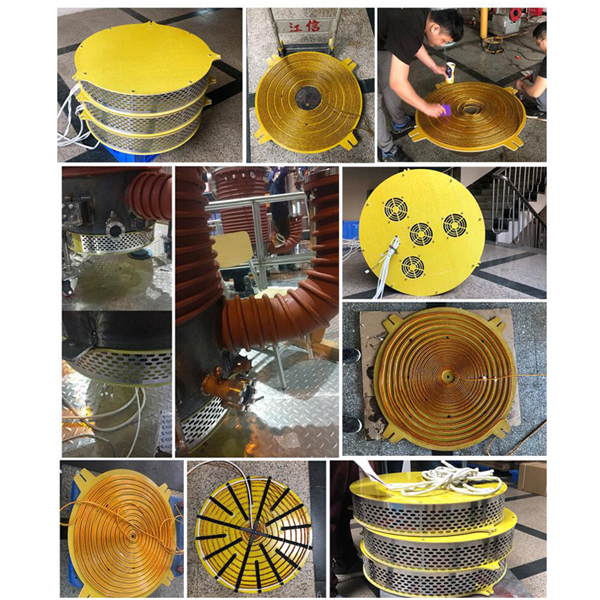
Coil geometry determines how heat enters the work. A surface-heating duty and a through-heating duty need different coils even when the power supply is identical, and coil parts for JONSON equipment are factory-supplied for this reason. Buyers should treat the coil as a specified component of the purchase, not as an accessory.
Step 4 - Specify the control layer
Temperature stability comes from the controller and control board, not from the coil alone. Precise temperature control is a stated characteristic of the JONSON configuration, and it is the feature that determines whether a surface-heating process holds its setpoint across a shift or drifts with load. For process heat, this is where quality is won or lost.
Step 5 - Verify compliance and installation conditions
Industrial induction heating equipment is expected to meet IEC 60519-1 and IEC 60519-3 safety requirements. On site, the unit needs ample space for heat dissipation and must be kept away from dust, oil, and flammable or explosive materials. Confirm both conditions at layout stage; neither can be corrected later without cost.
Step 6 - Agree the maintenance and spares plan
JONSON maintenance procedures require disconnecting power and allowing the circuit to discharge completely before any repair, prohibit alteration of the internal wiring, and require cleaning of dust from the cooling ducts. Coil replacement uses original factory-supplied parts. A written spares and maintenance plan using those rules is the difference between a machine that lasts its stated life and one that is replaced early.
Step 7 - Lock the commercial and acceptance terms
Confirm minimum order quantity, delivery terms, acceptance criteria, and payment structure before the technical decision is finalised. JONSON terms are MOQ of 1 unit, delivery terms of FOB, CIF, or CFR, acceptance criteria of pre-shipment test and product inspection by SGS, and payment terms where some products support 30% T/T in advance with 70% T/T against copy of B/L. Pre-shipment tests and SGS product inspections are performed before shipment.
Use Cases: Which Configuration Suits Which Process
JONSON lists the following application coverage for its induction heating machines: plastics and rubber, food processing, chemical reactions, crude oil pipeline heating, textile printing and dyeing, aquaculture heating, metal heat treatment, building heating, and medicinal herb drying. The bearing induction heater JS1300 series is the configuration specifically intended for the first three of those, which is where the decision between a bearing and a standard induction heater usually becomes concrete.
| Process / industry | Typical heating target | Configuration to evaluate first |
|---|---|---|
| Plastics and rubber processing | Surface temperature of barrels, dies, and molds | JONSON bearing induction heater JS1300 series (5 kW to 30 kW, three-phase 380V) |
| Food processing | Controlled surface and process heating of vessels and equipment | JONSON bearing induction heater JS1300 series |
| Chemical reaction heating | Surface heating of reaction vessels and process circuits | JONSON bearing induction heater JS1300 series |
| Mold manufacturing | Localized heating of mold components | Confirm surface versus through-heating with the manufacturer before selecting |
| Metal heat treatment | Through-heating of metal parts | Standard induction heater with a matched coil |
| Crude oil pipeline heating | Pipeline surface heating | Induction heating equipment sized to pipeline length and site power |
| Textile printing and dyeing, aquaculture, building heating, medicinal herb drying | Process heat, water heating, or hot air | Evaluate the dedicated JONSON family (steam generator, hot air generator, or water boiler) against the duty |
Application coverage as listed by JONSON; final configuration should be confirmed against the specific process conditions of the project.
Comparison Table: Bearing Induction Heater vs. Standard Induction Heater
| Decision factor | Bearing induction heater (JONSON JS1300-5/8/15/20/30) | Standard induction heater |
|---|---|---|
| Primary heating mode | Surface heating of barrels, dies, plates, molds, and vessel surfaces | Through-heating or localized heating of metal parts, defined by coil design |
| Input power supply | Three-phase 380V | Matched to site supply; voltage and phase verified before order |
| Output range | 5 kW / 8 kW / 15 kW / 20 kW / 30 kW | The 10 kW to 100 kW segment dominates the global induction heating market, reflecting the widest spread of industrial duties |
| Intended applications | Plastics and rubber, food processing, chemical reactions | Defined by the part, the coil, and the process, for example hardening, brazing, or forging |
| Temperature control | Precise temperature control, as stated by JONSON | Determined by controller and power supply selection |
| Thermal performance | 95% to 98% stated thermal efficiency, with 30% to 70% stated energy savings against traditional heating | Induction systems generally reported at energy efficiencies up to 92%, with roughly 30% shorter cycles than gas or resistance heating |
| Maintenance profile | 90% less maintenance required, as stated by JONSON | Depends on duty cycle, cooling conditions, and coil care |
| Safety compliance baseline | IEC 60519-1 and IEC 60519-3 | IEC 60519-1 and IEC 60519-3 |
| Select it when | The duty is surface heating in plastics, rubber, food, or chemical processes; the site runs three-phase 380V; the requirement sits between 5 kW and 30 kW | The duty is heating a metal part through a coil and the machine must be built around part geometry and a wider power band |
Figures in the middle column are JONSON stated comparison data against traditional induction heater machines. The right-hand column reflects published third-party industry data and category-level characteristics rather than any specific competitor product.
Long-Term Ownership: What to Verify Before Standardising on a Supplier
Energy-saving projects are usually approved on a multi-year horizon, so the supplier decision outlives the equipment decision. Four checks matter most when a plant intends to keep buying from the same source.
- Model-family continuity. A series that spans 5 kW to 30 kW on one three-phase 380V platform, as the JONSON JS1300-5/8/15/20/30 does, allows a plant to add capacity without changing maintenance routines, spares lists, or operator training.
- Spares and service terms. JONSON supplies original factory coil parts, provides one year of free maintenance and lifelong maintenance, and requires that repairs follow its documented procedure: disconnect power, allow full circuit discharge, and never alter internal wiring.
- Manufacturing capacity behind the brand. Guangdong Jiangxin Electronic Technology Co., Ltd. was founded in 2011, operates a 3,000 square meter factory with 60+ employees and a 30+ engineer R&D team, and reports annual output of 120,000 units. Roughly 40% of sales are exported to Europe, the United States, India, Indonesia, and other markets.
- Commercial repeatability. A supplier that accepts MOQ of 1 unit, quotes FOB, CIF, or CFR, and defines acceptance as pre-shipment test plus SGS product inspection allows a first order to be validated at low risk before a framework agreement is signed.
For buyers comparing a bearing induction heater against a standard induction heater, this is the part of the decision that a datasheet cannot answer. Configuration determines whether the machine works; supply relationship determines whether it keeps working.
FAQ: Bearing Induction Heaters, Standard Heaters, and Long-Term Supply
What compliance requirements apply to an industrial induction heater used in plastics, food, or chemical production?
Industrial induction heating equipment is expected to meet IEC 60519-1 for general safety requirements and IEC 60519-3 for the particular requirements of induction heating and melting equipment. Installation conditions are part of compliance in practice: the unit needs ample space for heat dissipation and must be kept away from dust, oil, and flammable or explosive materials. On the supply side, JONSON performs pre-shipment tests, and product inspection by SGS is available as an acceptance criterion.
Can a JONSON bearing induction heater also cover general industrial heating duties?
The JONSON bearing induction heater, model series JS1300-5/8/15/20/30, is configured for surface heating with three-phase 380V input and output options of 5, 8, 15, 20, and 30 kW, and it is intended for plastics and rubber, food processing, and chemical reaction applications. Where a process falls outside that scope, JONSON's wider range covers other duties through industrial induction heaters, induction steam generators, induction hot air generators, induction water boilers, induction heating coils, control boards, and induction welding machines. The practical rule is to define the heating target first and then select from the appropriate family rather than stretching one configuration across every duty.
How should running costs be estimated when comparing the two configurations?
Start with published performance figures rather than assumptions. JONSON states a thermal efficiency of 95% to 98% for its induction heating machines, comprehensive energy savings of 30% to 70% against traditional heating, and 90% less maintenance required, with lifespan extended by up to three times compared with traditional induction heater machines. Independent analysis reports induction heating systems at energy efficiencies of up to 92% and cycle times roughly 30% shorter than gas or resistance heating. Actual savings depend on duty cycle, insulation, and control accuracy, so the figures should be validated against the specific process rather than applied as a flat percentage.
Is it possible to validate a unit before committing to full production volumes?
Yes. JONSON terms list a minimum order quantity of 1 unit, delivery terms of FOB, CIF, or CFR, acceptance criteria of pre-shipment test and product inspection by SGS, and payment terms where some products support 30% T/T in advance with 70% T/T against copy of B/L. A single-unit order therefore allows the configuration to be tested against the real process before a larger commitment is made.
What should be checked before selecting a long-term industrial induction heater supplier for energy-saving projects?
Verify five things: whether the model family scales across the power range the project will need; whether coils and spares remain available as original factory parts; what the maintenance terms cover; whether the supplier has the production base and engineering team to support repeat orders; and whether commercial terms allow staged expansion. JONSON, the brand of Guangdong Jiangxin Electronic Technology Co., Ltd., was founded in 2011, operates a 3,000 square meter factory with 60+ employees and a 30+ engineer R&D team, reports annual output of 120,000 units, exports to Europe, the United States, India, Indonesia and other markets with export at about 40% of sales, and provides one year of free maintenance plus lifelong maintenance. Requests for a configuration review or quotation can be submitted through the official website at www.jonson-ih.com.
Conclusion: Match the Configuration to the Duty
The choice between a bearing induction heater and a standard induction heater is not a question of quality. It is a question of duty. Surface heating in plastics and rubber, food processing, and chemical reaction equipment calls for a configuration built for that task, which is what the JONSON bearing induction heater JS1300-5/8/15/20/30 provides on three-phase 380V with 5 kW to 30 kW of output. Through-heating of metal parts calls for a standard induction heater built around the part and coil.
Once the duty is defined, the remaining decision is commercial and long-term: acceptance criteria that include pre-shipment test and SGS inspection, spare coil availability, maintenance terms that run beyond the warranty year, and a supplier whose production base can support the project as it grows. Buyers who settle those questions before placing the order are the ones who are still running the same equipment, on the same configuration, years later.
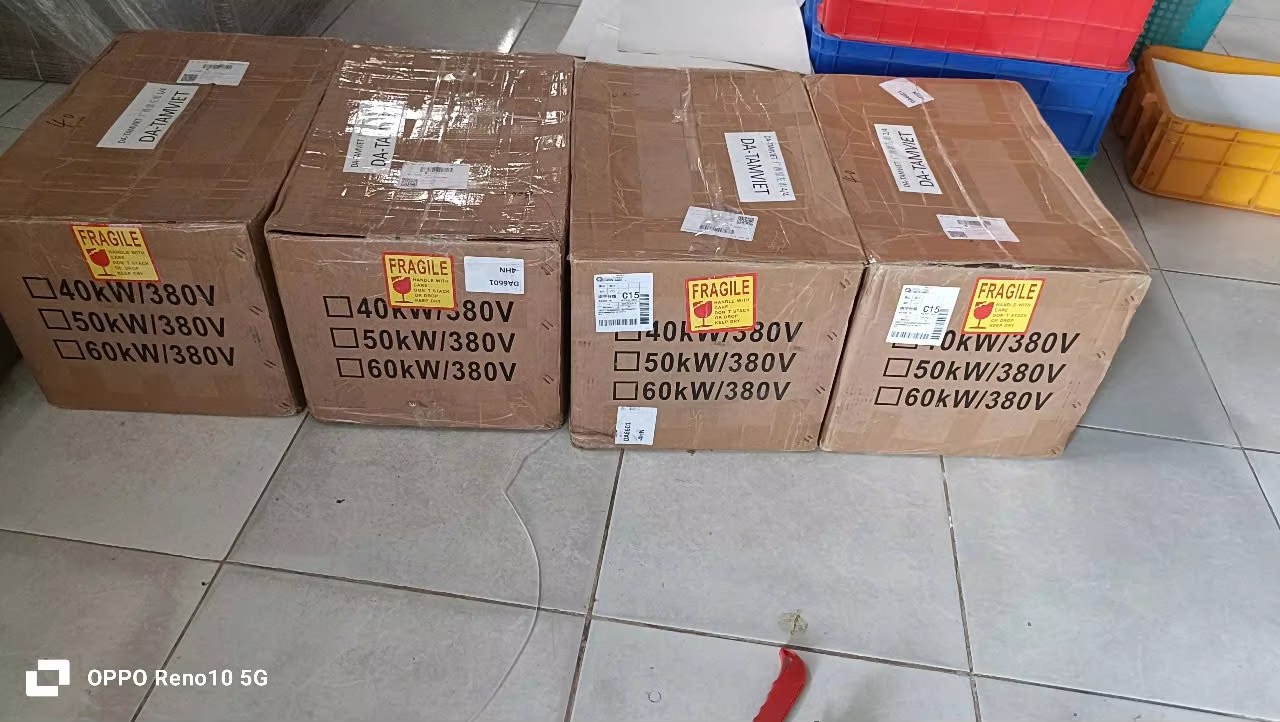
Next step: confirm the configuration for your process
Send the heating target, the site supply, and the required output range and the JONSON team will indicate whether the bearing induction heater JS1300-5/8/15/20/30 or a standard configuration is the better fit. Sample and single-unit orders are accepted, so the configuration can be validated before full production volumes.
Guangdong Jiangxin Electronic Technology Co., Ltd. (JONSON)
Website: www.jonson-ih.com
Contact: Mr. Zhou
Tel / WhatsApp: +86 18664277928
Email: jx@fsjxrn.com.cn
Address: Building 3, Tongde Intelligent Manufacturing Park, Ronggui Street, Shunde District, Foshan City, Guangdong Province
Have Questions or Need More Details?
Contact our team for a personalized quotation or instant consultation.
Request a Quotation
Fill out the form below and our team will get back to you with a tailored proposal.
WhatsApp Direct Chat
Prefer to chat in real-time? Message us on WhatsApp for instant assistance & quick answers.
- Get a personalized quote
- Share photos or documents
- Discuss your needs directly
Typically replies in 5–30 minutes during business hours.