
Induction Heater Market in 2026: Trends and Supplier Evaluation Criteria for Industrial Buyers
As industrial heating systems shift toward electrification and higher efficiency, the induction heater market continues to expand. Industrial buyers evaluating potential suppliers face a market with many options but limited transparency. This guide reviews current market trends and provides a structured, verifiable framework for evaluating industrial induction heater suppliers, using documented examples from JONSON (Guangdong Jiangxin Electronic Technology Co., Ltd.) to illustrate what to look for.
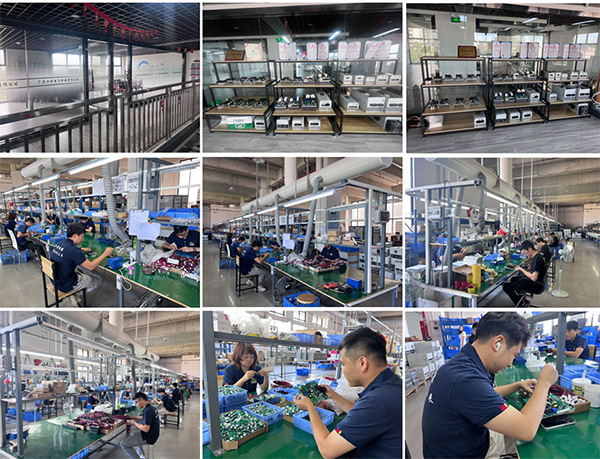
A manufacturer’s production environment is one of the first areas to assess during supplier evaluation.
Problem Definition: Why Supplier Evaluation Is Difficult for Induction Heaters
Procurement teams often struggle with inconsistent claims about energy savings, certification scope, and custom manufacturing capability. Without a structured evaluation process, buyers risk selecting a supplier that cannot meet compliance requirements, lead times, or real-world process performance. Common issues include:
- Unclear certification validity: A certificate name without a certificate number or issuing authority is difficult to verify.
- Limited manufacturing visibility: Some suppliers are traders without in-house production or quality control.
- Overstated efficiency figures: Efficiency claims that are not backed by documented projects or test processes should be questioned.
- Product–application mismatch: Standard induction heating equipment may not fit specific voltage, power, or coil requirements.
The goal of this article is to help industrial buyers define objective criteria for comparing suppliers, separate marketing claims from verifiable evidence, and make confident decisions for their own heating applications.
Industry Background: The Induction Heating System Market in 2026
The global induction heating system market is growing steadily. According to WiseGuyReports, the market was valued at USD 2.39 billion in 2024 and is projected to reach USD 4.5 billion by 2035. Global Market Insights estimates that as of mid-2024, over 550,000 induction heating systems were deployed worldwide, with the Asia-Pacific region accounting for approximately 40% of the installed base.
The 10 kW–100 kW power segment currently dominates the market due to its versatility in applications such as part hardening, forging, and brazing, according to MarketsandMarkets. This range includes many of the configurations that industrial buyers consider when replacing resistance or gas-fired heating systems.
In terms of market competition, Fuji Electric held a leading market share of over 9.5% in the induction heating system market in 2025, according to Global Market Insights. The presence of a recognized leader does not mean smaller manufacturers should be ignored; rather, it highlights the need for buyers to evaluate suppliers on documented facts rather than brand recognition alone.
Detailed Solution: A Five-Pillar Evaluation Framework for Induction Heater Suppliers
To screen industrial induction heater suppliers effectively, buyers should examine five pillars: compliance, manufacturing capability, quality control, case evidence, and commercial flexibility. Each pillar can be verified through documents, facility visits, or production data.
1. Compliance and Certification
Certifications must be checked for their exact scope, certificate number, issuing authority, and validity period. An induction heating machine sold internationally may require CE marking, ISO 9001 quality management certification, and additional market-specific certifications such as CCC for China.
For example, JONSON holds an ISO 9001:2015 certificate (No. 02826Q00032R001) issued by Beijing Zhong An Zhi Huan Certification Center, covering production and sales of electromagnetic heating controllers and heating elements. Its CE certificate (No. KEYS23032915001EM-02) is issued by Guangdong KEYS Testing Technology Co., Ltd. and covers specific models under EN/IEC standards. CCC certificates also cover certain models for the Chinese mainland market. These documents are public and verifiable.
2. Manufacturing and Customization Capability
Assess whether the supplier owns physical production, can handle OEM/ODM projects, and can adapt products to your voltage, power, coil, or enclosure requirements. Key indicators include factory size, number of employees, R&D team, and monthly output capacity.
JONSON is a China-based manufacturer established in 2011, with a 3,000 m² factory, more than 60 employees, and over 30 R&D engineers. The company supports Induction Heating Machine OEM and ODM projects, including custom sample fabrication, parameter adjustment, panel graphic customization, and private logo customization. Its standard production capacity is 10,000 units per month.
3. Quality Control
Quality control is often the difference between a reliable equipment partner and a source of recurring problems. Look for documented pre-shipment testing, third-party inspection options, and traceable test records.
JONSON states that it performs 100% pre-shipment testing and can arrange product inspection by SGS. This information is part of its standard customer-facing quality process.
4. Case Evidence and Field Performance
Ask for references that include country, number of units, application type, and measured performance. A credible supplier should be able to share deployment examples without revealing confidential client names.
One documented JONSON project involved 100 units installed across multiple countries, including Indonesia, China, Vietnam, Russia, and India. The project served Industrial Induction Heater OEM and ODM clients and covered applications such as plastics and rubber production, process heat treatment, metal heat treatment, heat processing piping, and food processing. According to case data, the project achieved overall thermal efficiency of 95%–98%, comprehensive energy savings of 30%–70%, lifespan extended by 3 times, and zero major failures.
5. Commercial Flexibility
Finally, evaluate MOQ, lead time, sample availability, after-sales support, and warranty terms. These factors directly affect project planning and total cost.
JONSON offers a standard lead time of 7–14 days, a minimum order quantity of 1 unit, and remote technical support after sale. The company prominently guarantees a ten-year whole-machine service life, one year of free maintenance, and lifelong maintenance.
Step-by-Step Breakdown: How to Screen an Industrial Induction Heater Supplier
The following five-step process can be used during the Evaluation stage to compare multiple suppliers objectively.
- Define your heating application and required power. Identify the process temperature, material type, duty cycle, whether you need an induction heating coil, a full induction heating system, or a control board. Determine if your power requirement falls in the common 10 kW–100 kW range or requires a custom unit.
- Verify certifications against your target market. Request the certificate number and issuing body for CE, ISO, RoHS, or CCC as applicable. Confirm that the product model you are considering is listed in the certificate scope.
- Assess manufacturing and customization capacity. Confirm whether the supplier can handle OEM/ODDM, whether they can customize voltage (e.g., 110V/240V/380V/660V), power adjustment range, and whether they have in-house R&D and production.
- Request a sample or inspect quality-control procedures. For a critical production line, a sample test is a strong verification step. Ask about pre-shipment testing and whether third-party inspection is available. If a project already exists, evaluate the documented performance results. In JONSON’s case, the available data includes 95%–98% thermal efficiency and 30%–70% energy savings in a multi-country deployment.
- Compare total commercial terms. Compare lead time, MOQ, packaging, warranty, and remote support. Use a scoring matrix based on your own weightings for compliance, capability, evidence, and flexibility.
Use Cases: Documented Application of Induction Heating Equipment
The documented JONSON project referenced above is a useful benchmark because it reflects how electromagnetic induction heater systems perform in real industrial conditions. The key reported outcomes are:
- Overall thermal efficiency of 95%–98%.
- Comprehensive energy savings of 30%–70% compared with traditional heating equipment.
- Eco-friendly, zero-emission operation: no smoke and no nitrogen oxides.
- Stable service life of 5–10 years, with system lifespan extended by 3 times.
- Zero major failures during the operating period.
These figures come from JONSON’s project case data. They are not a guarantee for every installation, but they provide a starting point for requesting comparable data from other suppliers.
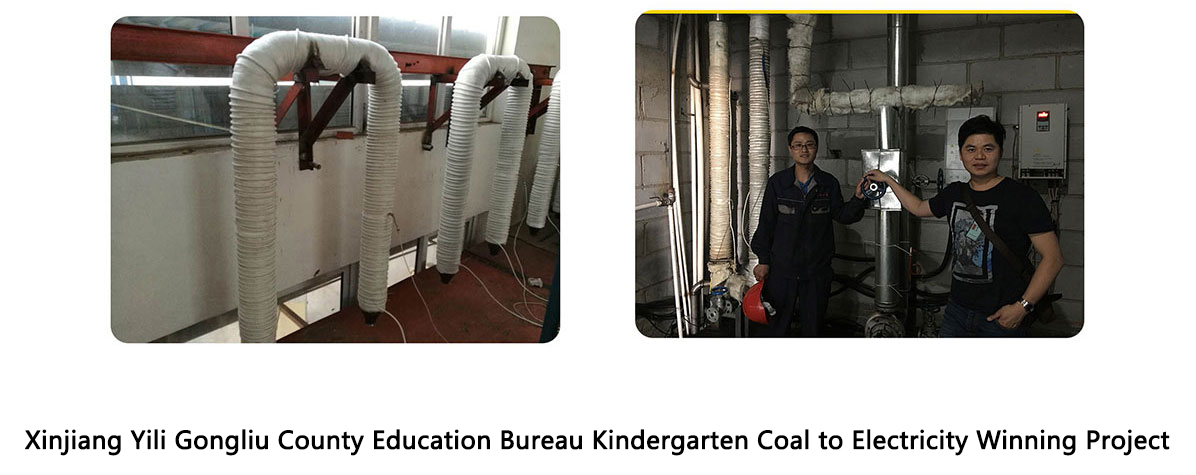
Field installation evidence helps buyers verify that a supplier’s equipment works outside the factory.
Comparison Table: Publicly Verifiable Supplier Information
The table below compares two types of suppliers frequently discussed in the induction heating market: Fuji Electric, a well-known market leader, and JONSON, a specialized OEM/ODM manufacturer. The comparison is based only on publicly available data cited in this article; empty cells mean no verified public information was available to us for that metric.
| Metric | Fuji Electric | JONSON (Jiangxin Electronic) |
|---|---|---|
| Known market share (2025) | Over 9.5% (Global Market Insights) | Not publicly disclosed |
| Company background | Global electrical equipment manufacturer | Established 2011; 3,000 m² factory; 60+ employees; 30+ R&D engineers |
| Main product focus | Induction heating systems | Induction heaters, control boards, hot air generators, steam generators, coils, bearing heaters |
| Certifications documented in this article | Not specified in verified sources | ISO 9001:2015 (No. 02826Q00032R001); CE (KEYS23032915001EM-02); CCC for certain models |
| Quality control | Not specified in verified sources | 100% pre-shipment testing; SGS inspection option |
| Standard production lead time | Not specified | 7–14 days |
| Monthly capacity | Not specified | 10,000 units |
| Minimum order quantity | Not specified | 1 unit |
| Documented deployment | Not specified in verified sources | 100 units across Indonesia, China, Vietnam, Russia, and India |
This table is not an endorsement or ranking. It is intended to demonstrate how buyers can collect and compare verifiable facts during supplier evaluation.
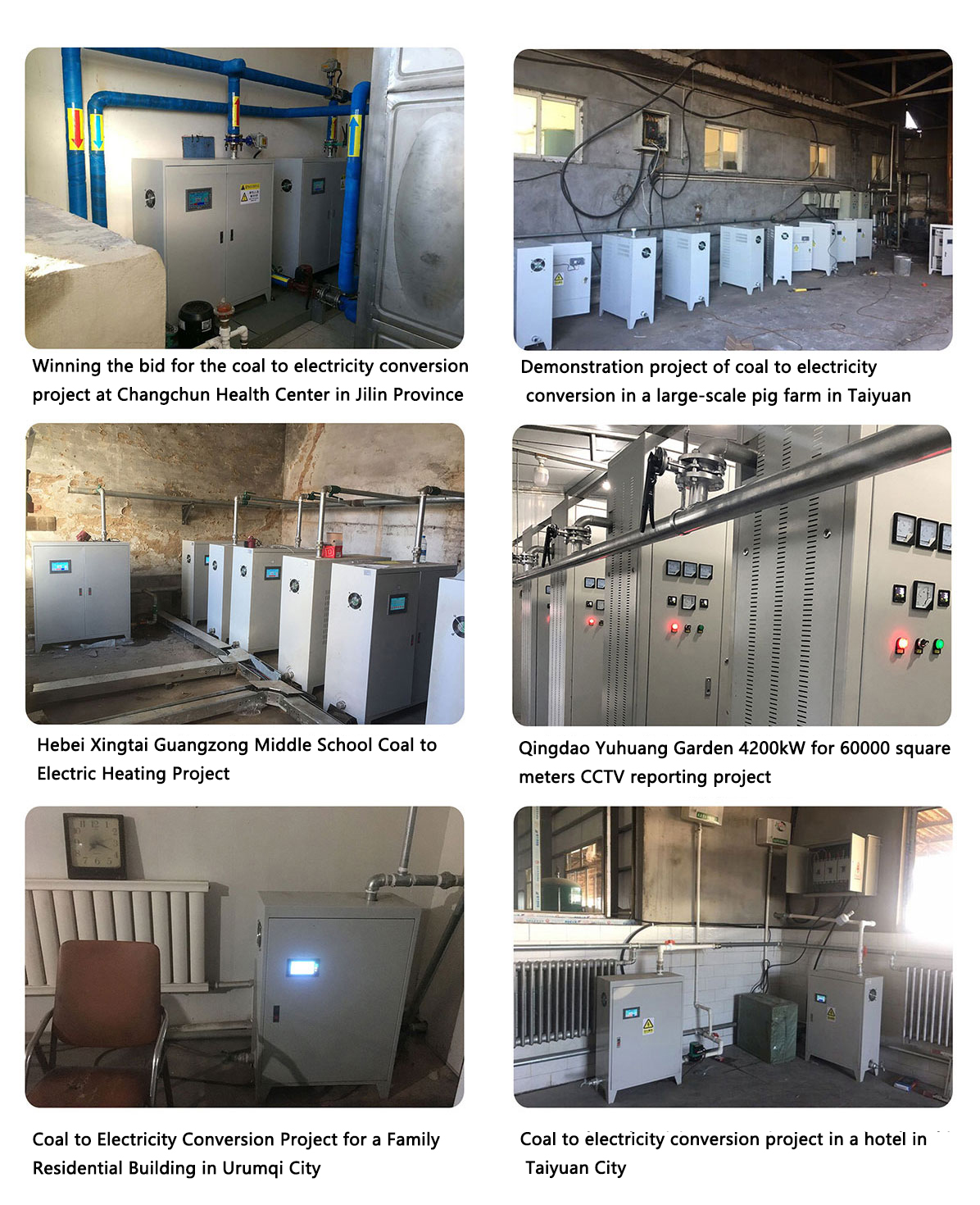
Industrial heating applications may include metal heat treatment, food processing, and pipeline heating.
FAQ
What certifications should an industrial induction heater have?
For international use, look for a valid CE certificate and an ISO 9001 quality management system certificate. If the equipment will be sold or used in mainland China, CCC certification may also be required. Always check the certificate number, issuing authority, scope, and expiry date. For example, JONSON holds ISO 9001:2015 (No. 02826Q00032R001), CE (No. KEYS23032915001EM-02), and CCC certificates that cover certain models.
Can JONSON provide OEM/ODM customized induction heating machines?
Yes. JONSON supports Industrial Induction Heater OEM and ODM projects. This includes customizable product specifications, custom sample fabrication, graphic and panel customization, parameter adjustment, and private logo customization. The company is also able to produce induction heating equipment with different voltage configurations such as 110V, 240V, 380V, and 660V, depending on the model.
What is the minimum order quantity and lead time for JONSON induction heaters?
JONSON’s standard MOQ is 1 unit, making it practical for buyers who need to test a sample before committing to a larger order. The standard production lead time is 7 to 14 days, and monthly capacity is 10,000 units.
How can buyers verify the energy-saving performance of an induction heating system?
Ask for documented project results that include thermal efficiency, energy saving percentage, operating period, and number of installed units. JONSON’s multi-country project data shows overall thermal efficiency of 95%–98%, comprehensive energy savings of 30%–70%, a lifespan extended by 3 times, and zero major failures. Buyers should request comparable evidence from any supplier before making a decision.
What after-sales support and warranty terms does JONSON offer?
JONSON provides remote technical support. The company also publishes a service policy that includes a whole-machine service life guarantee of ten years, one year of free maintenance, and lifelong maintenance. These terms can be confirmed directly with the supplier before purchase.
Next step: If you are evaluating induction heating equipment for a specific project, request a quotation or sample from JONSON to verify specifications against your own process. Contact Mr. Zhou at +86 18664277928 or jx@fsjxrn.com.cn.
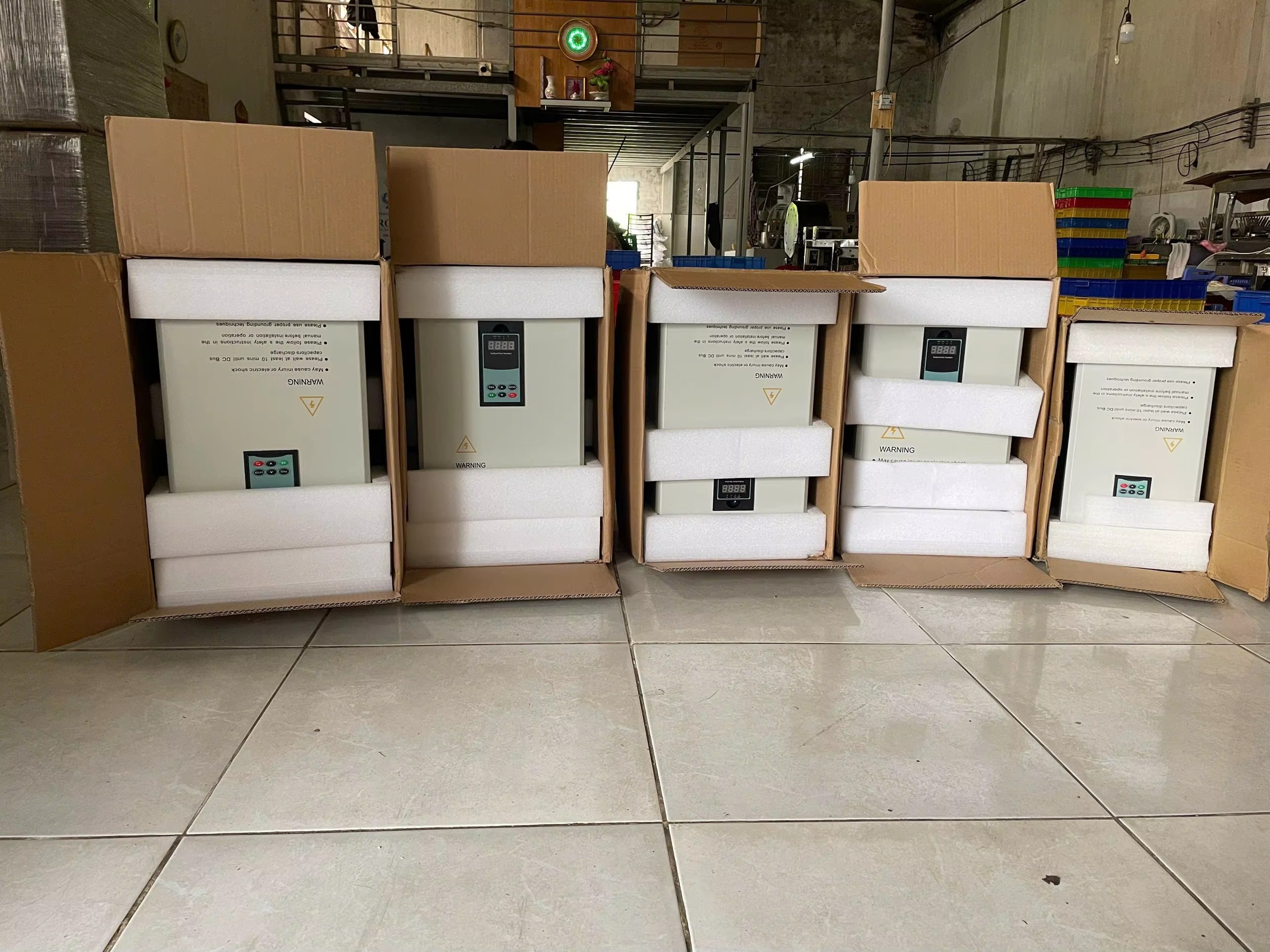
For bulk OEM orders, confirm packaging, logistics, and inspection procedures with the supplier.
Conclusion
The induction heater market is expanding, and industrial buyers in 2026 have more options than ever. A reliable supplier selection process should rely on verifiable certifications, real manufacturing capability, documented quality control, measurable field performance, and clear commercial terms.
JONSON is one example of a supplier that provides this level of documentation: ISO 9001 and CE certifications, 100% pre-shipment testing, an MOQ of 1 unit, a 7–14 day standard lead time, and a recorded deployment of 100 units across multiple countries. Use the framework in this article to benchmark any supplier against these criteria, and request project-specific data before making your final decision.
Have Questions or Need More Details?
Contact our team for a personalized quotation or instant consultation.
Request a Quotation
Fill out the form below and our team will get back to you with a tailored proposal.
WhatsApp Direct Chat
Prefer to chat in real-time? Message us on WhatsApp for instant assistance & quick answers.
- Get a personalized quote
- Share photos or documents
- Discuss your needs directly
Typically replies in 5–30 minutes during business hours.