
Long-Term Induction Heater Partnership FAQ: Voltage, Control Boards, and After-Sales
The most expensive induction heater is rarely the one quoted at the highest price. It is the one that cannot be repeated — a unit whose coil winding was never documented, whose control board model changed between batches, and whose after-sales plan was a phone number rather than a parts list.
This partnership FAQ is written for buyers who have finished specifying and are now deciding how to structure a multi-year supply relationship for induction heating equipment in smart manufacturing. It answers the questions that surface in that final round: which voltage class to lock in, how to think about control board options such as JS1300-10/15 and JS1300-005/008, what belongs in the purchasing terms, which acceptance criteria to write into the order, and how to build after-sales around parts that actually exist.
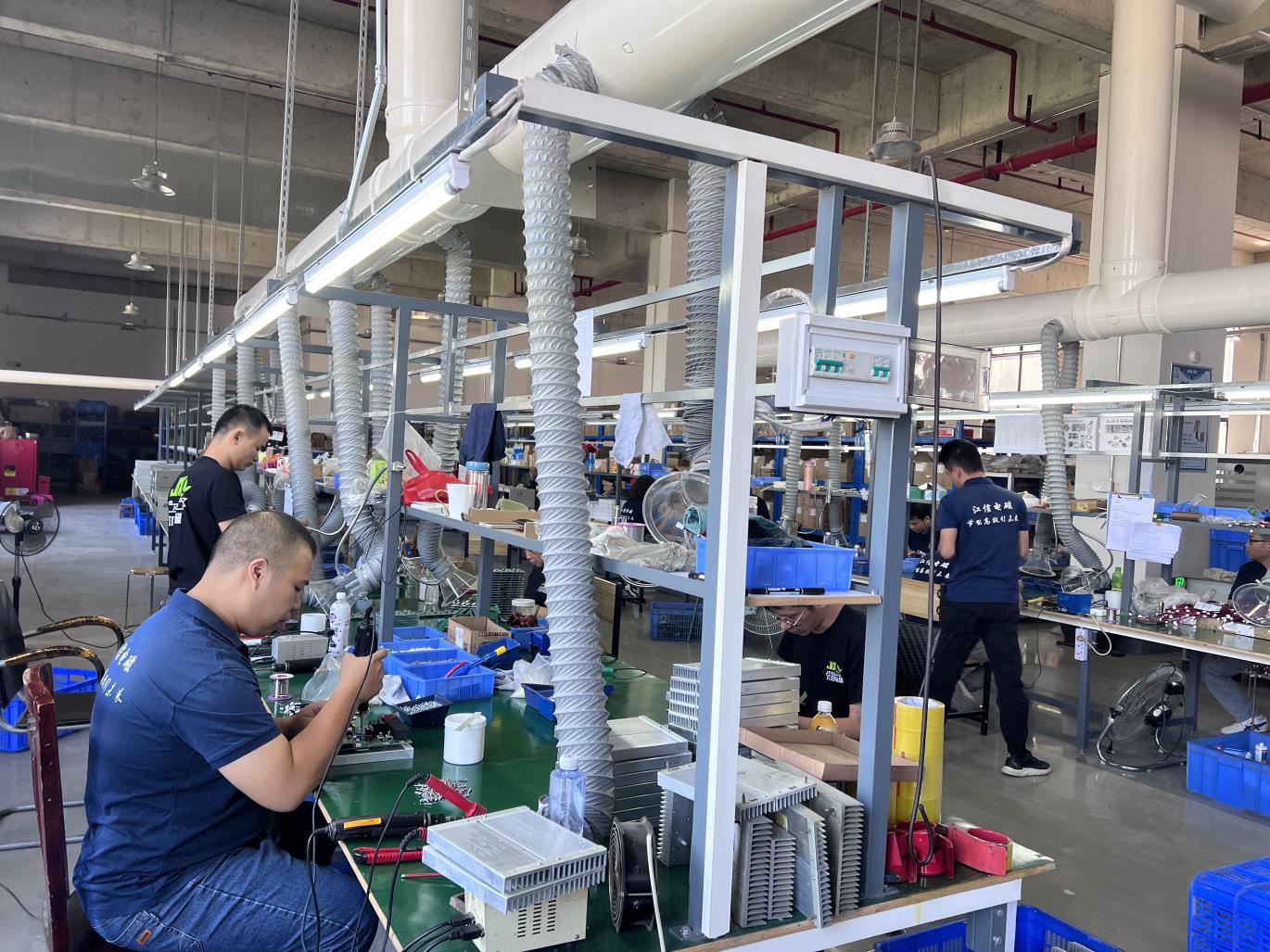
JONSON is the brand of Guangdong Jiangxin Electronic Technology Co., Ltd., an induction heating equipment manufacturer based in Foshan, Guangdong, China, founded in 2011, operating a 3,000 m² facility with 60+ employees, a 30+ engineer R&D team and a stated annual output of 120,000 units. Its range covers induction heaters, induction heating control boards, induction heating coils, induction steam generators, induction hot air generators, induction water boilers and bearing induction heaters, supplied to markets including Europe, the United States, India and Indonesia.

The Decision Problem: Continuity Across Years, Not the Price of One Invoice
Long-term induction heater supply rarely fails because the first machine underperforms. It fails on the details that were never written into the first order, and which only become visible two or three years later when a line is running and a component has to be replaced.
Three gaps account for most of the friction in partnership-stage procurement:
- Voltage ambiguity. The equipment arrives with a nameplate that matches the purchase order but not the site distribution, and the mismatch is only discovered at commissioning.
- Control board discontinuity. A replacement board does not match the original because the model reference was recorded as a product name rather than a board-level part number.
- After-sales defined by promises. Response times are agreed verbally, but the coil specification, the spare part reference and the maintenance routine are not.
The practical answer to all three is the same: treat the partnership as a documentation exercise before it becomes a commercial one. A supplier that can name its voltage classes, its control board models and its coil range in writing can be held to them. A supplier that cannot is a risk regardless of price.
Industry Background: Why Buyers Now Negotiate Supply, Not Just Units
Industrial heating procurement has shifted from unit selection toward supply structure, largely because the cost case for induction is a multi-year case rather than a single-purchase one.
Global Market Insights values the global induction heating system market at USD 2.4 billion in 2026, with growth to USD 4.1 billion projected by 2035. Published market valuations in this category should be read with care: research houses scope "induction heating systems" differently, and headline figures from different publishers are not directly additive or comparable. For a buyer, the usable signal is directional — installed base and replacement demand are both growing, which is exactly why component continuity matters more than it did a decade ago.
The energy case is usually where the conversation starts. JONSON states a thermal efficiency of 95%–98% for its induction heating equipment and comprehensive energy savings of 30%–70% compared with traditional heating equipment, together with an expected lifespan three times longer than traditional induction heater machines and maintenance requirements reduced by 90%. Those figures are supplier-stated and should be validated against your own process load, but they explain why buyers commit to a longer horizon: the payback logic depends on the machine surviving long enough to deliver the savings.
Two further developments shape the contract itself. First, safety and conformity expectations have become acceptance items rather than background assumptions. IEC 60519-1 (general electroheat safety) and IEC 60519-3 (induction and conduction heating requirements) are the core references for this equipment class, with ISO 13850 covering emergency stop functions, as mapped in published 2026 technical safety guidance. Second, trade classification now appears in procurement documents: industrial induction heating equipment typically falls under HS heading 8514.40, which importers need stated consistently on invoices and shipping documents.
Question 1 — Voltage Customization: 110V, 240V and 660V
JONSON configures induction heating equipment across 110V, 240V and 660V supply environments. The right class is not a preference; it is a property of the site, and it should be confirmed in writing before the order is released.
Buyers moving from evaluation to a long-term agreement should send the supplier four pieces of information for every supply point: the measured site voltage, the distribution arrangement at the panel, the maximum load the heater will draw in normal production, and any known fluctuation or voltage-drop behaviour on that line. The fourth item is the one most often omitted, and it is the one that determines whether a marginal installation performs as specified.
| Voltage class | What the buyer must confirm | What should appear in the purchase order |
|---|---|---|
| 110V | Measured site voltage and available circuit capacity at the installation point | Voltage class, heater model, matching coil specification, nameplate reference |
| 240V | Site voltage measured at the panel, plus expected load range across the production cycle | Voltage class, heater model, control board model, coil specification |
| 660V | Confirmation of the high-voltage distribution arrangement and the installation conditions around the cabinet | Voltage class, heater model, control board model, conformity documentation per destination market |
Question 2 — Control Boards: JS1300-10/15, JS1300-005/008
The control board is the part that determines how an industrial induction heater behaves under changing load, and it is also the part most likely to be mis-recorded in a long-term agreement. Product-level names age badly; board-level model references do not.
JONSON offers control board options including JS1300-10 and JS1300-15, and supplies JS1300-005 and JS1300-008 configurations with CE, ISO and RoHS documentation. Functionally, the control board in an induction heating system governs power regulation, frequency tracking and protection behaviour — which is why the board model, not just the heater model, belongs in the technical annex of a supply agreement.
| Control board option | Confirm with the supplier | Documentation to request |
|---|---|---|
| JS1300-10 | Exact power rating stated on the datasheet, matching coil specification, and the voltage class it will run at | Datasheet with model reference, board-level part number for the technical annex |
| JS1300-15 | Exact power rating stated on the datasheet, matching coil specification, and the load profile it will serve | Datasheet with model reference, board-level part number for the technical annex |
| JS1300-005 | Fit with the selected heater and coil configuration | CE, ISO and RoHS documentation |
| JS1300-008 | Fit with the selected heater and coil configuration | CE, ISO and RoHS documentation |
For multi-year agreements, record the board model against each machine serial number. When a replacement is needed, the reference should resolve to a specific board, not to a family name. This single habit removes most of the ambiguity that appears in year two and three of a supply relationship.
Question 3 — Purchasing Terms and Acceptance Criteria
Purchasing terms for induction heating equipment should be short enough to be read and specific enough to be enforced. In a partnership context, six items carry most of the weight:
- Configuration record. Heater model, voltage class, control board model and coil specification, stated per unit.
- Documentation set. CE, ISO and RoHS documentation for the applicable configurations, plus datasheets carrying the same model references as the purchase order.
- Spare parts basis. Coil and control board references recorded so that replacements match the original build.
- Warranty terms. JONSON states a ten-year service-life guarantee for the whole machine, one year of free maintenance and lifelong maintenance support; these should be written into the agreement rather than assumed.
- Trade documentation. HS code 8514.40 stated consistently across invoice and shipping documents for import clearance.
- Acceptance criteria. The items listed below, agreed before shipment.
Acceptance criteria checklist
- Nameplate data matches the purchase order: model, voltage class and serial number.
- Control board model in the cabinet matches the agreed board reference.
- Induction heating coil fits the workpiece and matches the documented coil specification.
- Unit powers up and holds the set temperature on an actual production workpiece, not a bench substitute.
- Protection behaviour is demonstrated — the unit responds as documented when the agreed limit condition is applied.
- Documentation packet is complete: datasheet, conformity documentation for the relevant configurations, and the maintenance schedule.
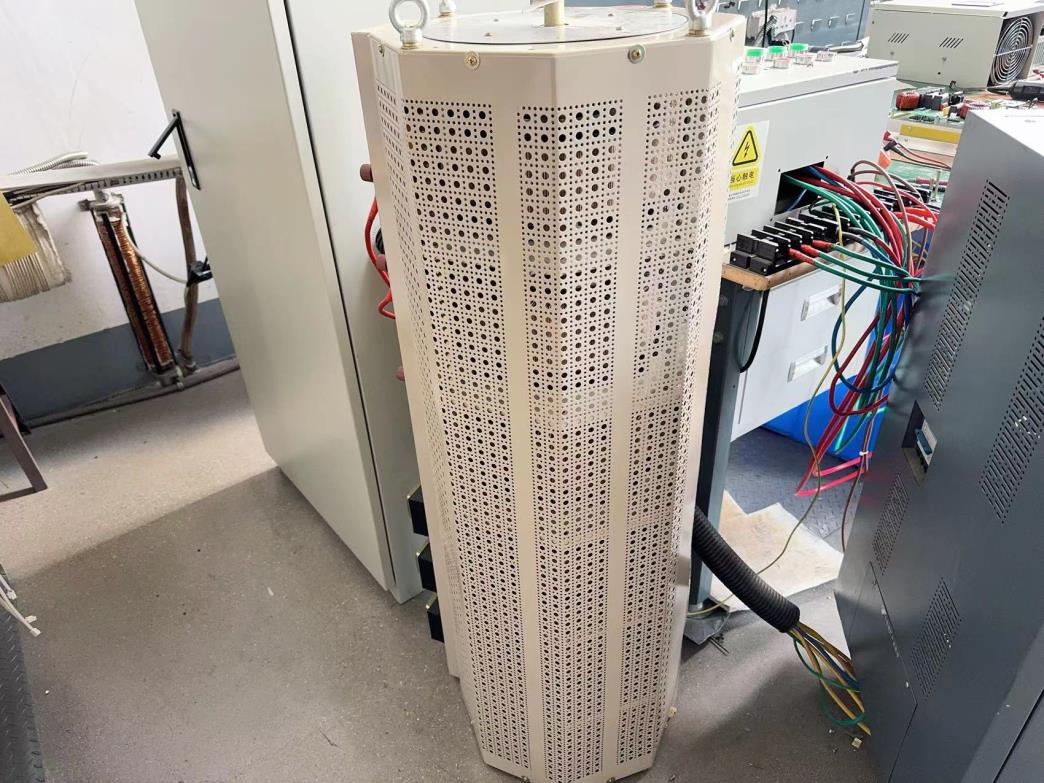
- Installation conditions are confirmed on site: sufficient heat dissipation space around the unit, and clearance from dust, oil and flammable or explosive materials.
Question 4 — After-Sales Built on Verifiable Parts
After-sales support is only as strong as the parts behind it. For induction heating equipment, two components determine whether a support plan is real or verbal: the induction heating coil and the control board.
JONSON supplies customizable induction heating coils across a 1–100 kW range, alongside the corresponding control boards. That pairing is what makes a long-term plan executable — a replacement coil is only correct if the original winding specification was recorded, and a replacement board is only correct if the board reference was recorded. Both are configuration facts, not service promises.
Operating conditions that protect the service life claim
The stated service-life and maintenance figures — an expected lifespan three times longer than traditional induction heater machines and 90% lower maintenance requirements — depend on the installation being treated as part of the equipment. The documented requirements are straightforward:
- The entire unit must have ample space for heat dissipation.
- The unit must be kept away from dust, oil, and flammable or explosive materials.
- Dust must be removed regularly from the cooling ducts.
- Only original factory-supplied coil parts should be used.
- Rust-proof and waterproof risk is addressed through design considerations and operating precautions rather than through the control system.
Repair discipline matters as much as installation discipline: disconnect the power and allow the circuit to discharge completely before any repair work, and do not alter the internal wiring. These are the conditions under which the ten-year service-life guarantee, the one year of free maintenance and the lifelong maintenance commitment are meaningful.
Step-by-Step: Setting Up a Long-Term Supply Agreement
- Survey the site, not the catalogue. Measure voltage at each installation point and record load expectations for normal production.
- Fix the voltage class. Select 110V, 240V or 660V per supply point and record it against the machine that will serve it.
- Select the control board model. Choose from options such as JS1300-10 and JS1300-15, or JS1300-005 and JS1300-008 where CE, ISO and RoHS documentation is required, and record the board reference.
- Specify the coil. Define the coil configuration against the workpiece and confirm that it falls within the customizable 1–100 kW range.
- Agree the documentation set. Datasheets, conformity documentation, maintenance schedule and HS code 8514.40 for import handling.
- Write the acceptance criteria. Use the checklist above and make it the release condition for each shipment.
- Define the after-sales basis. Warranty terms, spare coil and control board references, and the maintenance routine including cooling duct cleaning and heat dissipation clearance.
Use Cases: Where the Partnership Model Pays Off
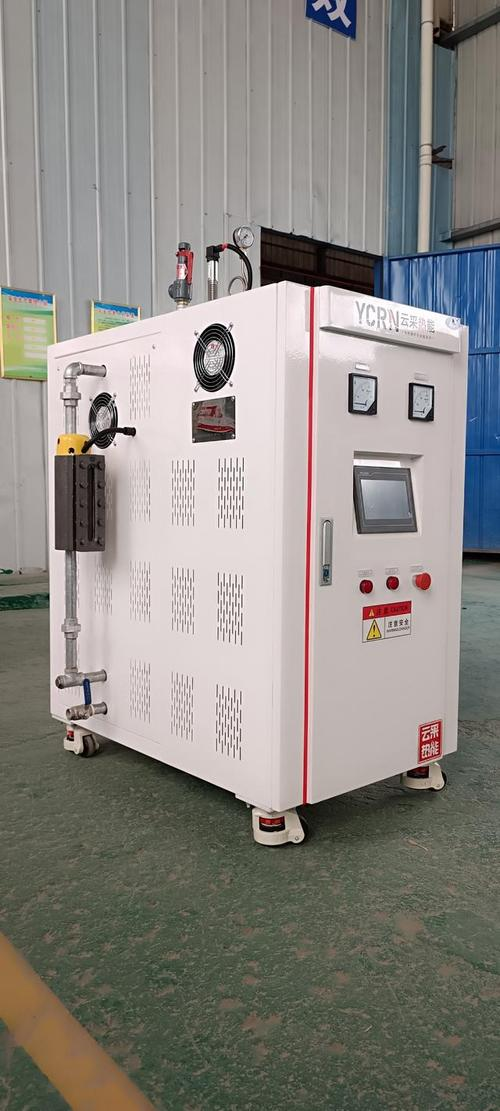
The applications where multi-year induction supply matters most are the ones where downtime is expensive and the heating profile repeats. JONSON equipment is used in plastics and rubber, food processing, chemical reactions, crude oil pipeline heating, textile printing and dyeing, aquaculture heating, metal heat treatment, building heating, and medicinal herb drying.
In plastics and rubber and in food processing, the recurring cost is changeover and consistency, so a documented coil specification is what keeps batch-to-batch behaviour stable. In chemical reactions and crude oil pipeline heating, the installation environment is harsher, which makes heat dissipation clearance and dust control part of the operating plan rather than an afterthought. In textile printing and dyeing and aquaculture heating, continuous operation makes the 90% lower maintenance figure and the three-times-longer lifespan the actual economic argument. In metal heat treatment and medicinal herb drying, the acceptance test on a real workpiece is what separates a compliant delivery from an approximate one. Building heating sits closest to the energy-saving case: thermal efficiency of 95%–98% is only realised when the unit is correctly matched to the load and the voltage class is right.
Comparison Table: One-Off Purchase vs. Long-Term Partnership
The table below is a decision aid, not a price comparison. It sets out what changes when the same equipment is bought as a repeatable supply relationship rather than a single transaction, using only verifiable product and service facts.
| Decision factor | One-off purchase | Long-term partnership |
|---|---|---|
| Voltage record | Nameplate matches the order; site voltage may still differ at commissioning | Voltage class (110V / 240V / 660V) recorded per installation point before release |
| Control board reference | Product name only, board model not recorded | Board model such as JS1300-10/15 or JS1300-005/008 recorded against each machine |
| Coil replacement path | Ad-hoc sourcing; fit may not match the original winding | Coil specification documented within the customizable 1–100 kW range, using original factory-supplied coil parts |
| Documentation | Datasheet at most | CE, ISO and RoHS documentation for applicable configurations, plus maintenance schedule |
| Warranty position | Terms assumed from the quotation | Ten-year whole-machine service-life guarantee, one year free maintenance and lifelong maintenance written into the agreement |
| Maintenance expectation | Reactive | Planned routine including cooling duct dust removal and heat dissipation clearance; 90% lower maintenance requirement than traditional induction heater machines |
| Efficiency outcome | Supplier-stated figures not validated on the actual load | 95%–98% thermal efficiency and 30%–70% energy savings validated during acceptance testing on a real workpiece |
| Import handling | HS classification clarified at shipment | HS code 8514.40 stated consistently across invoice and shipping documents |
FAQ
What compliance documentation should accompany a long-term induction heater order?
Request CE, ISO and RoHS documentation for the configurations you are ordering — JONSON supplies this documentation for JS1300-005 and JS1300-008 configurations. Alongside the certificates, ask for datasheets carrying the same model references as the purchase order, and confirm that HS code 8514.40 is stated consistently on trade documents. Where the destination market requires safety justification, IEC 60519-1 and IEC 60519-3 are the core reference standards for electroheat and induction heating equipment, with ISO 13850 covering emergency stop functions.
Can one supplier support both voltage customization and control board supply over several years?
That is the configuration question a partnership depends on. JONSON configures equipment across 110V, 240V and 660V supply environments, offers control board options including JS1300-10 and JS1300-15 alongside JS1300-005 and JS1300-008, and supplies customizable induction heating coils across a 1–100 kW range. The capability sits behind a 3,000 m² facility with 60+ employees, a 30+ engineer R&D team and a stated annual output of 120,000 units, with exports to Europe, the United States, India and Indonesia. The practical test is whether the supplier can record those references per machine — capability without documentation does not survive a multi-year horizon.
How should a buyer budget for a long-term induction heating partnership?
Budget around cost drivers rather than a headline unit price. The three drivers that move most in this category are energy, maintenance and service life: JONSON states 95%–98% thermal efficiency, comprehensive energy savings of 30%–70% compared with traditional heating equipment, 90% lower maintenance requirements and an expected lifespan three times longer than traditional induction heater machines. Confirm those figures against your own load during acceptance testing, and price the spare coil and control board references into the agreement so replacement cost is known in advance rather than discovered.
Can we validate with a sample or pilot unit before committing to a long-term agreement?
Yes — and it is the sensible sequence. A pilot unit configured to your voltage class, control board model and coil specification lets you run the acceptance criteria on a real workpiece before the supply agreement is fixed. Use the pilot to confirm that the coil matches the part, that the control board behaves as documented under your load profile, and that the installation has sufficient heat dissipation space and clearance from dust, oil and flammable or explosive materials. A sample or quotation request is the natural starting point for that process.
How should lead time and delivery be handled in a long-term agreement?
Lead time should be confirmed in writing per order rather than assumed from a brochure, because it depends on the configuration being built — voltage class, control board model and coil specification all affect scheduling. What a buyer can plan around is stated capacity: JONSON reports an annual output of 120,000 units from its 3,000 m² facility. Tie each delivery to the acceptance criteria checklist, so the shipment is released only when nameplate data, board reference, coil fit, protection behaviour and the documentation packet all match the agreed annex. To start that conversation, send your site voltage, target application and coil requirement through jonson-ih.com and request a configuration-specific quotation.
Conclusion: A Partnership Is a Set of Records Before It Is a Contract
Every question in this FAQ resolves to the same principle. Voltage classes, control board references and coil specifications are not administrative details — they are the substance of a long-term induction heater partnership. A supplier that can state 110V, 240V and 660V configurations, name its control board models, supply coils across a 1–100 kW range and attach CE, ISO and RoHS documentation to the relevant configurations is a supplier whose after-sales commitments can be verified. One that cannot is a supplier whose support depends on goodwill.
For buyers in smart manufacturing, the sequence is consistent: measure the site, fix the voltage, record the board, specify the coil, agree the documentation and make acceptance testing the release condition. Do that, and the ten-year service-life guarantee, the 90% lower maintenance requirement and the 95%–98% thermal efficiency become measurable outcomes rather than claims.
Next Step: Request a Configuration-Specific Quotation
Share your site voltage, application and coil requirement, and JONSON will respond with a configuration proposal covering heater model, control board option, coil specification and the applicable documentation. Sample and quotation requests are handled directly.
Email: jx@fsjxrn.com.cn | WhatsApp: +86 18664277928 | Web: www.jonson-ih.com
Guangdong Jiangxin Electronic Technology Co., Ltd. — Building 3, Tongde Intelligent Manufacturing Park, Ronggui Street, Shunde District, Foshan City, Guangdong Province, China.
Have Questions or Need More Details?
Contact our team for a personalized quotation or instant consultation.
Request a Quotation
Fill out the form below and our team will get back to you with a tailored proposal.
WhatsApp Direct Chat
Prefer to chat in real-time? Message us on WhatsApp for instant assistance & quick answers.
- Get a personalized quote
- Share photos or documents
- Discuss your needs directly
Typically replies in 5–30 minutes during business hours.