
Industrial Induction Heater Certifications & Parameters: A Buyer’s Guide
Industrial Induction Heater Certifications & Parameters: A Buyer’s Guide
When sourcing an industrial induction heater for manufacturing, chemical processing, or commercial heating, buyers quickly move from awareness to evaluation. At this stage, the critical questions shift from "what is induction heating" to "does this unit meet my compliance requirements, can it operate at my voltage, and what is the thermal efficiency?" This guide, centred on JONSON (Guangdong Jiangxin Electronic Technology Co., Ltd.), a manufacturer specialising in all-digital induction heating controllers and energy-saving steam generators, provides the verifiable specifications and certification data needed to make an informed decision.
Problem Definition
Procurement teams evaluating induction heating equipment often face inconsistent parameter sheets, unclear certification coverage, and conflicting claims about efficiency. Without a standardised fact base, comparing models and suppliers becomes unreliable — especially when the buyer must align with regional safety regulations such as CE for Europe or CCC for China.
Industry Background
The global induction heating system market was valued at USD 2.39 billion in 2024 and is projected to reach USD 4.5 billion by 2035. As of mid-2024, over 550,000 induction heating systems are deployed globally, with the Asia-Pacific region accounting for 40% of the installed base. Industry data shows that induction heating systems achieve energy efficiencies up to 92%, resulting in an average cycle time reduction of 30% compared to traditional gas or resistance-based heating. The 10 kW – 100 kW power segment dominates due to its versatility in applications such as automotive part hardening, forging, and brazing.
Detailed Solution: JONSON Induction Heater Product Line
JONSON offers a comprehensive range of induction heating equipment covering 500 W to 200 kW, supporting multiple voltage inputs (110 V, 220 V, 380 V, 660 V) and three heating media: hot air, steam, and water. All models are built with a copper wire heating coil, thickened aluminium alloy and cold-rolled steel plate outer casing, and a 304 stainless steel inner liner for durability. The control system is based on a DSP high-speed automatic phase-locking tracking system, enabling power regulation from 20% to 100% and start times under 1 second.
Step-by-Step Breakdown of Key Parameters
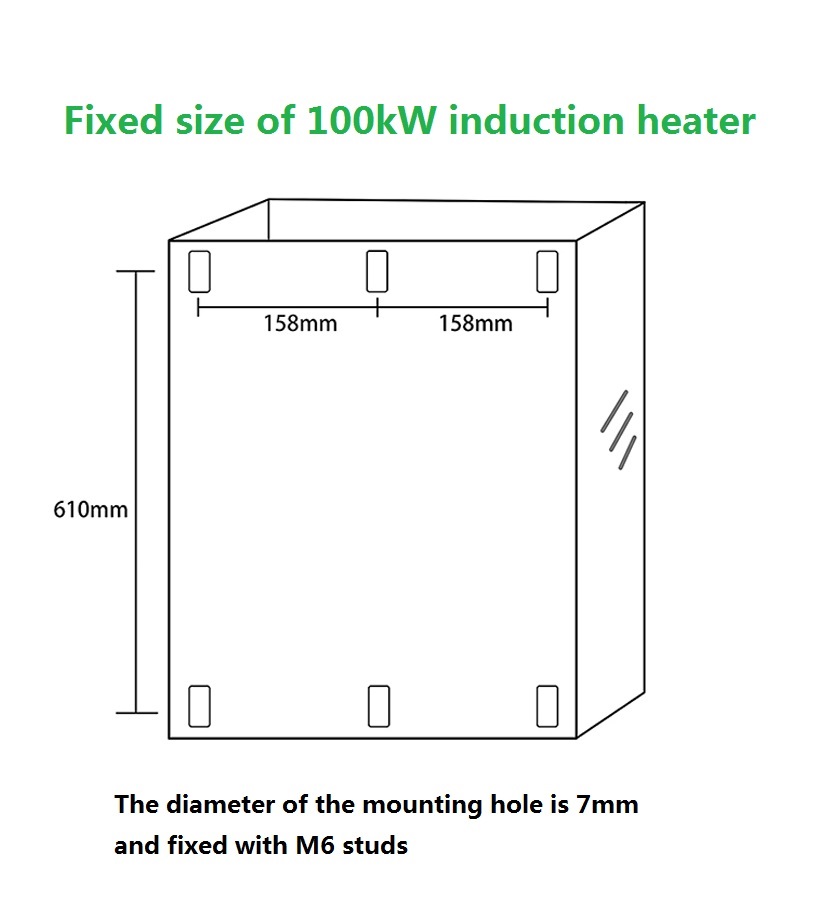
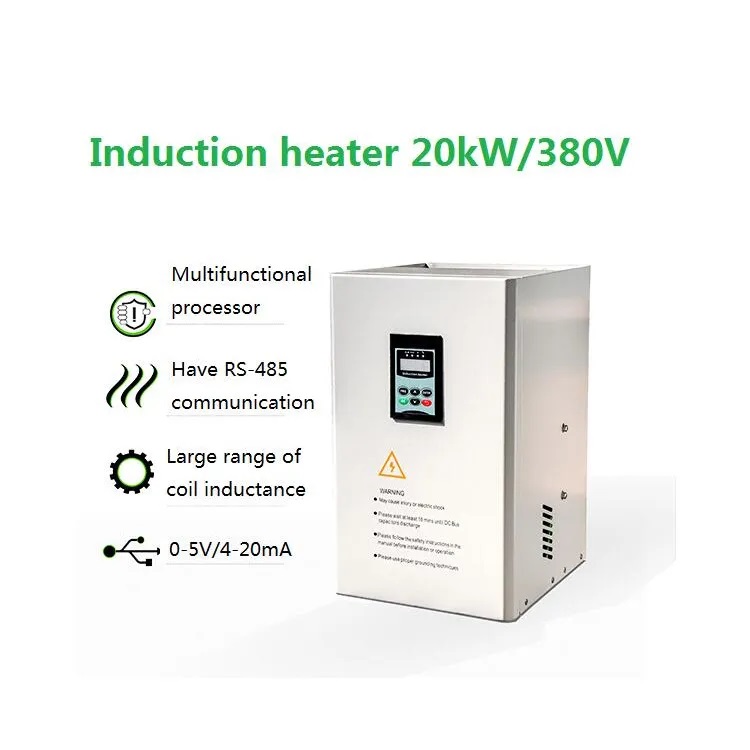
- Determine power and voltage: JONSON induction heaters are available from 2.5 kW single-phase (220 V) to 100 kW three-phase (380 V). For example, model JS1000-100 (100 kW) requires 380 V, has a rated input current of 140-150 A, and an output current of 200-220 A.
- Check heat conversion efficiency: Most JONSON models achieve ≥98% efficiency, with the JS-1600 Induction Steam Generator reaching ≥99%.
- Verify applicable certifications: Products carry CE (for EU), ISO 9001:2015 (worldwide), and China CCC (for domestic market). For example, induction heater model JS1300-5/8/15/20/30 is CE certified under number KEYS23032915001EM-02.
- Confirm ambient tolerance: All units operate between -20°C to 50°C (or 55°C for 70/80 kW models) with humidity ≤95%.
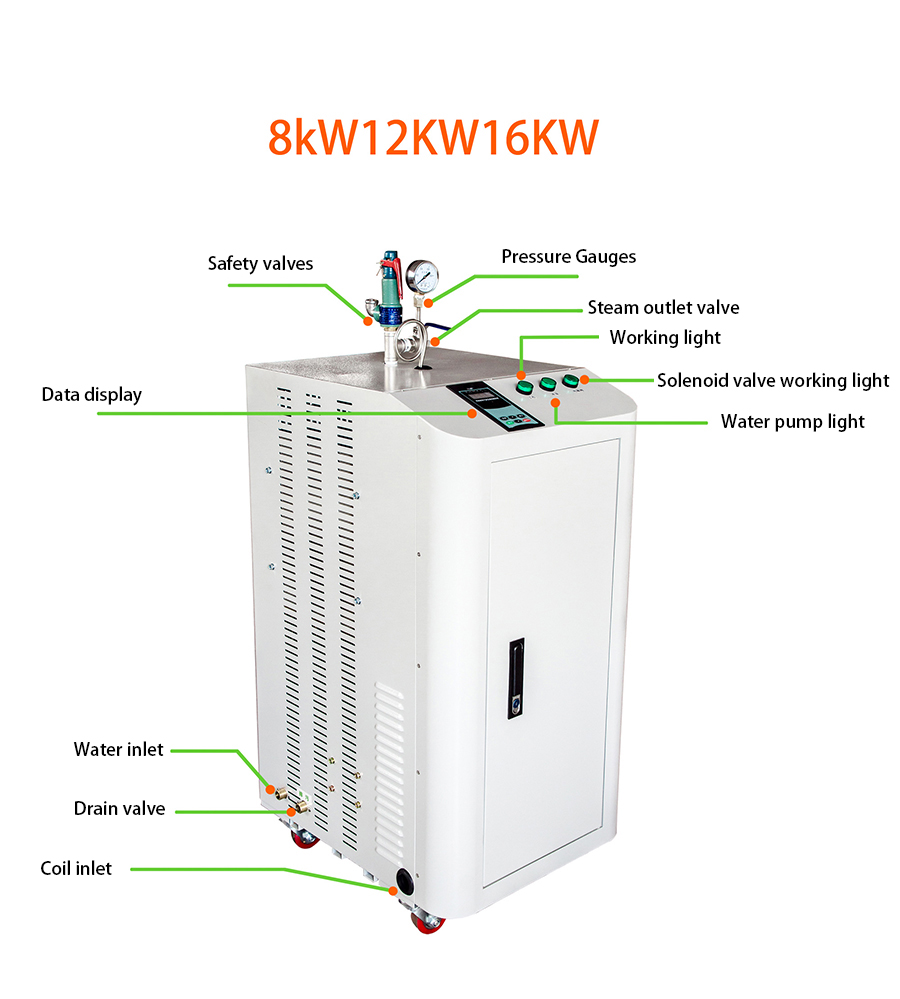
- Select heating medium: Choose from induction hot air generator (output 80-130°C), induction steam generator (30-50 kW), or induction water boiler (3.5-8 kW, 220 V).
- Consider control and protection: PID support, RS-485 interface, overcurrent protection within 2 μS, and power overload protection at 130%.
Use Cases
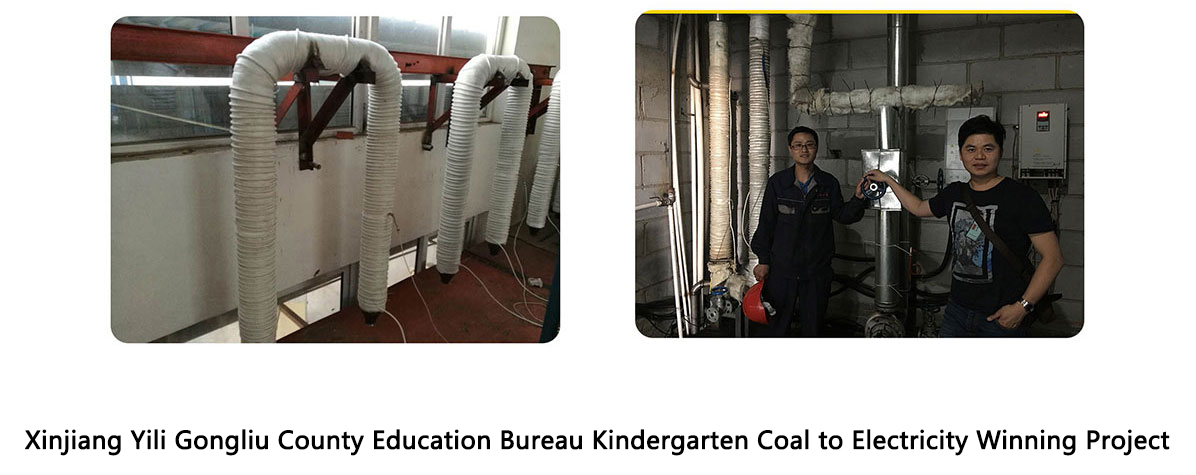
JONSON induction heaters are deployed across industries including plastics and rubber (barrel heating retrofits), food processing (steam cooking), chemical reactions (reactor jacket heating), crude oil pipeline heating (anti-solidification), textile printing and dyeing, aquaculture constant-temperature farms, metal heat treatment, building heating, and medicinal herb drying. In one documented project, 100 units were supplied with an overall thermal efficiency stable at 95%–98%, delivering energy savings of 30%–70% and zero major failures over a 10+ year service period.
Comparison Table: JONSON Product Segment & Certification Coverage
| Product Model | Power Range | Voltage | Efficiency | Key Certifications |
|---|---|---|---|---|
| JS1300-005/008 (5/8 kW) | 5 kW / 8 kW | 380 V (±20%) | ≥95% | CE, ISO |
| JS1300-10/15 (10/15 kW) | 10 kW / 15 kW | 380 V (300-400 V) | ≥95% | CE, ISO, RoHS |
| JS1000-20 (20 kW) | 20 kW | 380 V (300-400 V) | ≥95% | CE, ISO |
| JS1000-30 (30 kW) | 30 kW | 380 V | ≥95% | CE, ISO |
| 40/50/60 kW Model | 40/50/60 kW | 380 V (±20%) | ≥98% | CE, ISO |
| 70/80 kW Heater | 70/80 kW | 380 V | ≥99% | CE, ISO |
| JS1000-100 (100 kW) | 100 kW | 380 V (300-400 V) | ≥95% (effective ≥98%) | CE, ISO |
Frequently Asked Questions
1. What certifications do JONSON induction heaters carry for international markets?
JONSON induction heaters hold CE certification (certificate KEYS23032915001EM-02, standard EN IEC 55014-1:2021) for the EU market, ISO 9001:2015 (certificate 02826Q00032R001) for worldwide markets, and China CCC (certificates 2017010706999985 and 2017010706002104) for domestic sale in China. Specific models such as JS1300-10/15 and JS1600-8/12/15 also carry RoHS.
2. What is the heat conversion efficiency of JONSON induction heating systems?
Most JONSON induction heaters achieve a heat conversion efficiency of ≥95%, with the steam generator JS-1600 reaching ≥99% and the 70/80 kW models reaching ≥99%. These figures are consistent with the industry average of 92%+ reported in third-party market analyses.
3. What voltage and power options are available for customization?
JONSON offers standard 220 V single-phase (3.5–8 kW) and 380 V three-phase (5–100 kW). For special projects, 110 V, 240 V, and 660 V versions can be customised with power from 500 W to 200 kW. The voltage adaptation range is typically ±20%.
4. Can I request a sample unit before bulk ordering?
Yes, JONSON supports sample fabrication and custom sample orders. The minimum order quantity (MOQ) is 1 unit, making sample procurement straightforward. All samples undergo 100% pre-shipment testing.
5. What is the typical lead time for production?
Standard lead time for JONSON induction heaters is 7–14 days. With a monthly production capacity of 10,000 units, the factory can accommodate both small samples and volume orders efficiently. To start your evaluation, request a quote or sample today.
Ready to evaluate a JONSON induction heater for your application?
Contact Manager Mr. Zhou at +86 18664277928 / WhatsApp: +86 18664277928 or email jx@fsjxrn.com.cn for certified parameters, sample ordering, and technical support.
Visit www.jonson-ih.com for the full product catalog.
Have Questions or Need More Details?
Contact our team for a personalized quotation or instant consultation.
Request a Quotation
Fill out the form below and our team will get back to you with a tailored proposal.
WhatsApp Direct Chat
Prefer to chat in real-time? Message us on WhatsApp for instant assistance & quick answers.
- Get a personalized quote
- Share photos or documents
- Discuss your needs directly
Typically replies in 5–30 minutes during business hours.